


LINKED PAPER Behavioural and fitness effects of experimental immune activation during incubation in a wild passerine. Barreda, I., García del-Río, M, Merino, S., Fuertes-Recuero, M. & Cantarero, A (2026) IBIS.VIEW

Incubation is one of the most critical and demanding periods in a bird’s life cycle (Tatner & Bryant, 1993). During this stage, parents must strike a delicate balance between their own survival and the constant need to maintain eggs at an optimal temperature for embryo development (Sheldon & Verhulst, 1996; Gustafsson et al., 1997; Raberg et al., 1998). But what happens when a mother falls ill in the middle of this process?
Traditionally, it has been thought that infection triggers the “acute phase response”, a physiological state that induces lethargy and loss of appetite to conserve energy for recovery (Owen-Ashley & Wingfield, 2007; Burness et al., 2010). In theory, this should reduce the effort a bird dedicates to incubating its eggs. However, an alternative theory — the “terminal investment hypothesis” — suggests that when facing a health threat, birds might instead “double down”, investing even more energy into their current brood if they perceive a reduced likelihood of surviving to breed again in the future (Clutton-Brock, 1984; Velando et al., 2006).
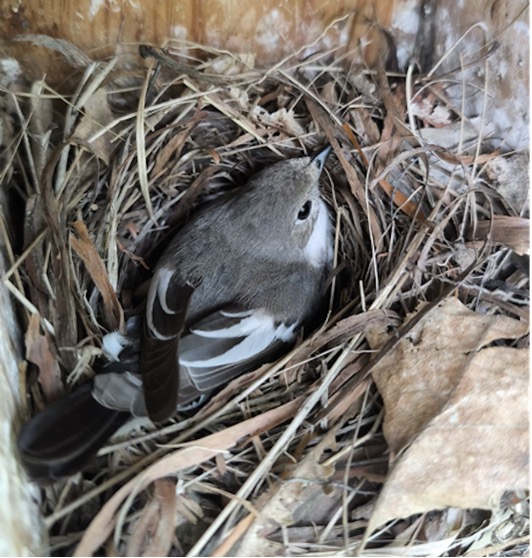 Figure 1. An incubating female Pied Flycatcher (Ficedula hypoleuca) at the study site in Valsaín © Alejandro Cantarero.
To test these ideas, our research team conducted an experiment in a wild population of the European Pied Flycatcher (Ficedula hypoleuca) (Figure 1) breeding in the oak forests of Valsaín, Spain.
During the late incubation stage, we injected a group of females with lipopolysaccharide (LPS), a compound that activates the immune system and simulates a bacterial infection without causing actual disease. A second control group of females received a neutral saline solution. Using video recordings, we closely monitored the incubation behaviour of the females.
The results revealed a fascinating behavioural adjustment during incubation. The females that received the immune challenge did not abandon their nests. Instead, they modified their strategy: they performed shorter but more frequent incubation sessions. In other words, they left the nest more often, but for shorter periods each time.
These changes in incubation behaviour allowed egg temperature to remain remarkably stable despite the females’ compromised physiological condition. The most surprising result emerged at the end of the breeding season: broods from females that had faced the immune challenge showed higher fledging success (the proportion of chicks that successfully leave the nest) compared to those of the healthy control group (Figure 2).
 Figure 2. A visual comparison of fledging success of broods from females subjected to an immune challenge (LPS) versus control females. From Barreda et al. 2026.
This pattern strongly supports the “terminal investment hypothesis”. When confronted with a perceived threat to survival, Pied Flycatcher females appear to have increased their reproductive effort, prioritising the success of their current offspring – even at a potential cost to their own future recovery or survival.
Overall, this study highlights the incredible plasticity of avian parental strategies. Birds can dynamically adjust their behaviour in response to environmental and physiological challenges, thereby enhancing reproductive success and contributing to the persistence of their species even under challenging conditions.
Further Reading
Bonneaud, C., Mazuc, J., Chastel, O., Westerdahl, H., & Sorci, G. 2004. Terminal investment induced by immune challenge and fitness traits associated with mayor histocompatibility complex in the house sparrow. Evolution. 58:2823–2830.VIEW
García-del Río, M., Merino, S., Chércoles-Nieto, J., Baldan, D., Fuertes-Recuero, M. & Cantarero, A. 2025. Experimental evidence that blood parasite infection affects incubation patterns in a cavity-nesting songbird. Integrative Zoology.VIEW
Owen-Ashley, N.T. & Wingfield, J.C 2007. Acute phase responses of passerine birds: characterization and seasonal variation. Journal of Ornithology. 148:583–591.VIEW
Image credit
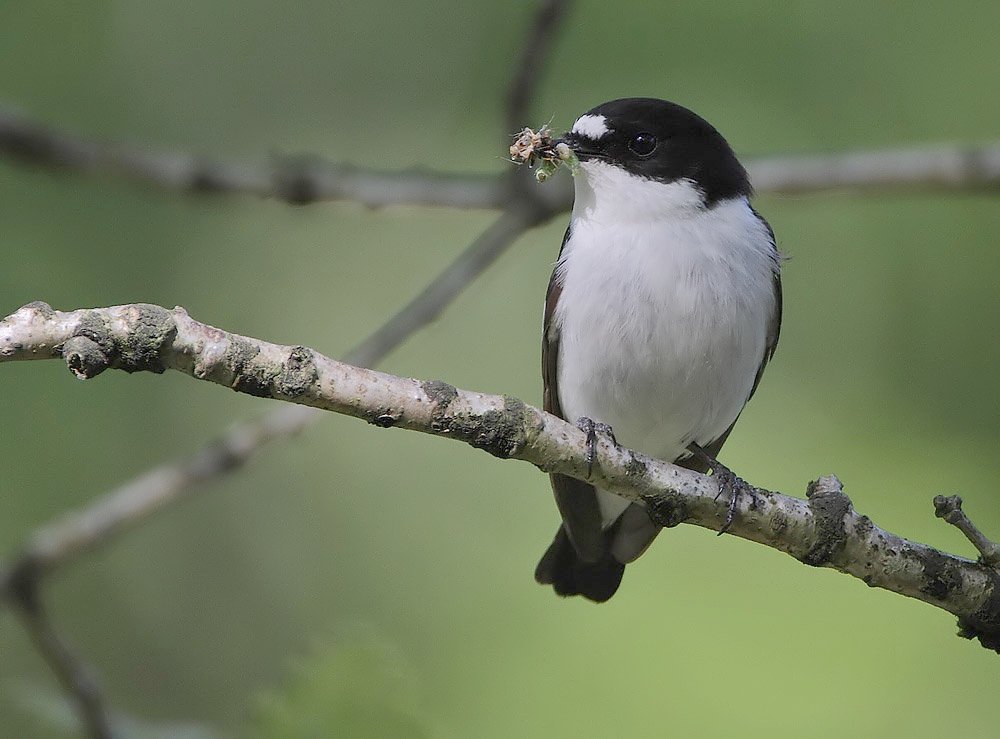
Top right and featured image: Pied Flycatcher (Ficedula hypoleuca) © Steve Garvie | CC BY-SA 4.0 Wikimedia Commons