


LINKED PAPER Isotopic assignment to origins of Eurasian Woodcock wintering in Britain and Ireland. Powell, A, van Wilgenburg, S.l., Newton, J., Aebischer, N.J., Gosler, A.G. & Hoodless, A.N. (2026) Ibis. VIEW
The conservation of migratory birds relies on a good understanding of the links between breeding, stopover and non-breeding locations so that pressures and habitat requirements at different points in the lifecycle can be addressed. This is particularly important for species which are hunted. There is a tradition of hunting migratory geese, ducks and waders in Europe, however, we have poor estimates of the population sizes and breeding origins of some species. The Eurasian Woodcock (Scolopax rusticola) is a widely hunted species for which there is limited knowledge, owing to its cryptic plumage and largely nocturnal activity during migration and wintering periods.
Approximately 96% of the European population breeds in Scandinavia, Finland, the Baltic States and Russia. In winter (December to mid-March), the population is primarily concentrated in Britain, Ireland, France, northern Spain, Italy and Greece. The annual European hunting bag is estimated to be at least 1,257,500 Woodcock, with the UK bag estimated at 140,000 (Hirschfeld et al., 2019). Until recently, the European population was considered stable, but it is now thought to be declining owing to a lower index trend in Russia, and evidence of reduced breeding populations in Britain and Switzerland (Heward et al., 2024).
The Woodcock in Britain presents a contradiction, being both red-listed as a Bird of Conservation Concern (since 2015) yet also a quarry species outside the breeding season. In the early 2000s, the Game & Wildlife Conservation Trust (GWCT) identified a need to better monitor our resident population and Woodcock habitat requirements, but also to understand the numbers and origins of migrant Woodcock wintering in Britain and Ireland. This led to the development of a bespoke survey method for breeding Woodcock, and national surveys and annual monitoring in collaboration with the British Trust for Ornithology (Heward et al., 2024).
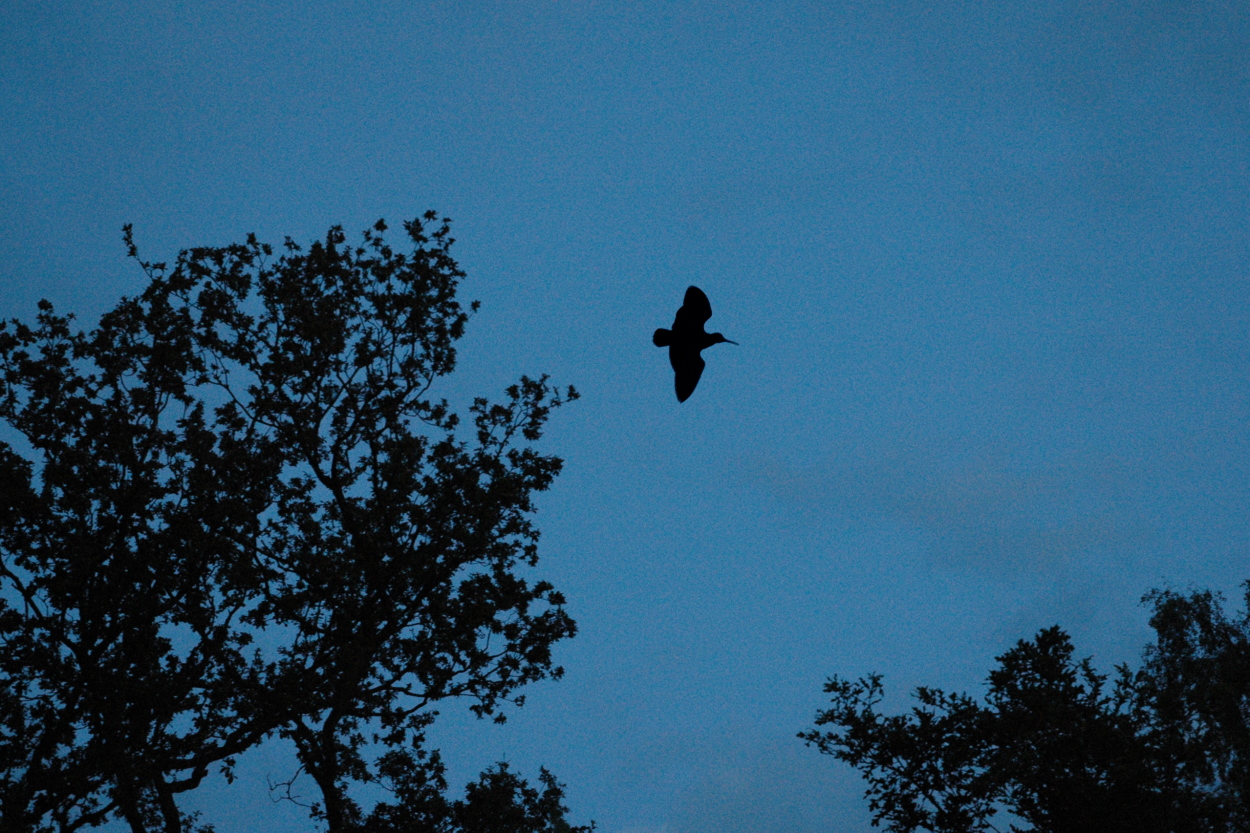 Figure 1. Male Eurasian Woodcock perform a distinctive ‘roding’ courtship flight and counts of passes at fixed points in woodland form the basis of the national breeding survey. © Andrew Hoodless.
In the early 2010s we started satellite tracking migrant Woodcock which provided valuable insights into migration timing and routes (Hoodless & Heward 2019). It showed that Woodcock are very faithful to breeding and wintering sites, raising questions about the potential impact of hunting on populations. However, owing to concern about hunting as a factor in declines of resident breeding Woodcock, we needed a way of estimating the proportion of resident Woodcock in hunting bags as a starting point for assessing impact.
Ring recoveries have provided broad insights into Woodcock breeding origins, but are biased by temporal and spatial changes in ringing and hunting effort between countries. Stable isotope analysis provides an alternative method for determining migratory origins and an unbiased, contemporary insight. It utilizes the fact that animal tissues reflect the isotopic conditions in which they were produced. Hydrogen isotope ratio measurements (proportion of protium 1H to deuterium 2H) of feathers have proven useful owing to large-scale predictable patterns in the ratio of hydrogen isotopes in rainfall across continents. Following pioneering studies in North America in the 1990s, they have now been used to infer the origins of migratory passerines in North America and Europe, and also to delineate the origins of hunted birds (Kelly et al., 2002; Jiguet et al., 2019).
Hydrogen isotope analysis is well suited to determining Woodcock origins because the species is a specialist invertebrate feeder, whose diet comprises a large proportion of earthworms, and it has a single annual moult on the breeding grounds. Britain and Ireland are also at the western edge of the global range, with the main breeding grounds lying to the north-east on a similar axis to that of the gradient in hydrogen isotopes in rainfall across Europe.
We were able to determine the relationship between feather and rainwater hydrogen isotope ratios by obtaining Woodcock feather samples from across Europe during the breeding season. This work comprised part of a collaborative PhD study and using this calibration, we were able to create a feather isotope gradient map or ‘isoscape’ for estimating breeding origins of Woodcock sampled in winter. Geographic assignment using isotope ratio alone is crude, so we calculated the probability of occurrence in 30-km grid cells by incorporating information on Woodcock abundance from the European Breeding Bird Atlas 2. Results from 1122 samples collected across six wintering regions spanning Scotland to Ireland to Norfolk, showed broad-front migration of Woodcock to Britain and Ireland but parallel migration routes from across the breeding range. The main breeding grounds for Woodcock wintering in Britain and Ireland spanned southern Norway, Sweden and Finland, and Estonia, Latvia, Belarus and western Russia.
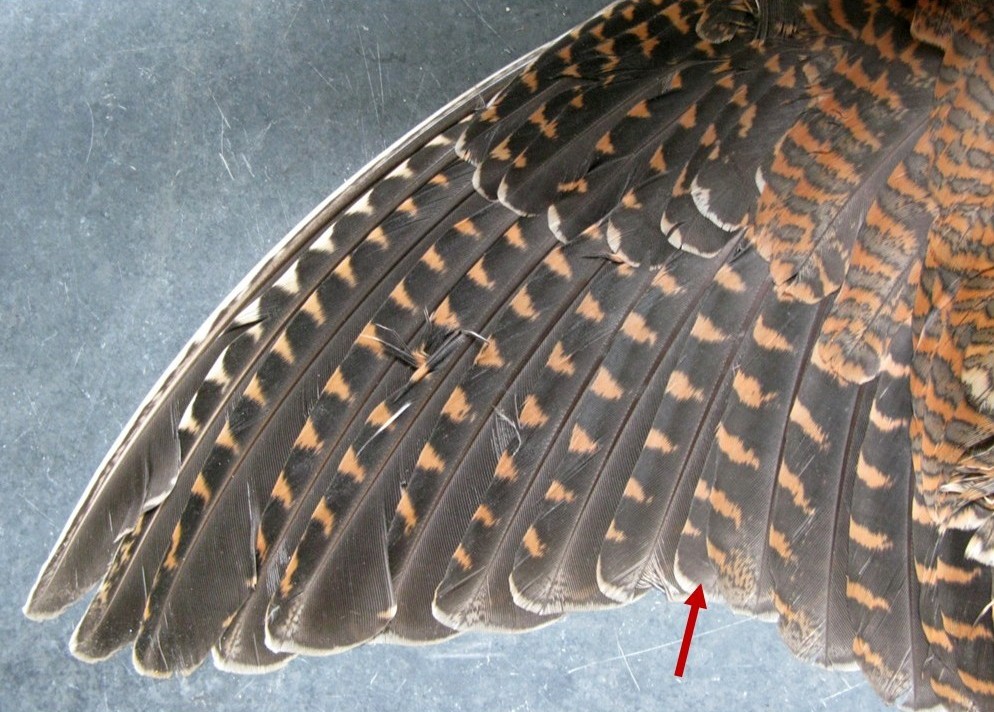 Figure 2. Once the relationship between feather and rainfall hydrogen isotope values across European breeding grounds had been established, samples were taken from the distal tip of the innermost primary of Woodcock shot in winter. © Andrew Hoodless.
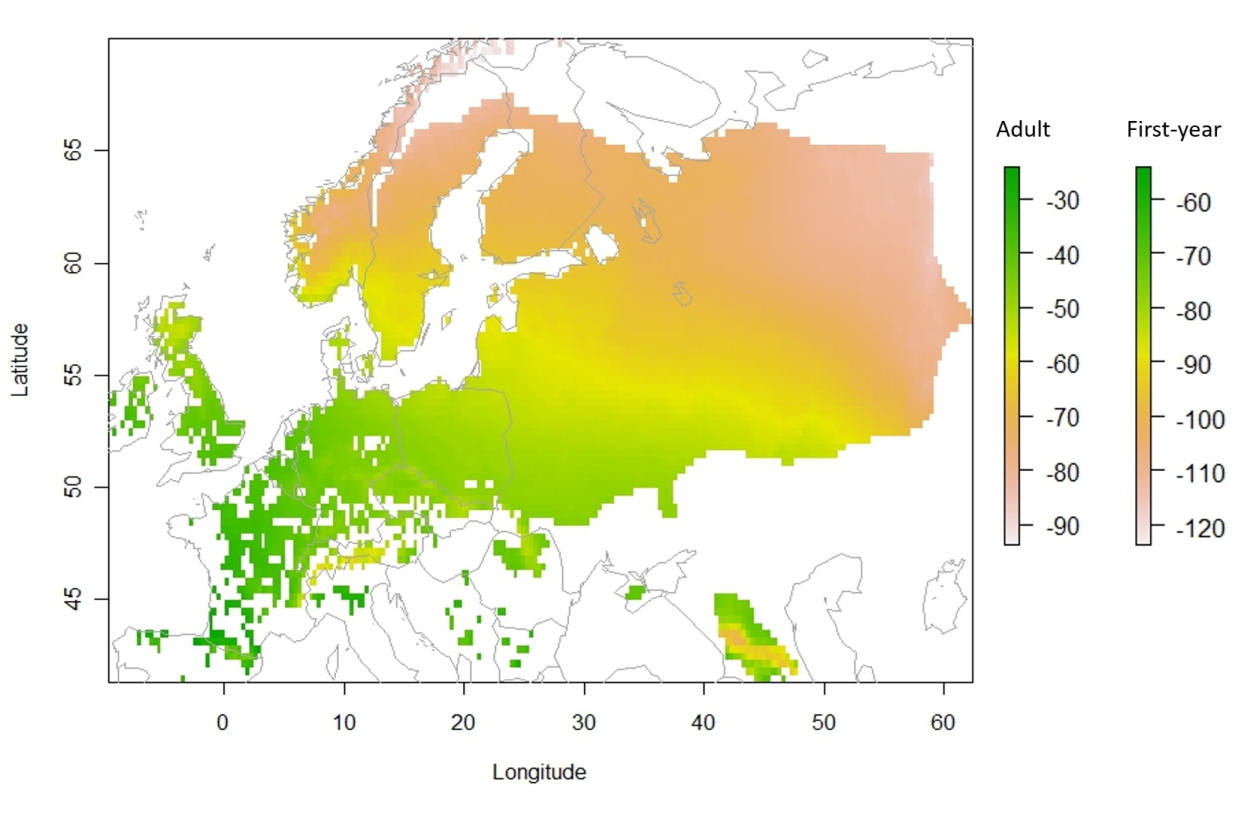 Figure 3. An isoscape calibrated to Woodcock feather hydrogen isotope values. Separation of first-year and adult birds was important for correct assignment owing to an age-related difference in the time of feather growth.
We could differentiate between resident and migrant Woodcock with reasonable confidence based on the feather isotope values, and estimated the proportion of resident Woodcock shot during mid-November to January to be 10%. Resident Woodcock were shot in all six study regions, including those where Woodcock have not historically bred, confirming movement of resident Woodcock from northern England and Scotland as previously indicated by ring recoveries. As such, we cannot assume that there is no impact on resident Woodcock from shooting in areas like Cornwall and west Wales where they do not currently breed.
Our study highlights the value of using emerging techniques and technology to address difficult and controversial conservation questions. Further information on Woodcock ecology and hunter behaviour are required before population and harvest models can be developed. However, since we found that large numbers of migrant Woodcock do not start arriving in Britain and Ireland until the second and third weeks of November, a simple measure to immediately help reduce the impact of hunting on residents is to delay shooting until December (the season currently starts on 1 September in Scotland, 1 October in England and Wales, and 1 November in Ireland). The GWCT has advocated this since 2018 and this year Defra proposed statutory changes to the start of the Woodcock season in Scotland (15 November), and England and Wales (1 December). We hope further research will pave the way for an adaptive management approach to hunting regulation.
References
Heward, C.J., Conway, G.J., Hoodless, A.N., Norfolk, D. & Aebischer, N.J. 2024. Population and distribution change of Eurasian Woodcocks Scolopax rusticola breeding in the UK: results of the 2023 Breeding Woodcock Survey. Bird Study 79:109-123.VIEW
Hoodless, A.N. & Heward, C.J. 2019. Migration timing, routes, and connectivity of Eurasian Woodcock wintering in Britain and Ireland. Proceedings of the American Woodcock Symposium 11:136-144.VIEW
Hirschfeld, A., Attard, G. & Scott, L. 2019. Bird hunting in Europe: an analysis of bag figures and the potential impact on the conservation of threatened species. British Birds 112:153-166.VIEW
Hirschfeld, Jiguet, F., Robert, A., Lorrillière, R. , Hobson, K.A. , Kardynal, K.J., Arlettaz, R., Bairlein, F., Belik, V., Berndardy, P., Copete, J.L., Czajkowski, M.A., Dale, S. , Dombrovski, V., Ducros, D., Efrat, R., Elts, J., Ferrand, Y., Marja, R., Minkevicius, S., Olsson, P., Pérez, M., Piha, M., Raković, M., Schmaljohann, H., Seimola, T., Selstam, G., Siblet, J.P., Skierczyński, M., Sokolov, A., Sondel, J., & Moussy, C. 2019. Unravelling migration connectivity reveals unsustainable hunting of the declining ortolan bunting. Science Advances 5:eaau2642.VIEW
Kelly, J.F., Atudorei, V., Sharp, Z.D. & Finch, D.M. 2002. Insights into Wilson’s warbler migration from analyses of hydrogen stable isotope ratios. Oecologia 130:216-221.VIEW
Image credit
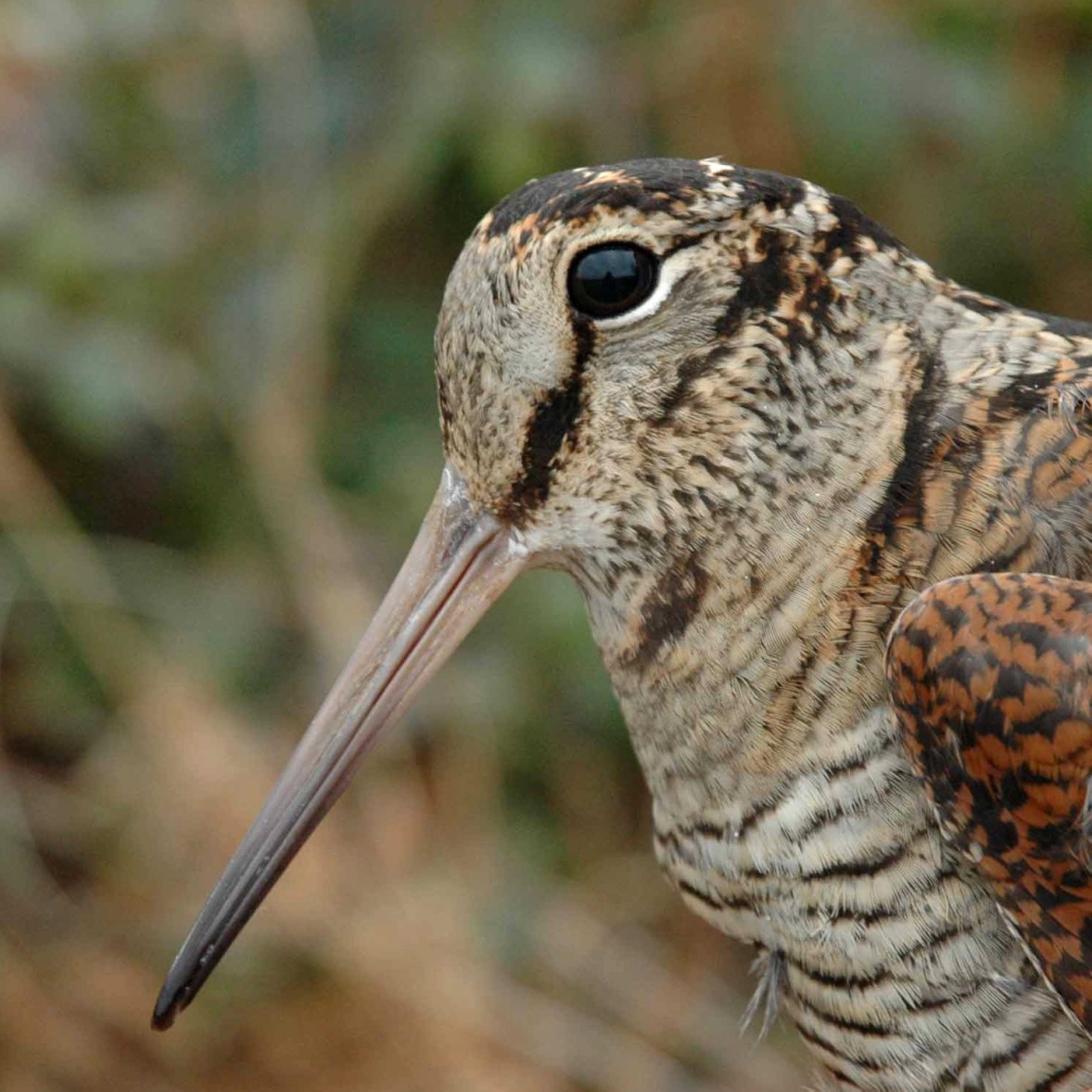
Top right and featured image: Eurasian Woodcock (Scolopax rusticola) © Andrew Hoodless.