


Report from a BOU Summer Placement Bursary
This summer, I had the opportunity to investigate the feasibility of a Dalmatian Pelican (Pelecanus crispus) reintroduction to England via the BOU Summer Placement Scheme. I was excited to contribute to this important research, which will play a critical role in reintroduction planning, with supervision from PhD student Lucia Snyderman at the University of Reading and Institute of Zoology, Dr William Mills at the University of Reading, and Prof Samuel Turvey at the Institute of Zoology.
The Dalmatian Pelican
Dalmatian Pelicans are predominantly found in southeastern Europe and parts of east-central Asia, and the species is currently classified as “Near Threatened” by the IUCN Red List (Catsadorakis, 2024). They are one the largest freshwater birds in the world, with a wingspan of over 3m and bills that turn bright orange during breeding season! They typically occur in wetlands or estuarine habitats and require a substantial number of fish for foraging (up to 1.5 kg a day). Today, Dalmatian Pelicans face many anthropogenic threats, including wetland drainage, human disturbance, power line collisions and persecution (Catsadorakis & Portolou, 2018).
Zooarchaeological evidence (e.g., pelican bones found in archaeological sites) indicates that they were present in the Somerset Levels and East Anglian Fens around ~3000 years ago. The earliest records of pelicans in these regions date to the Bronze and Iron Ages, but there is no evidence for their survival beyond the Roman period (though no specimens are directly dated). Bones of juvenile Dalmatian Pelicans have been found at both sites, confirming that the species once bred in England and strengthening the case for a potential reintroduction (Figure 1; Crees et al., 2023). There has been increasing interest in reintroducing pelicans to England, which may encourage large-scale wetland restoration and create an avenue for future rewilding initiatives. There are, however, many uncertainties regarding their former presence and local extinction dynamics, which my co-supervisor Lucia Snyderman, is currently investigating through her PhD. This knowledge is essential for accurately informing a possible reintroduction to England and evidence-based conservation actions.
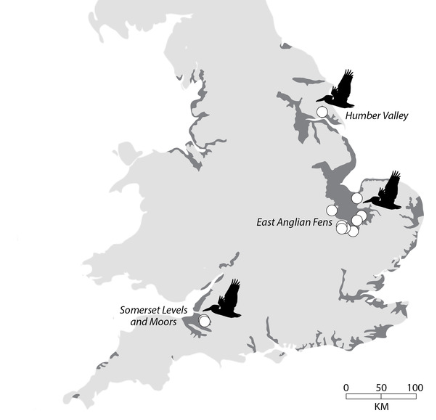 Figure 1. Wetland locations across England from which Dalmatian Pelican bones have been recovered (image from Crees et al., 2023).
Project background
My BOU Summer Placement aimed to investigate the ecological requirements of a successful Dalmatian Pelican reintroduction to England using population viability analysis (PVA). My main questions included: (1) How many pelicans are needed to establish a breeding population? (2) What management actions would improve the chances of success? (3) What might be suitable locations for a potential reintroduction? These questions create a baseline for reintroduction planning and management.
To address these questions, I performed PVA, a method used in conservation to determine population trends and extinction probabilities of a reintroduced population over time using species life-history information (e.g., longevity, reproductive rates). For example, a PVA study on a reintroduced population of white storks in the Knepp estate (West Sussex), found that existing birds would have higher growth rates if management actions were implemented. Alternatively, they found that a small proportion of storks overwintering in the UK could also lead to similar results. These insights are essential for understanding population trends and increasing the success of species reintroductions (Mayall et al., 2023).
In the first week of my placement, I visited the Wildfowl and Wetlands Trust (WWT) at Slimbridge along with my co-supervisors to meet with a team of conservation breeding and rewilding experts, which allowed us to co-develop a plan to generate useful data to inform reintroduction planning. During my placement, I also had the opportunity to visit the WWT site at Arundel to see captive pelicans and learn about their life in captivity from the keepers and vets. This was also a great excuse to see Dalmatian pelicans for the very first time with my co-supervisor, Lucia. It was incredible to see them and appreciate truly how large their wingspan is! (Figures 2a & b).
 Figure 2a. Captive Dalmatian pelicans at Wildfowl and Wetlands Trust (WWT) site at Arundel © Lucia Snyderman.
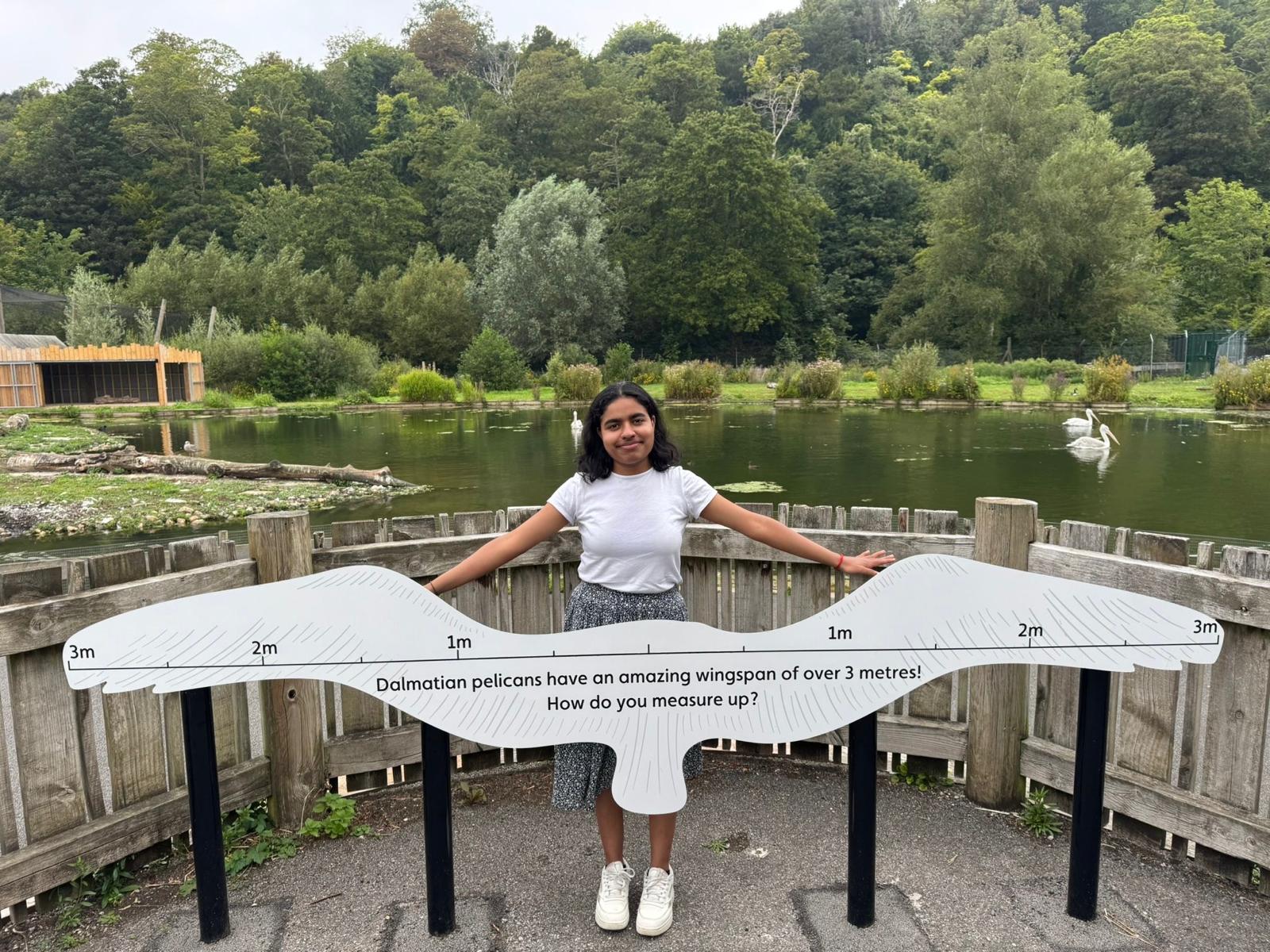 Figure 2b. Wingspan comparison with Dalmation Pelican cut-out © Lucia Snyderman.
Methods
I performed PVA using Vortex to determine likely population trends under different pelican reintroduction scenarios (Lacy, 1993). First, I gathered data on pelican life-history from extant populations and experts. Next, I modelled the reintroduction of 20 pelican chicks to examine their survival and growth over 100 years. After this, I modelled the impact of adding 20 more pelicans each year as “supplementation” over 5, 8, and 10 years to assess whether it improved the model. That is, in each scenario, the initial 20 chicks were followed by yearly additions of 20 more for periods of 5, 8, or 10 years. Finally, I also modelled how management actions (i.e., providing nesting platforms, reed beds, and nourishment) might impact survival. This was modelled as decreased mortality and higher breeding success. This framework will provide us with insights into how populations may fare under different scenarios, help us identify which management strategies are likely to maximise reintroduction success and support decision-making.
The importance of conservation intervention
Several Dalmatian pelican colonies in Europe have shown promising results in response to implementing nesting platforms and pelican decoys to facilitate breeding (Rewilding Europe, 2025). Greece, for instance, is home to one of the largest Dalmatian pelican colonies (~2000 breeding pairs), accounting for almost a third of the world’s Dalmatian pelican population. This is a huge increase from the 1970s, when the population size was as small as 100! (Catsadorakis et al., 2024).
Successful conservation initiatives like this show that, with careful planning and management actions, a reintroduction may be feasible. However, more research on their extinction, former ecology, and reintroduction sites is essential for decision-making. Our work demonstrates that an interdisciplinary approach, combining palaeobiology, conservation breeding, population modelling, and bringing together a team of people across disciplines, is necessary to make an evidence-based decision regarding a Dalmatian pelican reintroduction to England and guide reintroduction planning.
Conference presentation
In December, I attended the British Ecological Society’s Annual Meeting held in Edinburgh, where I had the opportunity to present a poster on my findings and discuss the results with ecologists. I also gained an insight into fascinating ecological research around the world, across a range of disciplines.
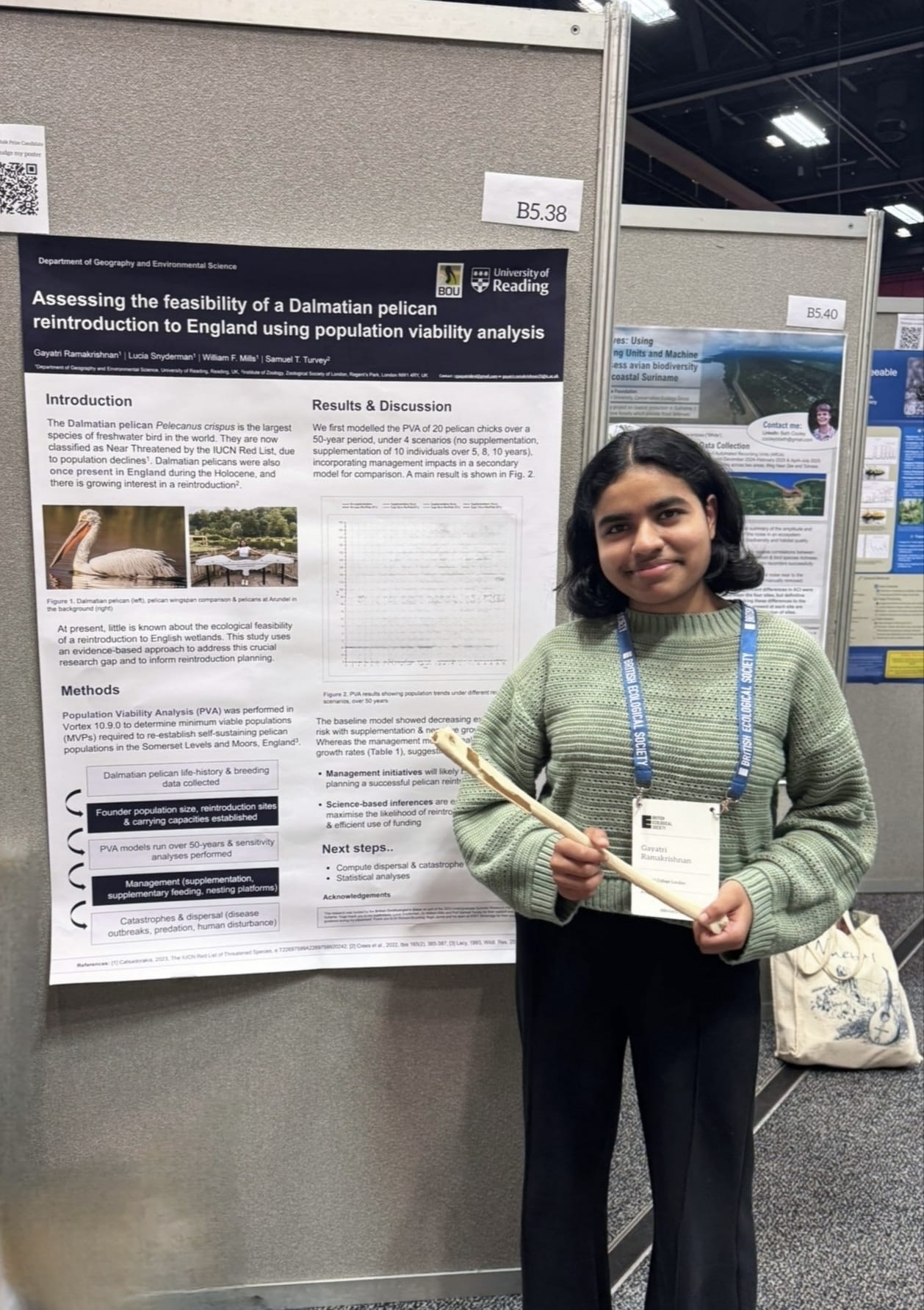 Figure 3. Author with her BES poster, which she presented in December (she is holding a 3D-printed pelican ulna) © Lucia Snyderman.
What’s next?
I am working on more complex PVA models (incorporating catastrophes, predation etc.) and preparing a manuscript for publication. Stay tuned for our results!
Acknowledgements
I am grateful to have received funding from the British Ornithologists’ Union Summer Placement Scheme for the opportunity to contribute to this research, which wouldn’t have been possible otherwise! I would also like to thank my supervisors, Lucia Snyderman, William Mills, and Samuel Turvey for their guidance and collaborators at WWT Slimbridge and Arundel for their support.
References
Catsadorakis, G. 2024. Pelecanus crispus (Green Status assessment). The IUCN Red List of Threatened Species 2024 :e.T22697599A2269759920251. Accessed on 15 August 2025.
Catsadorakis, G., Alexandrou, O., Hatzilacou, D., Kasvikis, I., Katsikatsou, M., Konstas, S., Malakou, M., Michalakis, D., Naziridis, T. & Nikolaou, H. 2024. The Breeding colonies, population growth and breeding success of the Dalmatian pelican Pelecanus crispus in Greece: a country-wide perspective, 1967-2021. European Journal of Ecology 10:3-13.VIEW
Catsadorakis, G. & Portolou, D. 2018. International single species action plan for the conservation of the Dalmatian Pelican (Pelecanus crispus). CMS Technical Series No. 39, AEWA Technical Series No. 69. EAAFP Technical Report.
Crees, J. J., Oxley, V. A., Schreve, D. C. & Turvey, S. T. 2023. Challenges for incorporating long‐term baselines into biodiversity restoration: A case study of the Dalmatian Pelican (Pelecanus crispus) in Britain. IBIS 165:365-387.VIEW
Lacy, R. C. 1993. VORTEX: a computer simulation model for population viability analysis. Wildlife research 20:45-65.VIEW
Mayall, E., Groves, L., Kennerley, R., Hudson, M. & Franco, A. 2023. Demographic consequences of management actions for the successful reintroduction of the White Stork Ciconia ciconia to the UK. Bird Conservation International 33:e47.
Rewilding Europe 2025. Rewilding efforts lay foundations for Dalmatian pelican comeback in Europe. Rewilding Europe. Accessed 15 August 2025. VIEW
Image credit
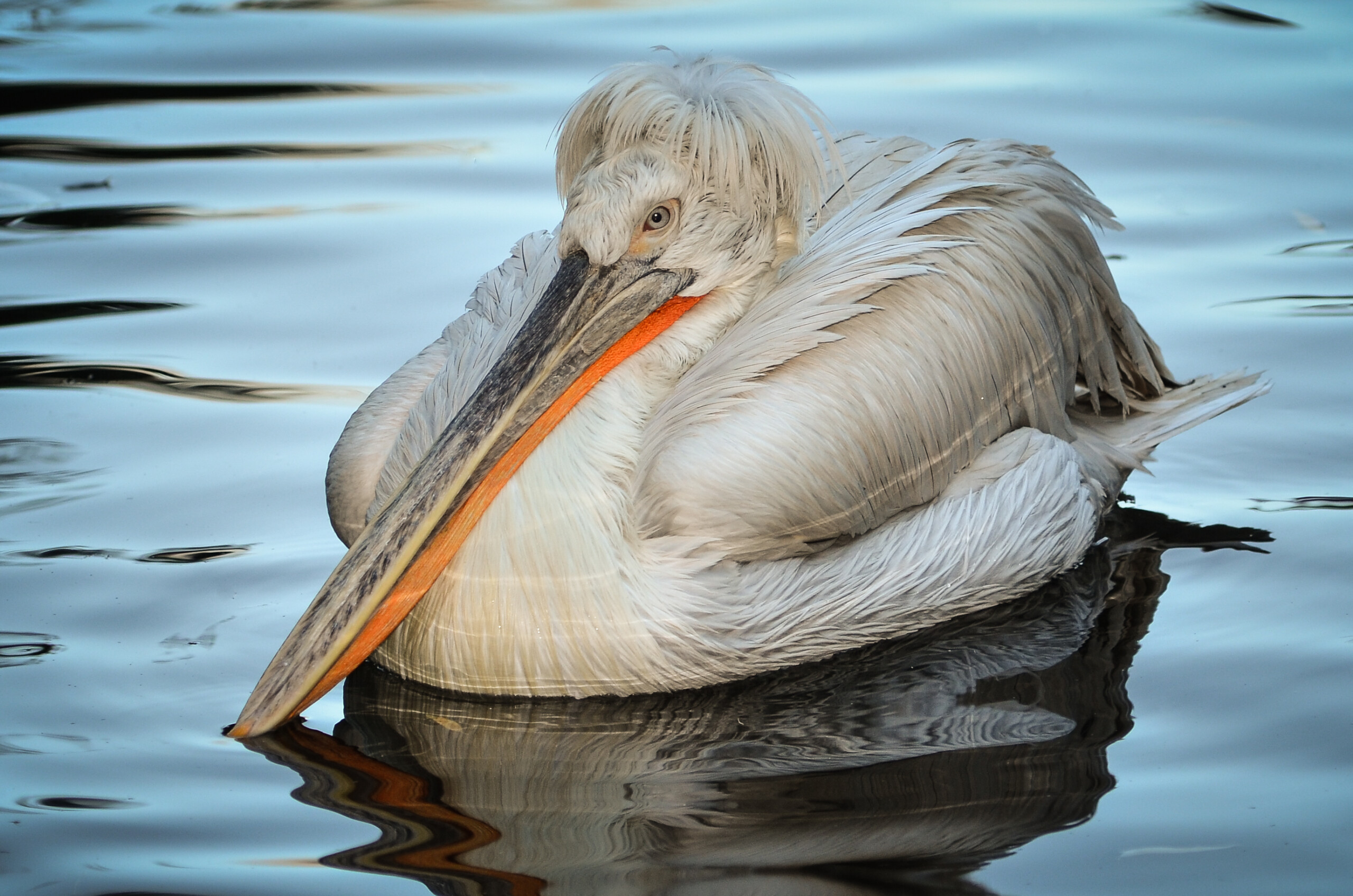
Top right and featured image: Dalmatian Pelican (Pelecanus crispus) on a fall afternoon © Olaf Oliviero Riemer | CC BY-SA 4.0 Wikimedia Commons.