

LINKED PAPER Mate choice cues in long-lived monogamous Oriental Storks. Deguchi, T., Naito, K., & Ohsako, Y. (2026) Ibis. VIEW
Mate choice in long-lived, monogamous birds has long attracted considerable research interest because of its potential consequences for lifetime reproductive success. However, studying mate choice presents a fundamental challenge. Many bird species exhibit natal philopatry — the tendency to return to or remain near their birthplace when they begin breeding. As a result, observed pairing patterns may simply reflect which individuals are most likely to encounter one another, rather than active preferences for particular mates.
To address this issue, we developed an approach that accounts for this encounter bias by weighting potential pairings according to an exponential probability distribution. This reflects the expectation that individuals born closer to one another are more likely to encounter each other and form a pair. By incorporating this spatial bias into the analysis, we sought to determine whether pairing patterns that cannot be explained solely by natal philopatry could be accounted for by other factors.
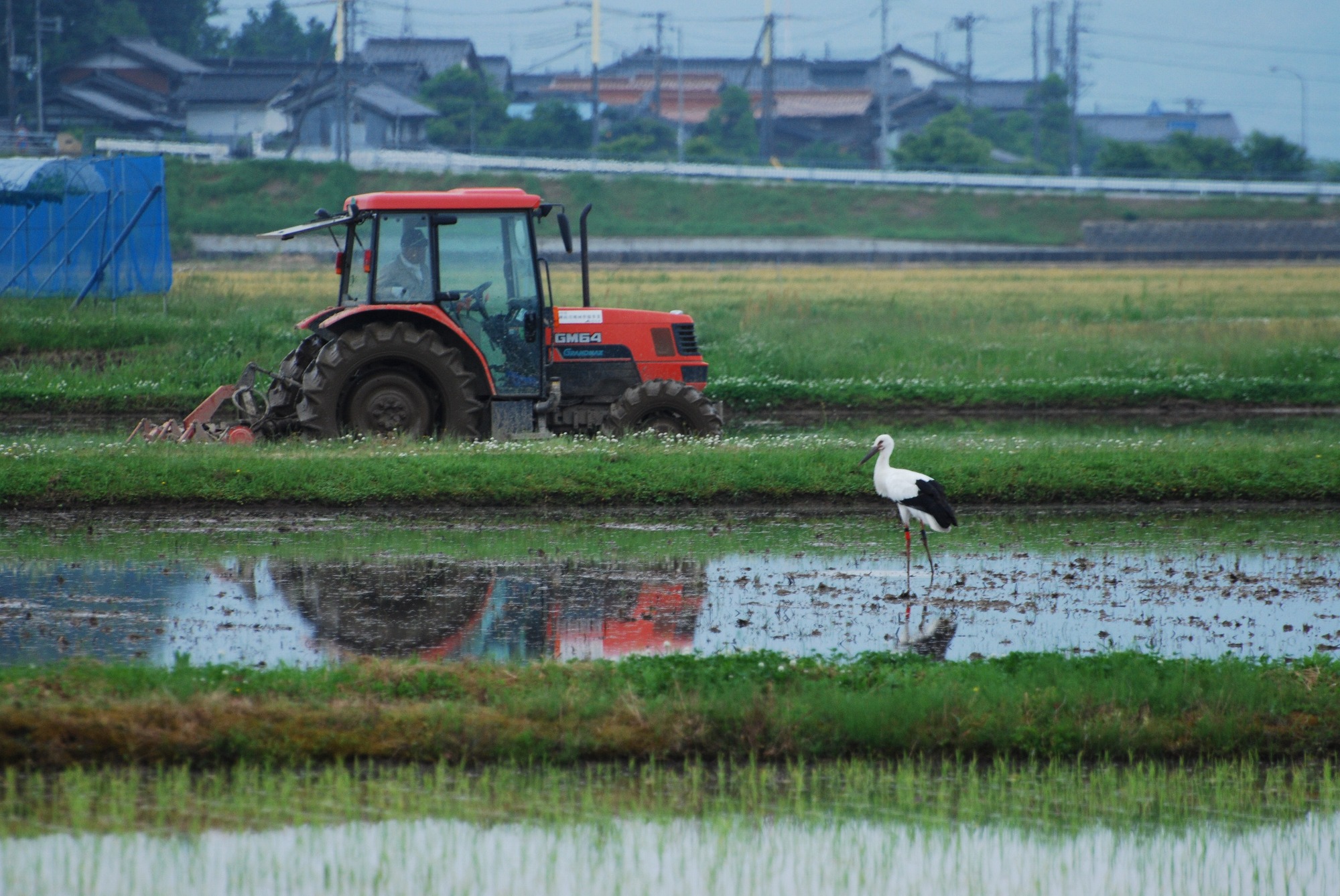
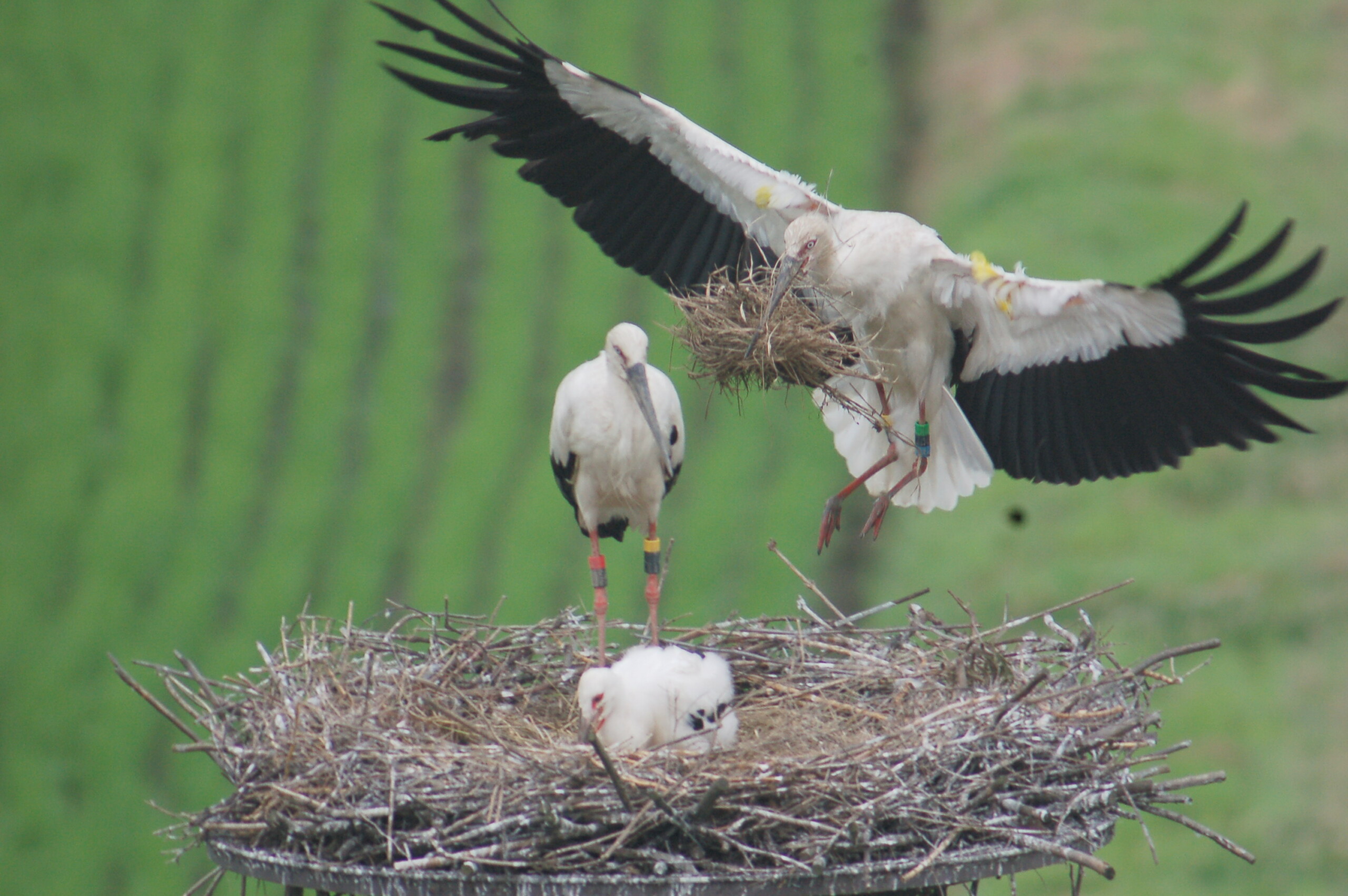 Figure 1. Oriental Stork (Ciconia boyciana) reintroduced to Japan in 2005. © Hyogo Park.
For this study, we focused on the Oriental Stork (Ciconia boyciana, Figure 1), a species that was reintroduced to Japan beginning in 2005. This population provides a particularly valuable opportunity to study pairing behavior in the wild. Nearly all individuals are fitted with leg bands, and members of the public regularly report sightings of marked birds. As a result, we have accumulated extensive information on where and when individuals are observed, allowing us to identify breeding locations and timing with considerable precision. These data revealed that Oriental Storks are long-lived birds (50% survival period: approximately 10 years) with strong pair bonding (the annual divorce rate is almost zero, excluding cases of partner injury or death). In addition, the parentage of offspring is known, providing detailed information on the pedigree relationships among individuals.
Our analysis of data collected through 2023 showed that the influence of natal philopatry on pair formation was substantial until 2014 when release sites were concentrated within a relatively small area. However, this influence became negligible from 2015 when release sites were separated by more than approximately 100 km. Next, we examined two factors that have frequently been considered in studies of avian mate choice: age and relatedness (Figure 2) while accounting for the encounter bias. We found that individuals were more likely to pair with partners of similar age, while also tending to avoid pairing with closely related individuals.
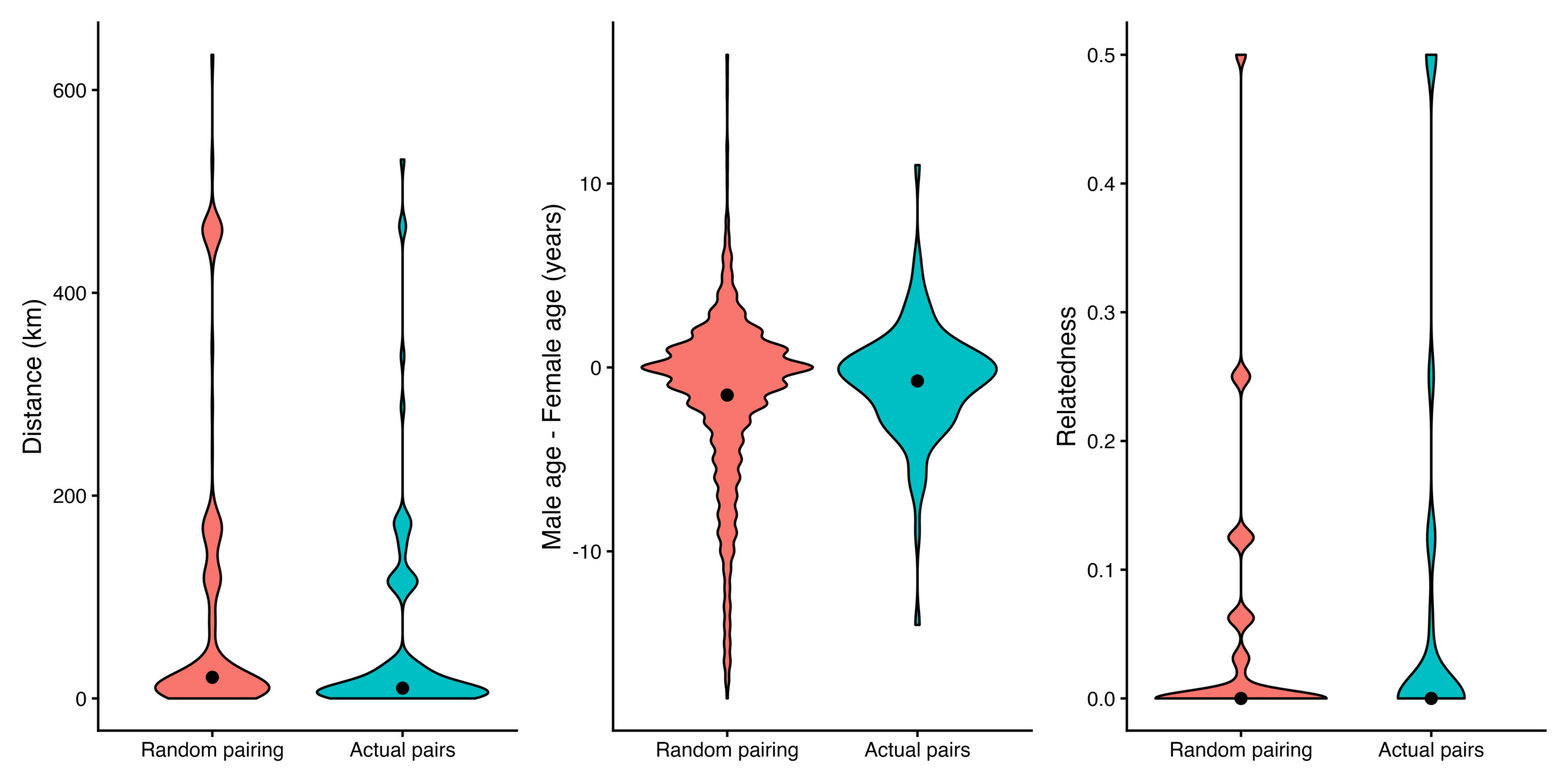 Figure 2. Pairwise geographic distances (km) between the birthplaces or release sites (left), age differences (male age minus female age) (centre) and relatedness values (right) of breeding-age males and females (random pairing) and actual breeding pairs of reintroduced Oriental Storks in 2005 to 2023. Distributions are displayed as violin plots reflecting the density of pairwise values, with the black dots representing the median for distances and relatedness values, and mean for age differences. Encounter bias is not taken into account regarding the age differences and relatedness values shown in this figure.
These results do not, by themselves, demonstrate that age similarity and genetic dissimilarity are the primary drivers of mate choice in reintroduced Oriental Storks. In this study, the relatedness value used was a pedigree-based expectation that did not consider genomic similarity. Nevertheless, they suggest that pairing patterns in this population cannot be fully explained by natal philopatry alone.
The findings also have potential implications for conservation. For example, supplementing the population with males of reproductive age and maintaining sufficient spatial separation between release sites may help promote opportunities for pairing and potentially contribute to the long-term viability of the reintroduced population.
This study is only a first step toward understanding how Oriental Storks form pairs. In future research, we hope to investigate in greater detail how age, genetic similarity, and other individual characteristics influence mate choice and reproductive success in this recovering population. For example, future studies should examine the major histocompatibility complex region and whole genome differences between the actual pair partners.
Image credit
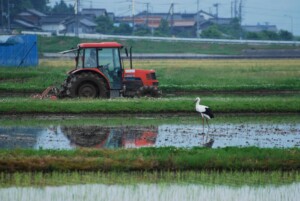
Top right and featured image: Oriental Stork in field in Japan. © Hyogo Park.