


LINKED PAPER Are morphometric traits cryptic indicators of sexual size dimorphism in ‘monomorphic’ species? Evidence from the King Vulture (Sarcoramphus papa). Basso, E., Vergara-Amado, J., Wicks, S., Flatt, E., Rolim Chulla, D., Perez Mullisaca, F.M., Quispe Quispe, C.J., Delgado, R., Whitworth, A., Verdugo, C. & Beirne, C. (2026) IBIS.VIEW

Sex differences in animals — such as body size, coloration, or ornamentation, a phenomenon known as sexual dimorphism — and their links to ecology, conservation, and evolution have long intrigued scientists. In birds, sexual dimorphism often appears as differences in size, plumage colour, or ornamental traits (Owens & Hartley, 1998). In most groups, males are slightly larger, although in some species females are larger, a pattern known as reverse sexual dimorphism (Mueller, 1990). In many species, however, these differences are so subtle that they cannot be detected with the human eye, and the sexes are therefore considered similar.
This is the case for the King Vulture (Sarcoramphus papa), an enigmatic and striking medium-sized Neotropical vulture. Although slight size differences have been suggested, males and females appear largely alike, and their distinctive head ornamentation shows no consistent variation between sexes. As a result, the species has long been considered monomorphic (Holste et al., 2020), with no obvious sexual differences visible at a glance. Yet, due to limited research on this species, whether King Vultures truly lack sexual dimorphism has remained unresolved — offering an opportunity to test long-standing assumptions.
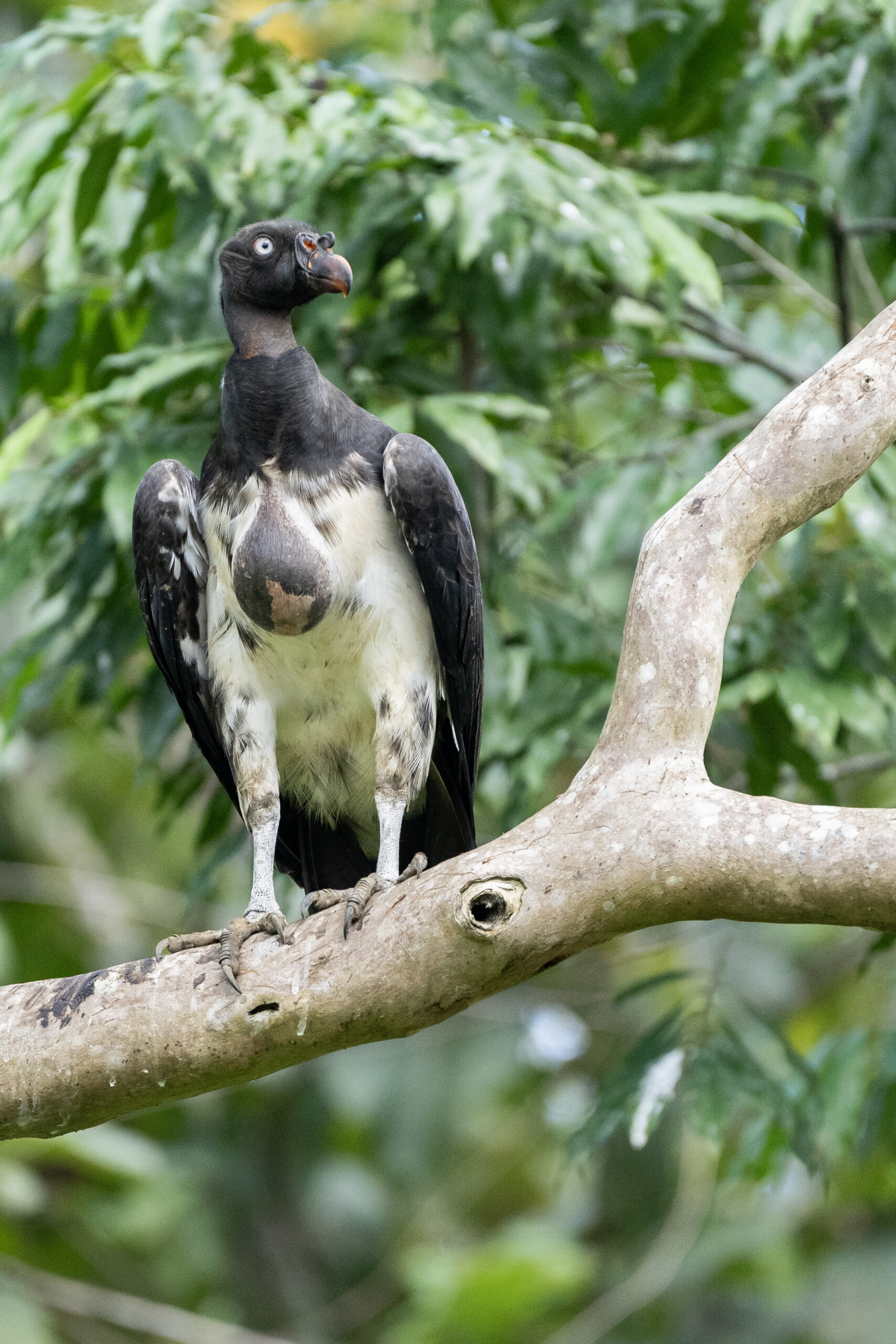 Figure 1. An immature King Vulture (approximately 2–3 years old) perched after feeding on a carcass, with a visibly distended crop © Enzo Basso.
To test whether King Vultures really lack sexual dimorphism, we combined molecular sexing with detailed morphometric measurements from wild birds. Between December 2022 and March 2024, the Osa Conservation research team captured 48 individuals across three sites in Costa Rica and Peru as part of the Gordon and Betty Moore Foundation–supported project, “The Movement Ecology of Neotropical Scavenger Networks: Sentinels of Ecosystem Health and Agents of Rainforest Resource Dynamics”. Blood samples were collected to genetically determine sex, and multiple body traits were measured to evaluate whether subtle but consistent size differences exist between males and females.
Digging into the details
Using the molecular sexing results as a guide, we explored the vultures’ morphological measurements through statistical tools to evaluate whether consistent differences exist between sexes. This allowed us to detect patterns that distinguish males from females and to understand which traits carry the strongest signals of sexual dimorphism.
Overall, males tended to be larger than females, particularly in head length, bill depth, and wing length. Even though body mass was not a reliable trait on its own for distinguishing sex, on average males were about 6.4% heavier than females. Using these measurements, we built models that could predict a bird’s sex with around 81–83% accuracy. The extremes were easiest to classify: the longest heads and deepest bills corresponded to males, while smaller measurements pointed to females. Wing length contributed too, though it was the least dimorphic of the three traits and can be influenced by factors like age or feather wear.
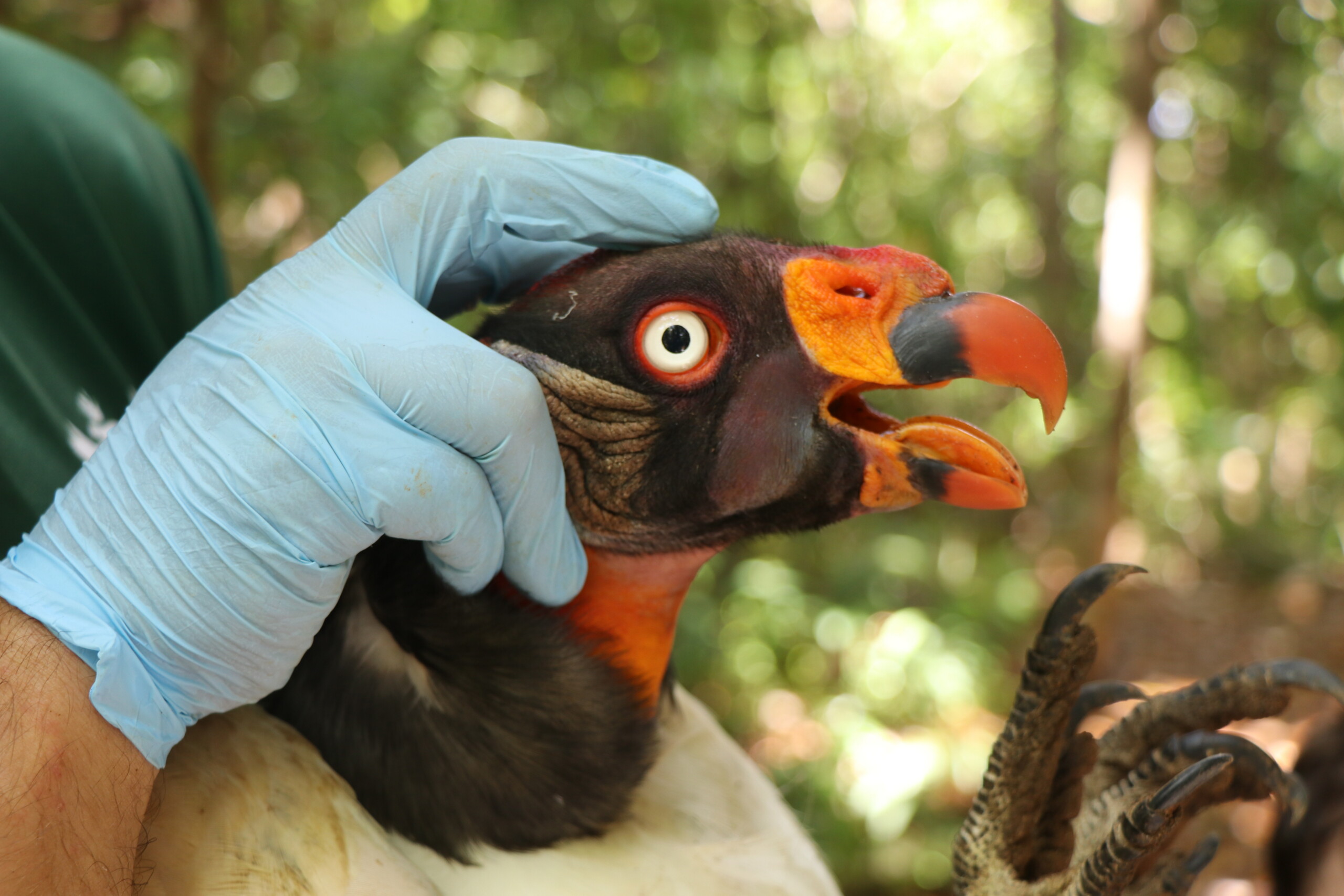 Figure 2. Close-up of the head of an adult King Vulture during morphometric measurements of cranial traits associated with sexual dimorphism © Julia Grootaers.
Why this matters
Even though King Vultures do not show obvious differences between males and females, discovering moderate sexual dimorphism is important because it opens the door for new research on this species. Until now, limited studies meant it was unclear whether King Vultures truly lack sexual differences — our study helps answer this long-standing question. In practice, it allows determining the sex of these birds in the field using simple morphometric traits with reasonable certainty. Head and bill measurements are especially useful, since a bird’s skull ossifies rapidly early in postnatal development (Plateau & Foth, 2021), limiting further growth thereafter, providing a reliable way to tell males from females regardless of age.
Being able to tell the sexes apart offers more than a practical advantage: our findings provide a baseline to explore the ecological role of traits such as coloration and head ornamentation, helping to understand how individuals interact, compete, or select mates (Donald, 2007). Identifying sex also allows conservation efforts to account for potential differences between males and females, such as variations in reproductive success or responses to environmental pressures, providing a more accurate picture of population dynamics and movement ecology. Finally, our study points to the possibility that, with the exception of the Andean Condor, cathartid vultures might exhibit subtle sexual dimorphism despite assumptions of monomorphism. Cranial traits such as head and bill size could serve as reliable cues, especially considering that cranial adaptations are critical for their scavenging lifestyle (Steinfield et al., 2024), highlighting their potential as informative traits for studying sexual dimorphism.
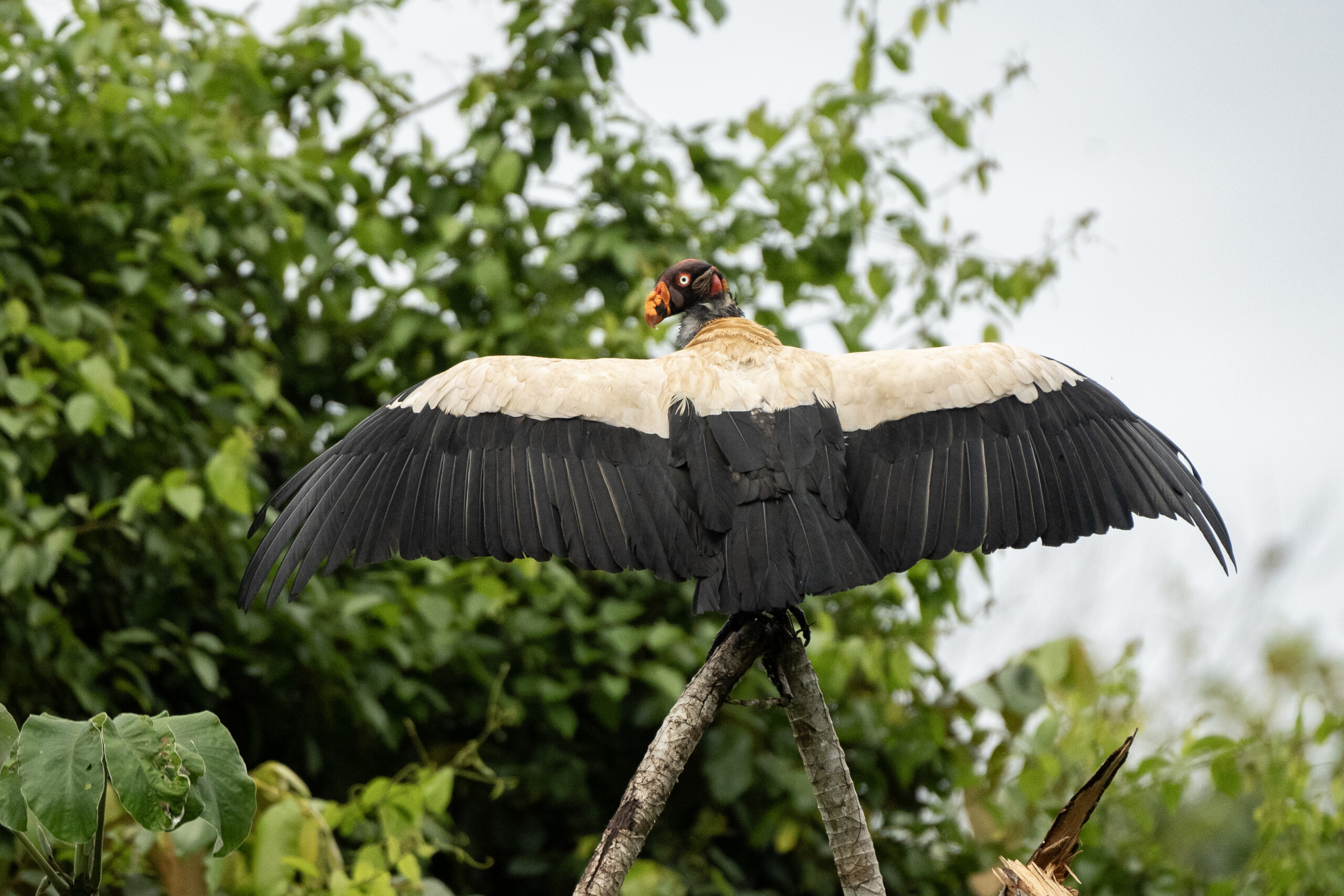 Figure 3. An adult King Vulture (over 5 years old) drying its plumage after scavenging in the rain © Enzo Basso.
Concluding thoughts
By revealing moderate male-biased size differences in King Vultures, this research challenges the long-held view of monomorphism in New World vultures and underscores the importance of detailed morphometric analysis. Even subtle traits, when carefully measured, can provide valuable insights for field identification, ecological studies, and conservation planning. Ultimately, understanding these hidden differences not only enriches our knowledge of vulture biology but also strengthens efforts to protect these iconic species in their natural habitats.
References
Donald, P.F. 2007. Adult sex ratios in wild bird populations. IBIS 149:671–692.VIEW
Holste, M., Ruth, J.M. & Eitniear, J.C 2020. King vulture (Sarcoramphus papa), version 1.0.. In: Schulenberg, T.S. (ed.), Birds of the World. Cornell Lab of Ornithology, Ithaca.
Mueller, H.C. 1990. The evolution of reversed sexual dimorphism in size in monogamous species of birds. Biological Review 65:553–585.VIEW
Owens, I.P.F. & Hartley, I.R. 1998. Sexual dimorphism in birds: Why are there so many different forms of dimorphism? Proceedings of the Royal Society of London, Series B 265:397–407.VIEW
Plateau, O. & Foth, C. 2021. Common patterns of skull bone fusion and their potential to discriminate different ontogenetic stages in extant birds. Frontiers in Ecology and Evolution 9:1–15.VIEW
Steinfield, K.R., Felice, R.N., Kirchner, M.E. & Knapp, A. 2024. Carrion converging: Skull shape predicts feeding ecology in vultures. Journal of Zoology 322:113–125.VIEW
Image credit
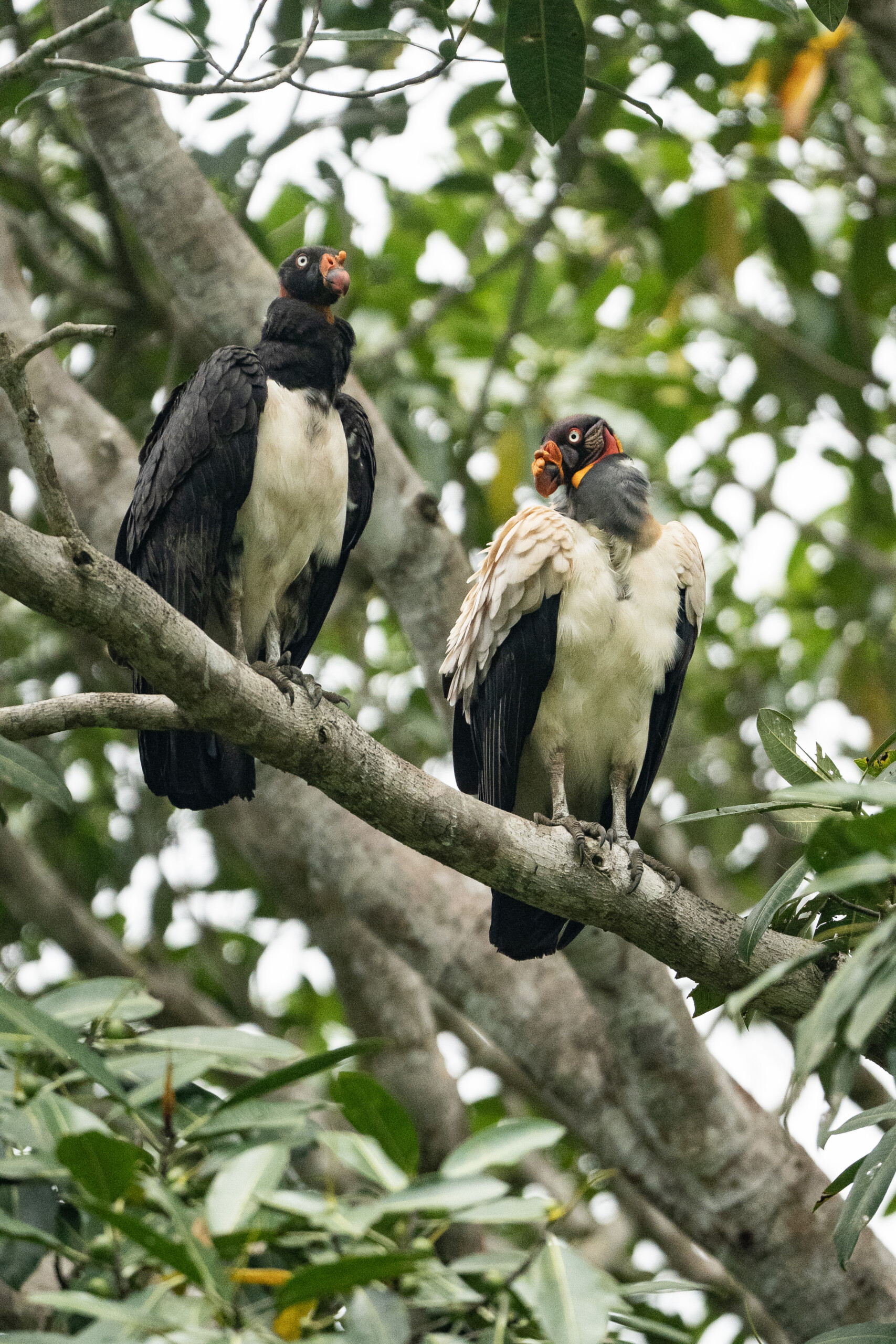
Top right and featured image: An immature and an adult King Vulture perched on a branch © Enzo Basso.


