


LINKED PAPER Climate, habitat availability and human activity shape the wintering distribution of an increasing migratory piscivorous raptor within the Mediterranean basin. García-Macía, J., Torralvo, C., Elias, G., Tomás, J.F., Ferrer, M. & Morandini, V. (2025) IBIS.VIEW
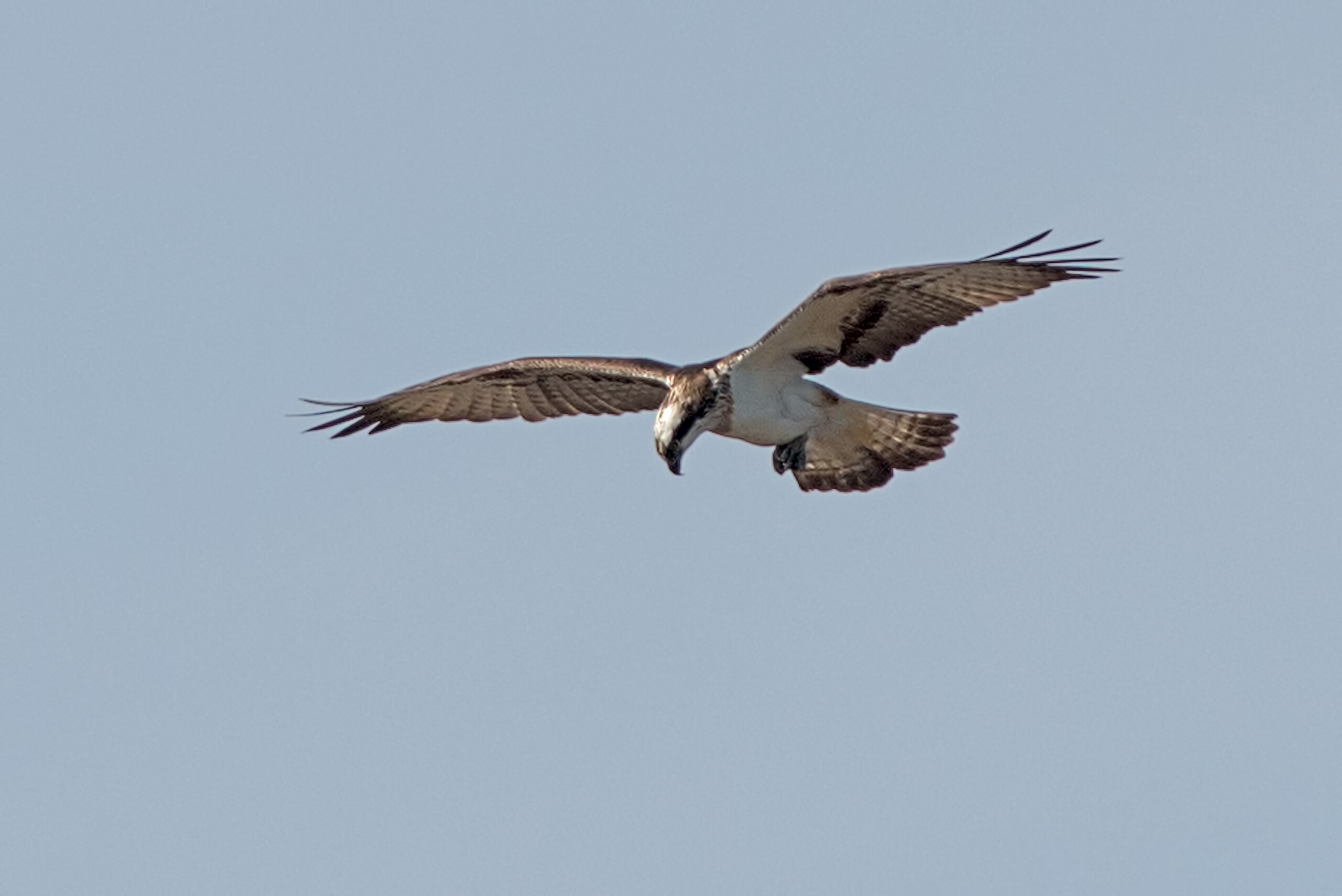
The Osprey (Pandion haliaetus) is a regular trans-Saharan migratory raptor. Hundreds or thousands of individuals —mostly from northern Europe— cross the Iberian Peninsula and the Strait of Gibraltar, finally reaching the Sahel belt after crossing the Sahara Desert (Figure 1).
However, this pattern is partially shifting: some Ospreys no longer cross to Africa. Instead, some individuals now remain in Iberia, where they may find suitable conditions to spend the winter. This recent change offers a valuable opportunity to understand how rapid global change is reshaping long-established migratory patterns.
 Figure 1. Osprey during the wintering period in Western Sahara © Carlos Torralvo.
Climate change is causing profound alterations in migratory and biogeographical patterns across many taxa worldwide. The Mediterranean basin, for instance, is experiencing large-scale environmental changes — warmer winters and scarcer, more irregular rainfall — with important ecological consequences for birds. To cope with conditions increasingly distant from their optimal bioclimatic niches, species must rely on avoidance behaviours or adaptive mechanisms. In this context, trans-Saharan migratory birds from Europe may not only shift their breeding ranges by selecting alternative nesting sites, but also may establish new wintering grounds. As the Sahel region becomes increasingly desertified and Europe continues to warm, some northern European birds are already modifying their wintering distributions.
In our study, we aimed to disentangle the bioclimatic mechanisms underlying the wintering distribution of the Osprey in Iberia. This species was rare and scarce in the region for many decades, but its presence during the non-breeding season has increased markedly in recent years. Today, the Osprey is a regular winter visitor in many Iberian regions (Figure 2). This change may be driven by a shortening of migratory routes in part of the European population, with individuals selecting Iberia instead of African wintering grounds. In Africa, intra- and interspecific competition is higher, migratory and wintering risks are greater, and climatic conditions have deteriorated in recent decades. As a result of climate warming and human-induced environmental change, Iberia may now represent a viable alternative wintering area for European Ospreys.
 Figure 2. Osprey density (individuals/ha) during different wintering seasons in Spain and Portugal.
Our work was based on a large, coordinated citizen-science dataset. Over a decade (2015–2024), thousands of professional and amateur birdwatchers participated in national surveys coordinated by Aves de Portugal and the Migres Foundation. After a rigorous data-curation process, these surveys allowed us to run regional-scale species distribution models, complemented by additional analyses to identify which sites are preferred by Ospreys — and why.
We analysed three main groups of factors: climatic conditions (temperature and precipitation), landscape structure (e.g. size and type of water bodies), and human-related variables (human footprint index and the presence of fish farms). Our models showed that the initial probability of Osprey presence and abundance in Iberia is strongly determined by the extent of coastal wetlands and inland water bodies, particularly the former. Healthy wetlands and complementary freshwater habitats are therefore essential for the species, which is consistent with its specific ecological requirements and feeding behaviour (Figures 3a & b).
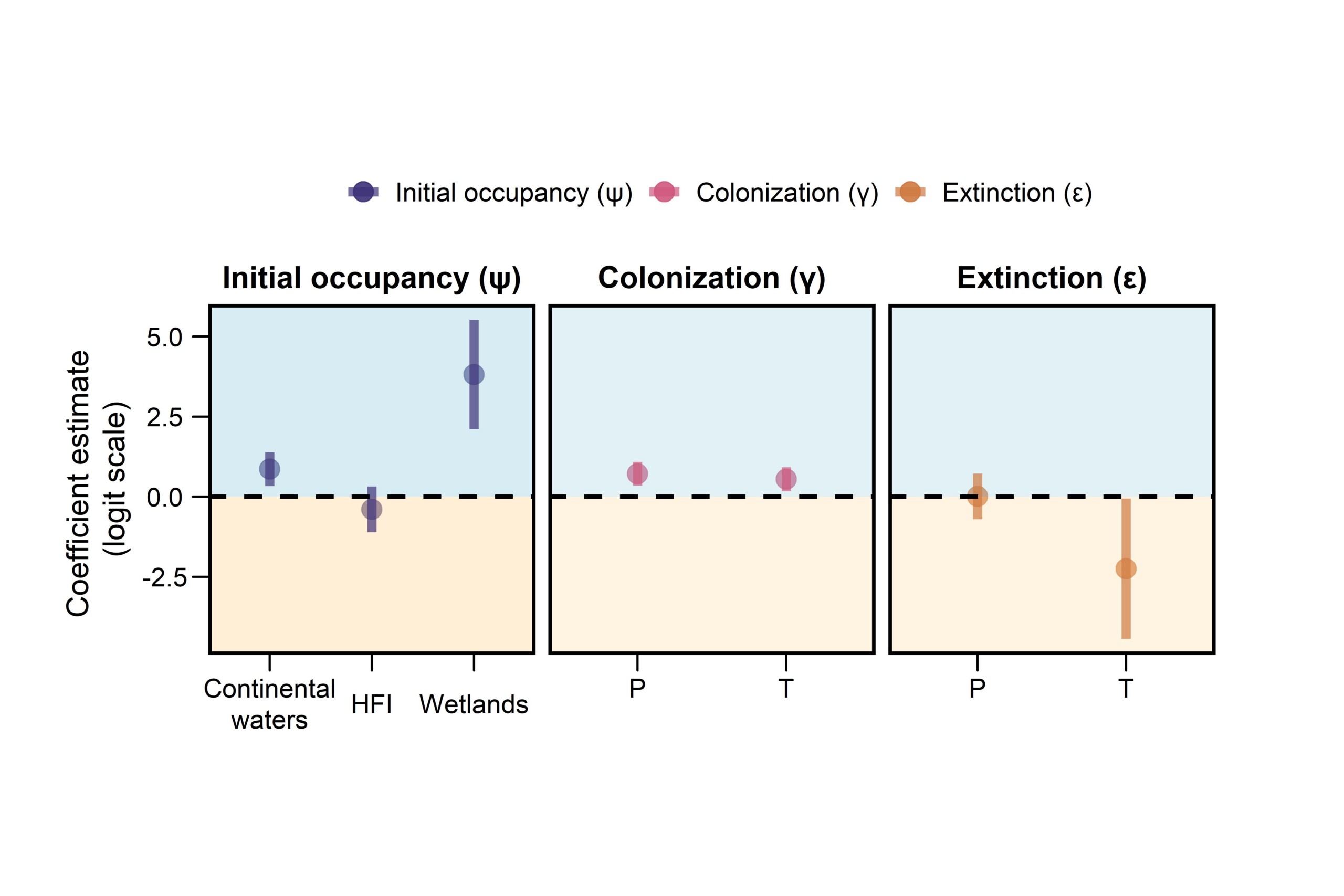 Figure 3a. Influence of bioclimatic factors on occupancy probability. HFI = Human Footprint Index; P = Cumulative precipitation; T = Mean temperature.
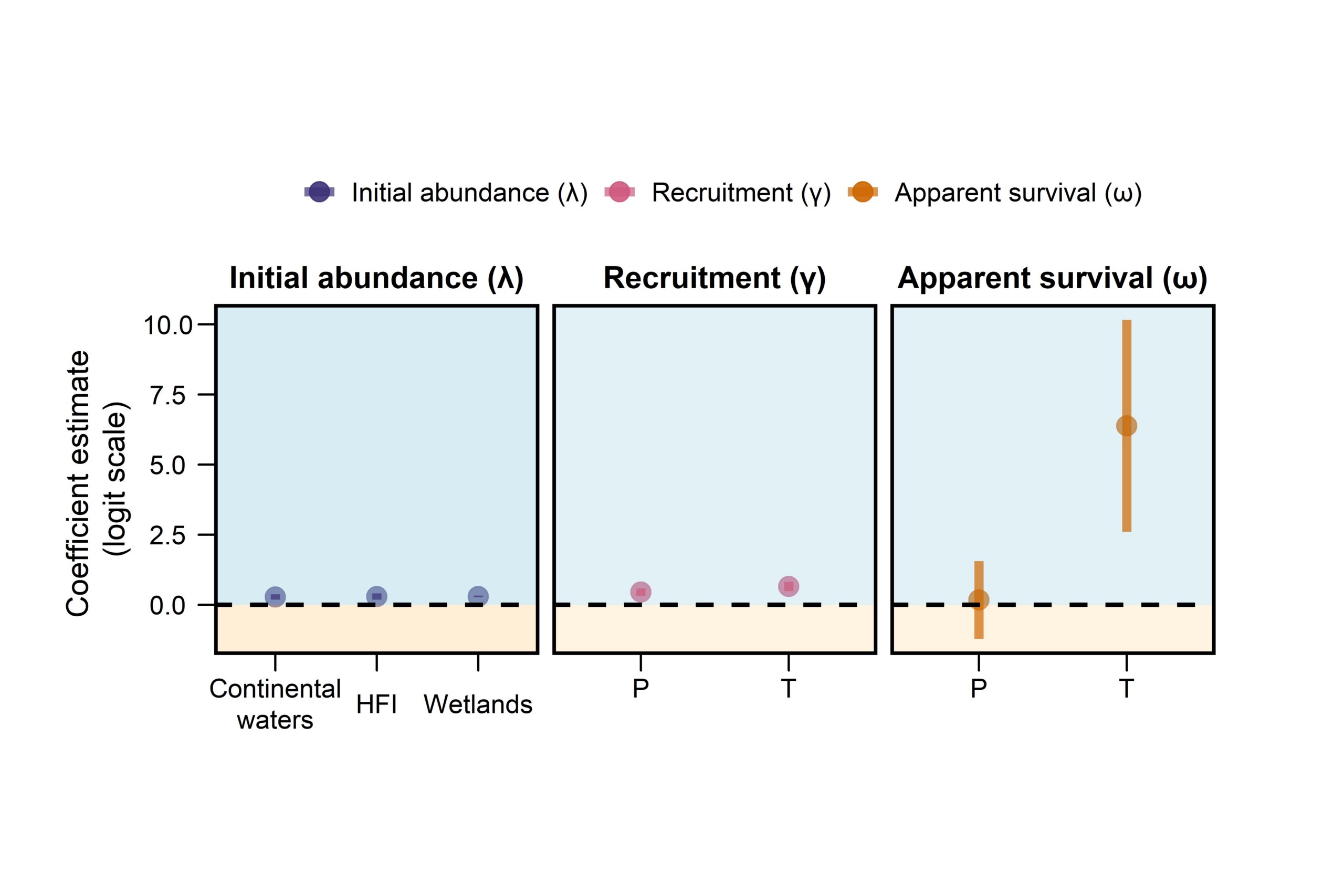 Figure 3b. Influence of bioclimatic factors on abundance probability. HFI = Human Footprint Index; P = Cumulative precipitation; T = Mean temperature.
While Iberian water habitats have existed for decades or centuries, the Iberian climate has changed substantially in recent decades. Because wetlands themselves are relatively stable features of the landscape, other dynamic variables must explain the recent increase in wintering Ospreys. According to our models, temperature and precipitation—especially temperature—were the most influential factors explaining winter presence and abundance. Ospreys preferentially select warmer areas with moderate rainfall, conditions that are now met across larger portions of the Iberian Peninsula as a result of climate change.
Interestingly, although the presence of fish farms was not a major determinant of Osprey distribution at large spatial scales, we did detect a significant spatial co-occurrence: Ospreys were located closer to fish farms than expected by chance (Figures 4a & b). Fish-farming facilities, which are frequently visited by piscivorous birds—sometimes with lethal consequences—may therefore drive fine-scale adjustments in Osprey distribution, or alternatively be spatially correlated with other ecological drivers. In any case, Ospreys are often observed at aquaculture facilities targeting medium-sized fish, whether as a cause or a consequence of their presence. Fish farms do not drive the broad-scale pattern, but they may fine-tune it.
 Figure 4a. Location of fish farms and Osprey records, including all wintering seasons.
 Figure 4b. Frequencies of distances from simulated observations across Spain to the nearest fish farm. MNFFD: mean nearest fish farm distance.
The southwestern Iberian Peninsula stands out as particularly suitable. While eastern Iberia is too arid and has fewer water bodies, and northern Iberia is colder and excessively rainy, the southwest combines all the key features of an ideal wintering area: mild winters, moderate precipitation, extensive and well-preserved wetlands, and a high density of fish farms.
In summary, our results — consistent with many other studies on European bird distributions — suggest that climate, habitat availability and human activity jointly shape the wintering distribution of this iconic raptor. As these factors are rapidly shifting under global change, species are forced to adapt to environmental conditions very different from those of past centuries. Understanding how, why, when and where species move, breed and feed is now crucial. Equally important is translating this knowledge into conservation action, which will require not only local or isolated measures, but integrated, large-scale strategies that rethink how socioeconomic systems interact with natural ecosystems.
References
García-Macía, J., García, L., Torralvo, C., Ferrer, M. & Morandini, V. 2024. Human-induced mortality causes affecting a newly established population of ospreys Pandion haliaetus in southern Iberia. Ardeola 72:3-13.VIEW
Hu, J., Hu, H. & Jiang, Z. 2010. The impacts of climate change on the wintering distribution of an endangered migratory bird. Oecologia 164:555–565.VIEW
Meyburg, B. & Holte, D. 2023. Wind effects on the long-distance migration of GPS-tracked adult ospreys Pandion haliaetus from Germany. Journal of Avian Biology 3:e03016.VIEW
Monti, F., Gremillet, D., Sfori, A., Sammuri, G., Dominici, J.M., Tryai, R., Munoz, A., Fusani, L. & Duriez, O. 2018. Migration and wintering strategies in vulnerable Mediterranean osprey populations. IBIS 160:554–567.VIEW
Ockendon, N., Johnston, A. & Baillie, S.R. 2014. Rainfall on wintering grounds affects population change in many species of afro-Palaearctic migrants. IBIS 155:905–917.VIEW
Image credit
Top right and featured image: Osprey (Pandion haliaetus) © Bengt Nyman | CC BY-SA 4.0 Wikimedia Commons