


The British Ornithologists’ Union Records Committee (BOURC) maintains The British List. Recording the diversity of species that have occurred in the wild but do not meet the criteria for inclusion in Categories A or C is important as it helps us both understand the diversity of escapes (with implications for attributing records to natural vagrancy), and the potential for the establishment of novel non-native species.
As such, the BOURC has revised the definition of Category E. Category E is reserved for species that have been recorded in the wild at least once since 1 January 1950 as either escapes or releases from captivity, or have been transported here by boat apparently unrestrained, or have occurred solely as beach-cast corpses that were considered may not have died in British waters1.
1 only those species that are not in Category A.
As with all categories of the British List, the taxonomy of the British List follows AviList v2025 (AviList Core Team 2025).
Category E has been adapted to include subcategories: E1, E2, E3 (including E3.1 and E3.2), E4, E5 (including E5.1 and E5.2), E6, and E7. These subcategories are defined as:
- E1 Species that have been recorded in the wild as an escape or release from captivity outside of a conservation translocation, and presumably in Britain, that have not also occurred in an apparently natural state (and are therefore not in Category A); e.g. Reeves’s Pheasant Syrmaticus reevesii (Figure 1)
- E2 Species that have been recorded in the wild as an escape or release from captivity outside of a conservation translocation, and presumably in Britain, that have also occurred in an apparently natural state (and are therefore also in Category A); e.g. Cackling Goose Branta hutchinsii (Figure 2)
- E3 Species released as a conservation translocation in Britain in areas of former or current occurrence (post 1 January 1800).
- E3.1 Species reintroduced in an area of former occurrence when regionally extinct (at a time when that population was/is not successfully re-established); e.g. Corncrake (Corn Crake) Crex crex (Figure 3)
- E3.2 Species reinforced where regionally extant; e.g. Turtle Dove Streptopelia turtur (Figure 4)
- E4 Feral species (species that have been domesticated) that have been recorded as an escape or release from captivity; e.g. Cockatiel Nymphicus hollandicus (Figure 5)
- E5 Species that are known to have escaped or been released from captivity outside of Britain
- E5.1 Species released as a conservation translocation in areas of former occurrence (post 1 January 1800) (at a time when that population was/is not successfully re-established); e.g. Lesser White-fronted Goose Anser erythropus (Figure 6)
- E5.2 Species that have escaped or been released from captivity outside of a conservation translocation; e.g. Snow Goose Anser caerulescens (Figure 7)
- E6 Species that have arrived on a boat(s) apparently unrestrained but have not been admitted to Category A; e.g. Great-tailed Grackle Quiscalus mexicanus (Figure 8)
- E7 Species that have occurred as a beach-cast corpse but have not been admitted to Category A as there is doubt that they have died in British waters; e.g. White-tailed Tropicbird Phaethon lepturus (Figure 9)
Records of species in Category E that have bred in the wild in Britain outside of a self-sustaining breeding population are denoted by *.
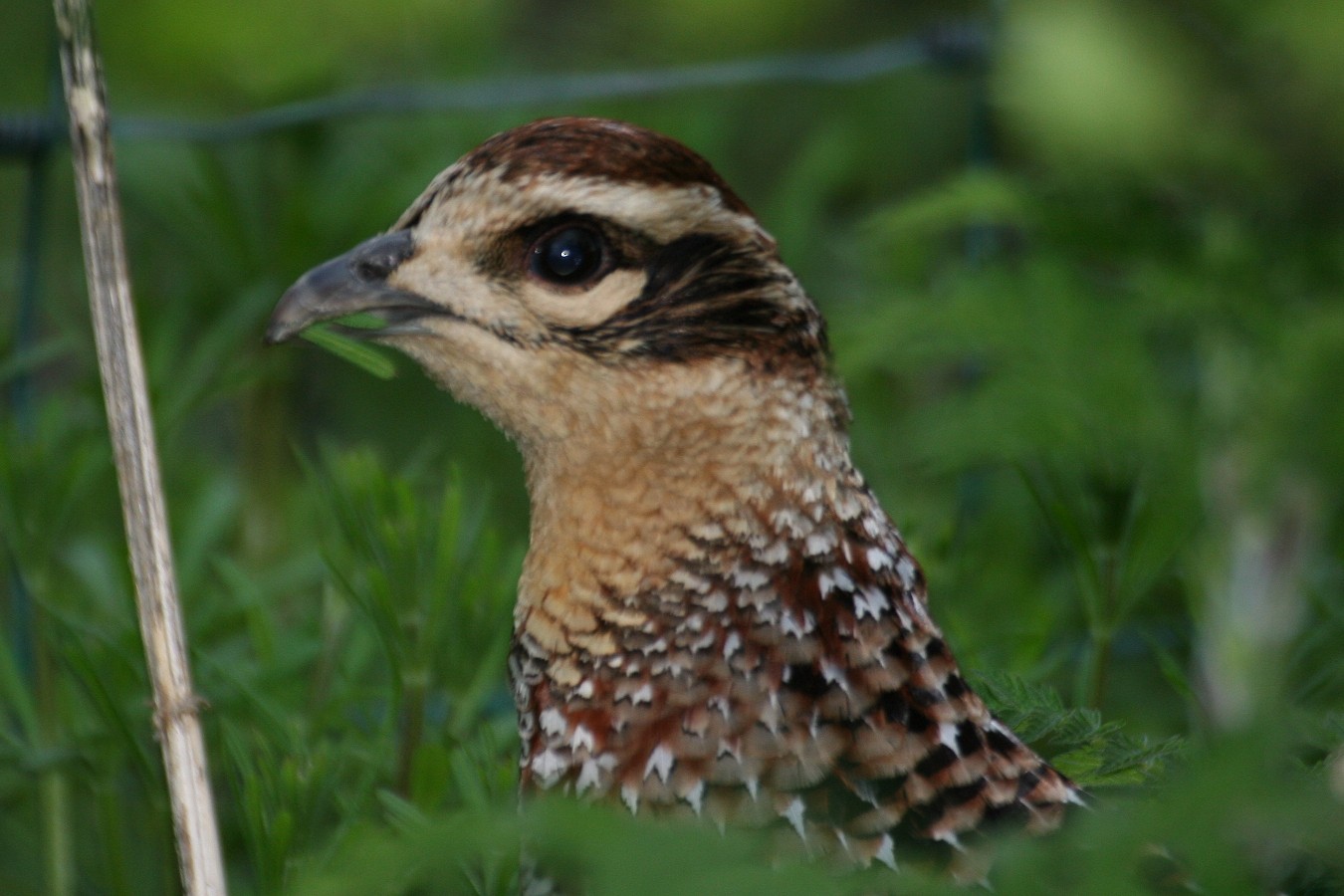 Figure 1. Reeves’s Pheasant Syrmaticus reevesii Cogie Hill, Lancashire & North Merseyside 25 April 2006 © Chris Batty. Species in subcategory E1 have been recorded in the wild as an escape or release from captivity outside of a conservation translocation, and presumably in Britain, that haven’t also occurred in an apparently natural state (and are therefore not in Category A), such as this Reeves’s Pheasant Syrmaticus reevesii at Clevedon, Avon, in June 2018.
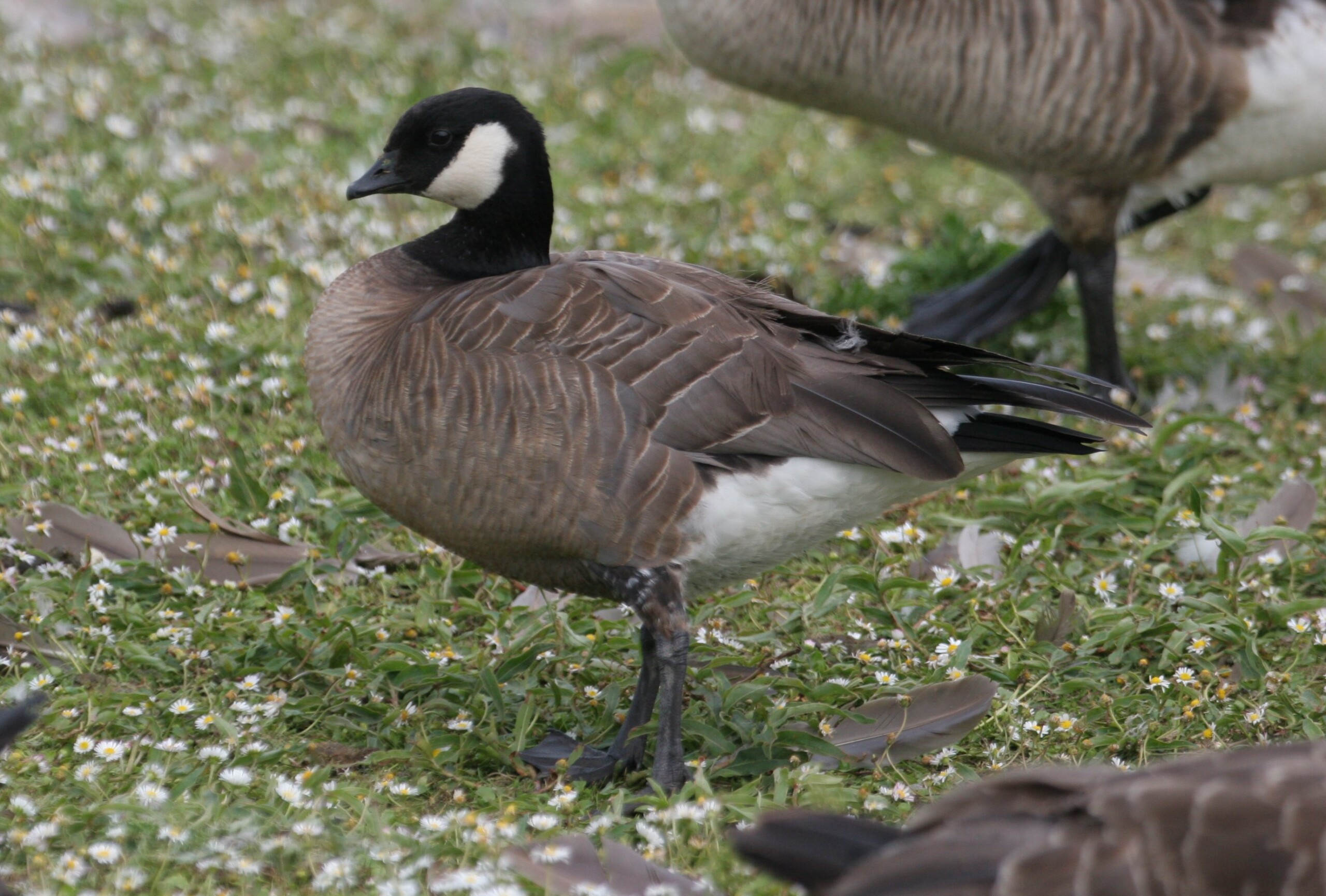 Figure 2. Cackling Goose Branta hutchinsii Fairhaven Lake, Lancashire & North Merseyside 16 June 2007 © Chris Batty. Species in subcategory E2 have been recorded in the wild as an escape or release from captivity outside of a conservation translocation, and presumably in Britain, that have also occurred in an apparently natural state (and are therefore also in Category A), such as this Cackling Goose Branta hutchinsii at Fairhaven Lake, Lancashire and North Merseyside in June 2007.
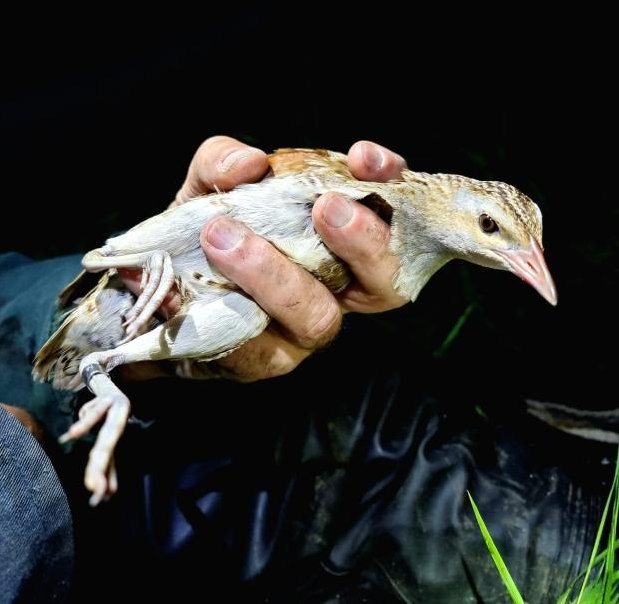 Figure 3. Corncrake (Corn Crake) Crex crex Welney, Norfolk 2024 © Kane Brides. Species in E3 were released as a conservation translocation in Britain in areas of former or current occurrence with the subcategory E3.1 for species reintroduced in an area of former occurrence when regionally extinct, such as this Corncrake (Corn Crake) Crex crex at Welney, Norfolk in 2024.
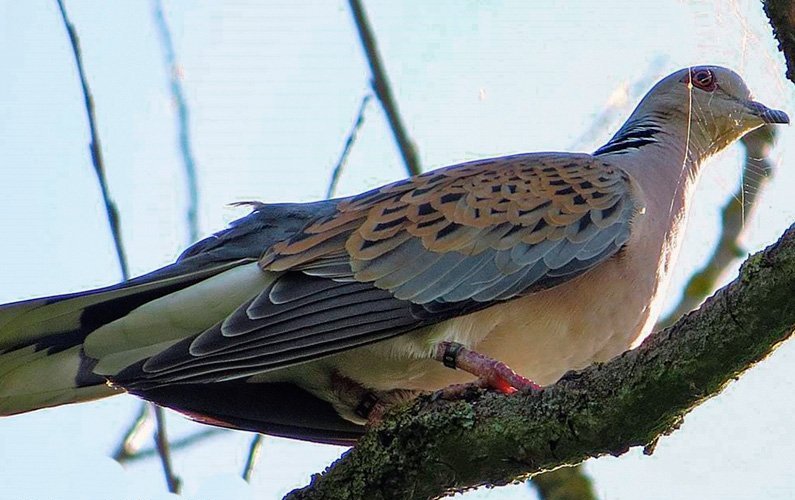 Figure 4. Turtle Dove (European Turtle Dove) Streptopelia turtur Ardleigh, Essex 15 August 2020 © Adrian Kettle. Species in subcategory E3.2 were reinforced where regionally extant, such as this Turtle Dove Streptopelia turtur at Ardleigh, Essex in August 2020 that had been bred and released in Suffolk.
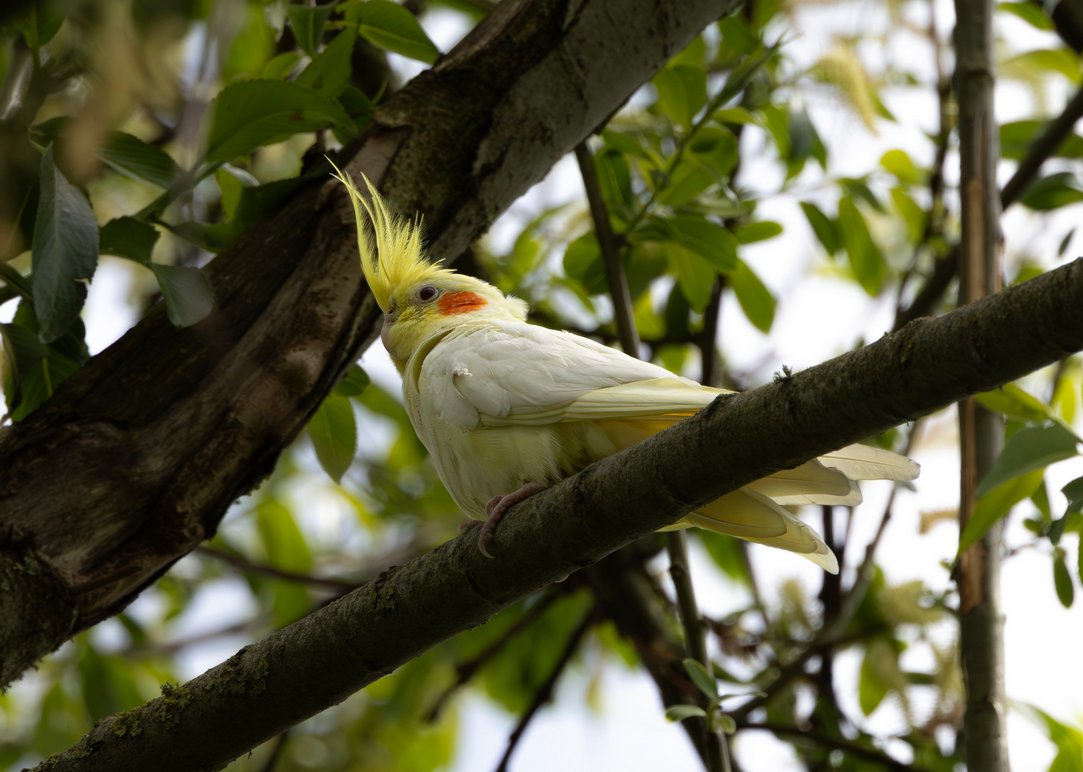 Figure 5. Cockatiel Nymphicus hollandicus Eastleigh Hampshire 27 April 2025 © Toby Carter. Species in E4 are feral (species that have been domesticated) that have been recorded as an escape or release from captivity, such as this Cockatiel Nymphicus hollandicus at Eastleigh, Hampshire in April 2025.
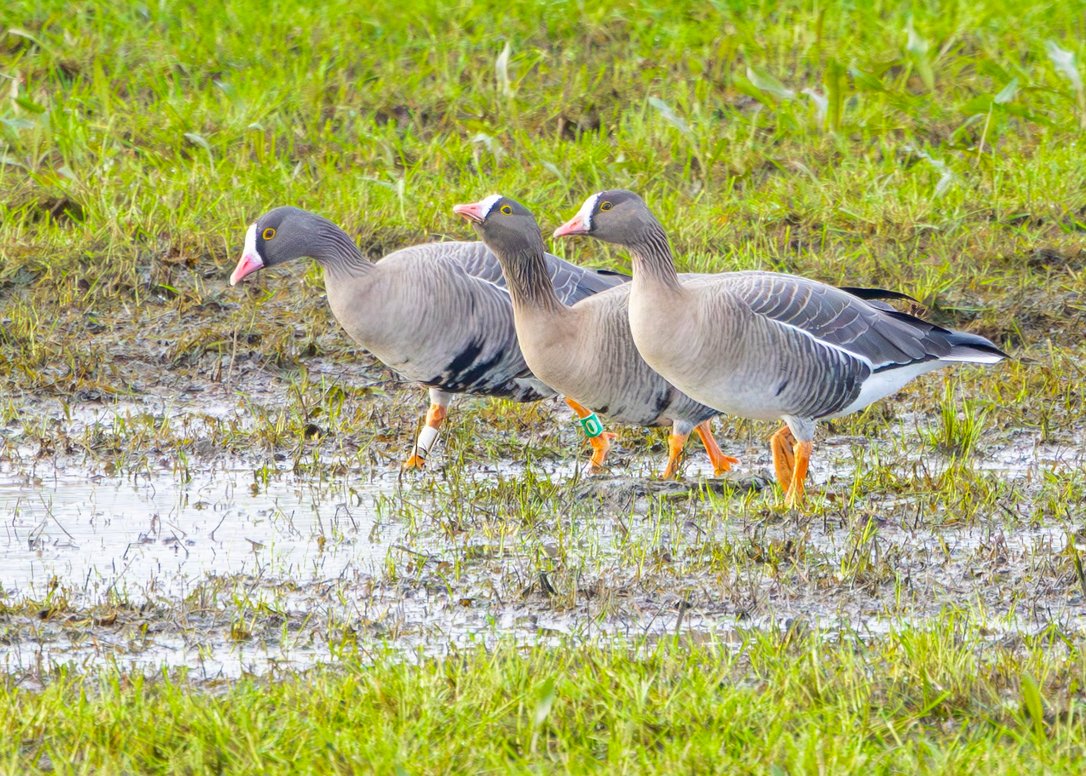 Figure 6. Lesser White-fronted Goose Anser erythropus Flamborough Head, Yorkshire 16 November 2024 © Nathaniel Dargue. Species in E5 are known to have escaped or been released from captivity outside of Britain with the subcategory E5.1 for species released as a conservation translocation in areas of former occurrence (post 1 January 1800) (at a time when that population was/is not successfully re-established), such as these Lesser White-fronted Geese Anser erythropus at Flamborough Head, Yorkshire in 2024 that originated in Sweden.
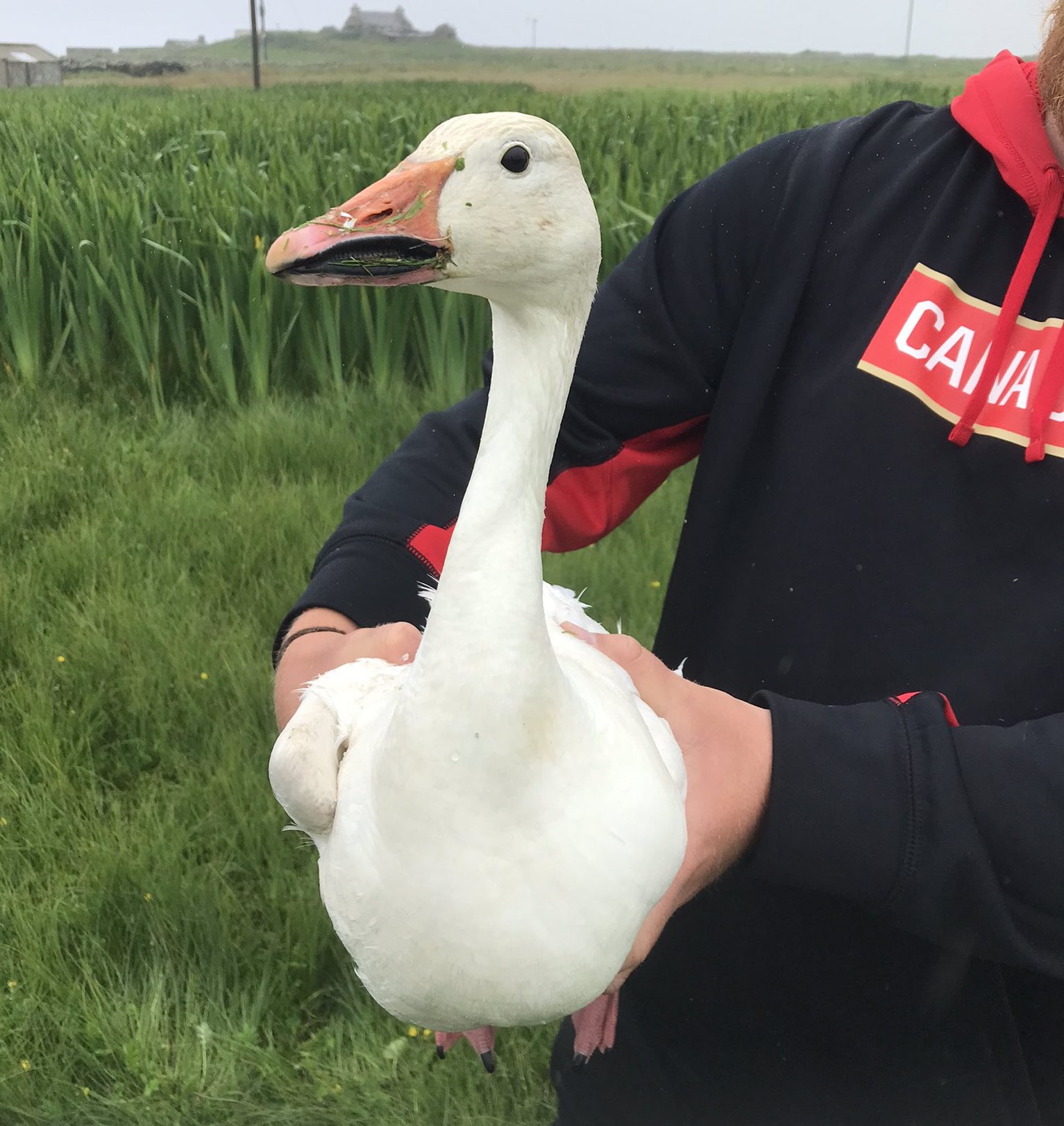 Figure 7. Snow Goose Anser caerulescens North Ronaldsay, Orkney 5 July 2021 © George Gay. Species in subcategory E5.2 have escaped or been released from captivity outside of a conservation translocation, such as this Snow Goose Anser caerulescens on North Ronaldsay, Orkney in July 2021 that had previously escaped in Germany.
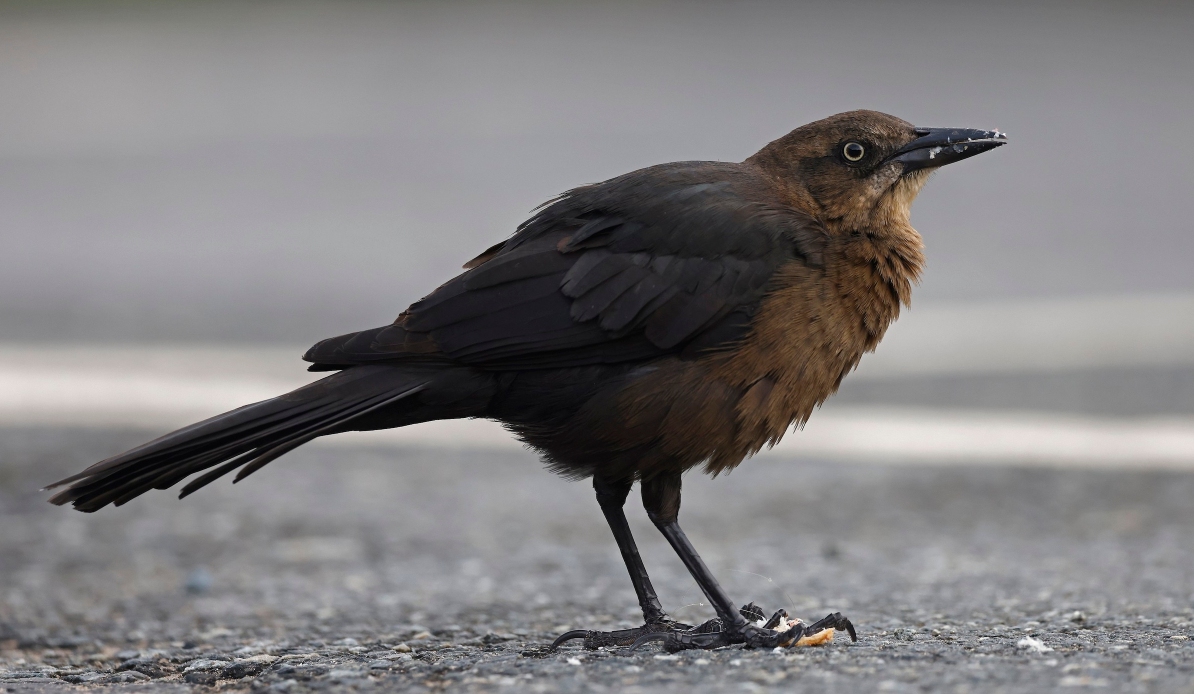 Figure 8. Great-tailed Grackle Quiscalus mexicanus Nolton Haven, Pembrokeshire October 2023 © Paul Chapman. Species in subcategory E6 have arrived on a boat(s) apparently unrestrained but have not been admitted to Category A, such as this Great-tailed Grackle Quiscalus mexicanus at Nolton Haven, Pembrokeshire in October 2023.
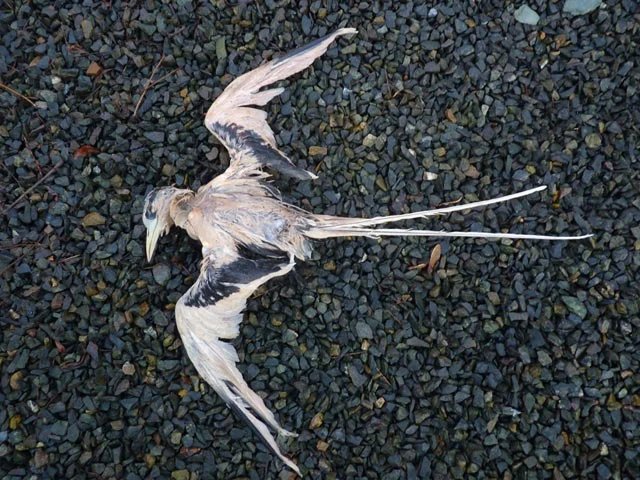 Figure 9. White-tailed Tropicbird Phaethon lepturus Mawbray, Cumbria 6 January 2013 © Stephen Hewitt. Species in subcategory E7 have occurred as a beach-cast corpse but have not been admitted to Category A as there is doubt that they have died in British waters, such as this White-tailed Tropicbird Phaethon lepturus at Mawbray, Cumbria in January 2013.
Category E now also includes a record to support each species in each subcategory with each record typically including the source, location, and month of occurrence. These records are exemplar voucher records and do not necessarily represent the chronological first record of each species. BOURC is unable to confirm the correct identification of species listed in Category E as supporting descriptions and rich media are not typically archived in county bird reports, regional avifaunas, or other sources of records of species in Category E, however, clearly erroneous records are excluded.
With this update to Category E, for the first time, a milestone has been passed, with the new total of 806 species exceeding the 626 species that are accepted as having occurred in Britain in a wild state (Categories A and B combined) (see here). Of the species in Category E 156 are also in Categories A or B (including 52 species that are currently considered as rarities by the BBRC; denoted by †) with a further 87 species in Category E recognized as having occurred in a natural state elsewhere in the Western Palearctic (sensu BWP). 96 species of introduced or escaped bird are recorded as having bred in the wild in Britain.
Species from 26 of the 46 Orders are represented in Category E including 302 species of Passeriformes (Perching birds), 134 Psittaciformes (Parrots), 129 Anseriformes (Waterfowl), 43 Accipitriformes (Raptors), and 40 Galliformes (Landfowl).
Representatives from 83 of the 252 currently recognised families, of 369 genera, include 39 Estrildidae (Munias, Parrotfinches, Waxbills, and Allies), 36 Fringillidae (Finches, Euphonias, and Allies), 34 Ploceidae (Weavers and Allies), 30 Sturnidae (Rhabdornis, Starlings, and Mynas), and 26 Strigidae (Owls).
Of the species in Category E 214 have their native breeding range in Africa, 204 in Eurasia (of which 159 regularly breed in Europe in a natural state), 148 in the Oriental realm, 136 in South America, 104 in North America, and 103 in Australasia.
E1 639
E2 142
E3.1 16
E3.2 9
E4 56
E5.1 9
E5.2 12
E6 3
E7 2
The BOURC welcomes signposts to published records of additions to Category E and its subcategories and these should be sent to the BOURC Secretary bourcsecretary@bou.org.uk for inclusion. The BOURC also encourages observers to report records of non-native species to the relevant local bird recorder, to BirdTrack, and eBird. Being able to independently confirm the identification of such records is desirable and we recommend that submissions include rich media where possible. Local bird recorders and those producing local, county or regional publications are encouraged to publish these records, and where breeding is suspected make them available to the Rare Breeding Birds Panel (RBBP) that publishes annual reports of non-native birds breeding in Britain.
The BOURC would like to thank all those who assisted in the revision of Category E and especially John Marchant.
View the revised Category E list
Image credit
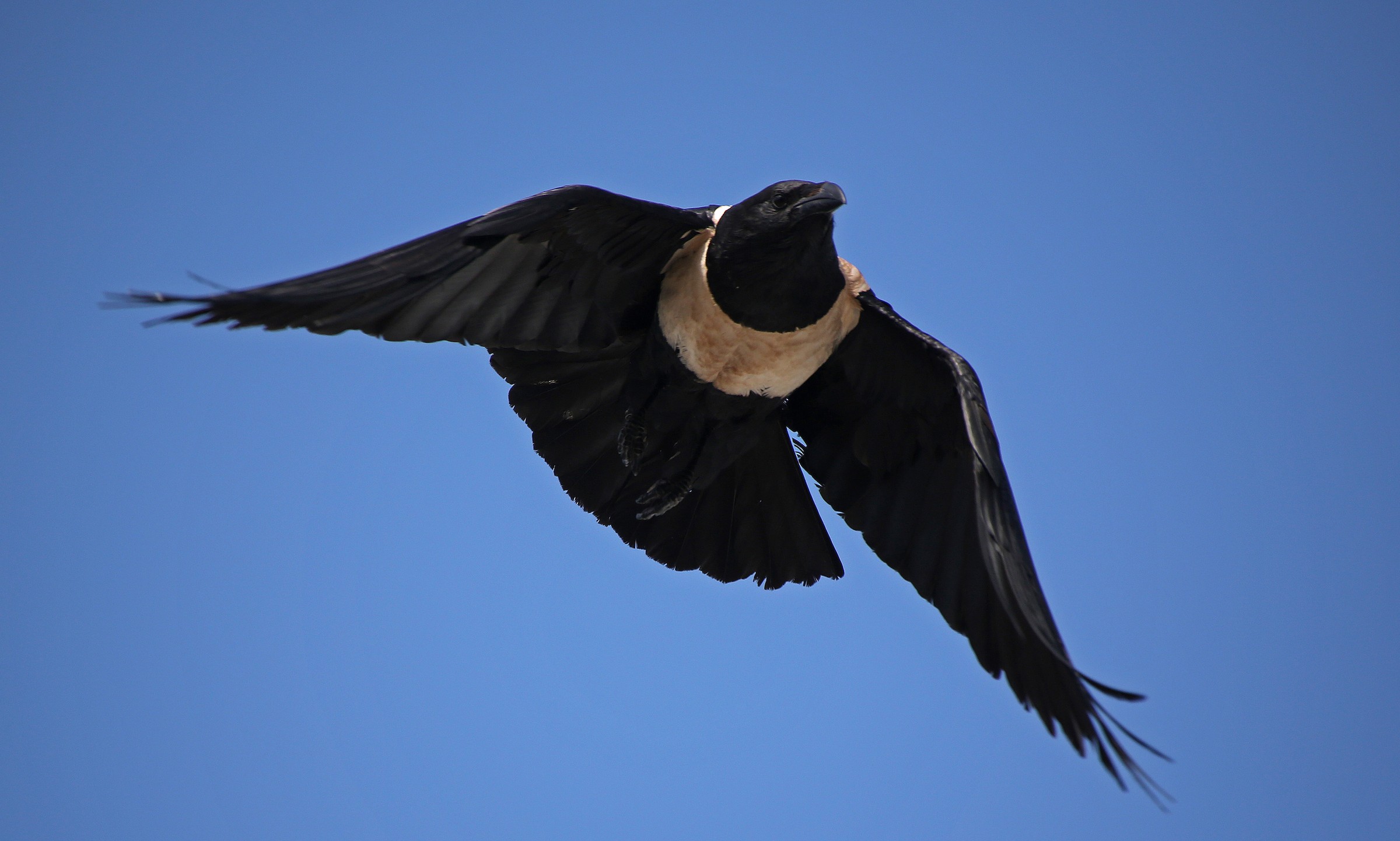
Top right and featured image: Pied Crow Corvus albus at Clevedon, Avon on 30 June 2018 © Paul Chapman.