

LINKED PAPER Dietary selectivity mediates niche overlap and interspecific competition in a reedbed warbler community in southern Europe. Davies, S.R., Vaughan, I.P., Thomas, R.J., Josa, P., Bateman Posse, S. & Symondson, W.O.C. (2026) Ibis. VIEW
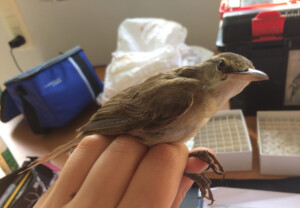
Looking back to 2018, when I first set off to Catalonia for three months of fieldwork, I can remember feeling a heady mixture of excitement and nervous anticipation. The latter largely because my first challenge was a 7-hour drive from Santander to Barcelona (I had never driven continental style on the right in my left-hand drive car), and the former because I was going to have the enormous privilege to meet and work with bird ringers from the Catalan Ornithological Institute (Institut Català d’Ornitologia, ICO), active across several wetland nature reserves in the region (Figure 1).
The purpose of my visit was to collect data for my PhD thesis chapter on the dietary ecology of Southern European warblers. My research goal was to catalogue the insectivorous diets of three reedbed dwelling species, using DNA metabarcoding, and then measure the proportion of prey overlap between the species’ diets – giving an indirect measure of interspecific dietary competition (Pianka, 1974). To achieve this goal, I was planning to collect faecal samples from birds captured during mist-netting sessions at my study sites, before returning to the laboratory at Cardiff University to amplify, sequence and identify the prey DNA sequences hidden within.
The reedbed warbler species in question included the ubiquitous Eurasian Reed Warbler (Acrocephalus scirpaceus), its larger cousin the Great Reed Warbler (Acrocephalus arundinaceus), and the more distantly related, and more terrestrial Cetti’s Warbler (Cettia cetti). All can be described as dietary generalists, known to forage on a wide diversity of arthropods,and we suspected each would feast on the mass of aquatic insects known to emerge from wetlands and reedbeds over spring and summer.
Ecologists increasingly use DNA-based methods such as DNA sequencing to categorize the diets of animals. A widely adopted approach is the identification of consumed prey species from the DNA left behind in animal droppings. Nowadays, modern high throughput sequencing (HTS) technologies can rapidly sequence hundreds of millions of DNA fragments in parallel, enabling the detection of multiple prey species from a single diet sample.
Until the advent of HTS diet studies on songbirds used hard-part analyses that identify prey remains to a relatively coarse taxonomic level (Pompanon et al., 2012). The lack of species-level detection by these techniques left a gap in our knowledge of these bird’s diets that DNA-based techniques could fill. This appeared to be an excellent opportunity to catalogue insectivore diets to a finer-scale, more accurately measure dietary partitioning, and examine species-specific mechanisms of prey selection, and hopefully answer the question of how these birds are able to coexist in Southern European wetlands.
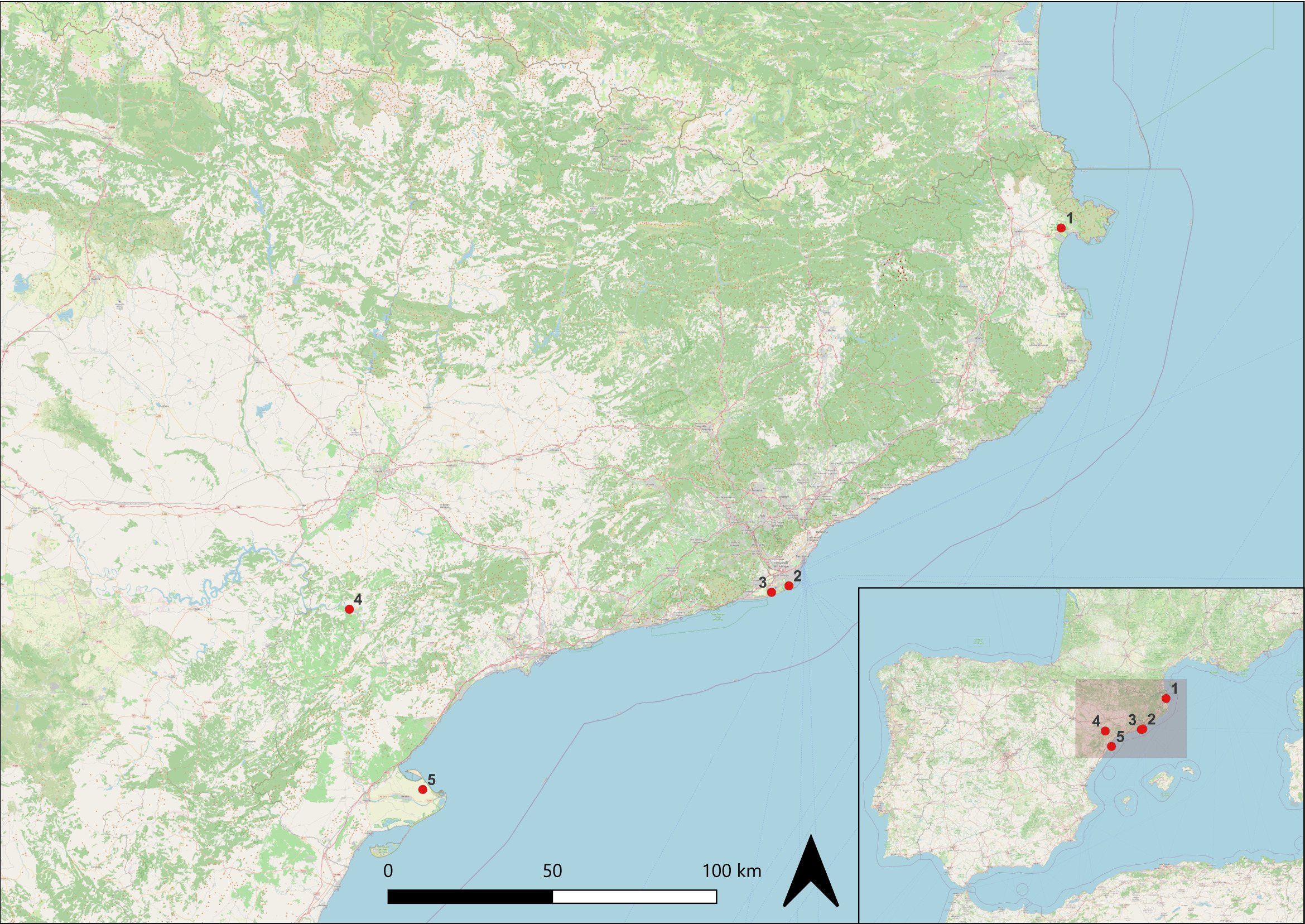 Figure 1. Map of Catalonia, showing the location of the 5 wetland study sites where bird ringing activities took place, with the study area region indicated by the shaded box of the insert. Numbered points indicate the location of the study sites; 1. Mas del Matá (Aiguamolls de l’Empordà), 2. Cal Tet (Llobregat Delta), 3. Remolar Filipines (Llobregat Delta), 4. Reserva Natural de Sebes, and 5. Canal Vell (Ebro Delta).
After succeeding in getting to Catalonia in one piece, my anxiety dissipated when, despite my rudimentary (at best!) Spanish, and even worse Catalan, I was welcomed with open arms at every ringing station. In fact, I was continually humbled by the kindness and interest shown by all the individuals I had the pleasure of working with during my time studying abroad.
From May to August, I travelled back and forth between five beautiful wetland reserves, where the ringing teams and I captured warblers in mist-nets and collected fresh faecal material from the birds (Figure 2). These samples were stored in ethanol to preserve the invertebrate DNA contained within. As well as strengthening my fondness for the three focal species, I was delighted to work in a landscape filled to the brim with wetland species (avian or otherwise), and I was lucky enough to observe-up close iconic birds such as the Golden Oriole, Little Bittern and Bee-eater (Figure 3).
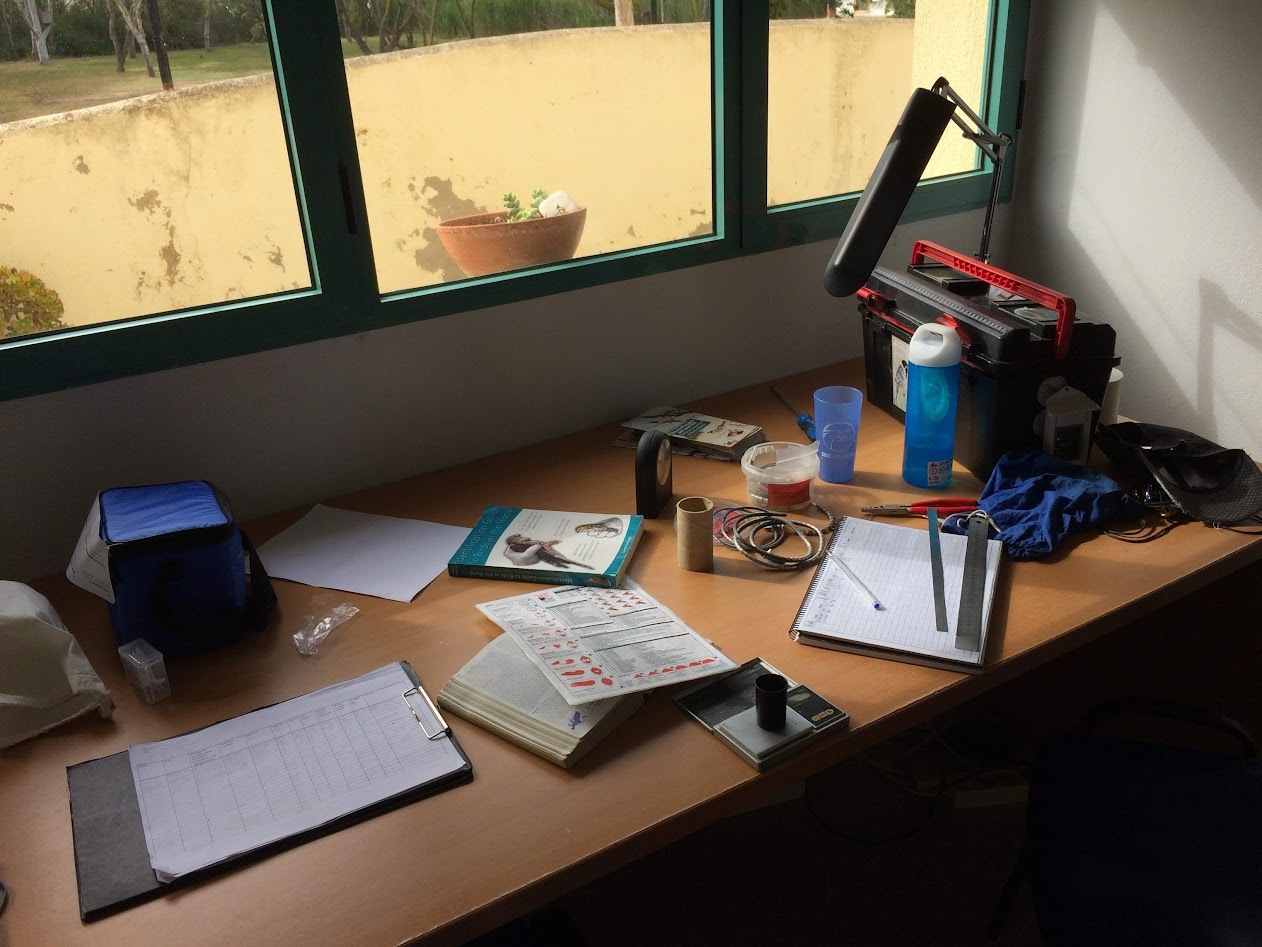 Figure 2. The bird processing station at Canal Vell in use during a bird ringing session.
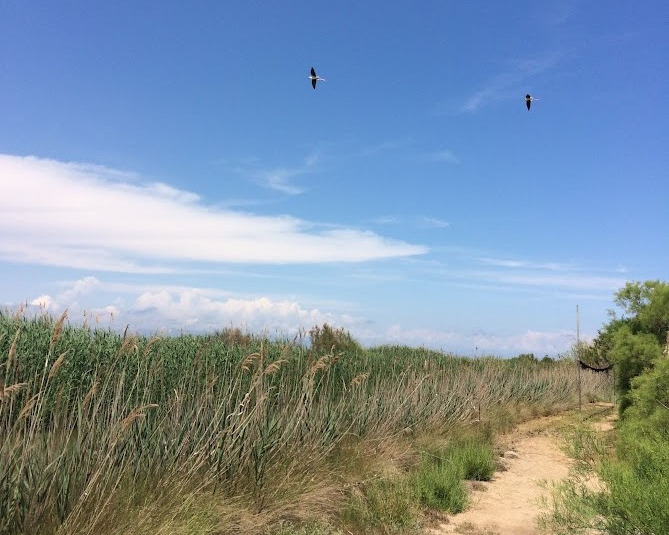 Figure 3. A pair of terns flying over a mist net ride set through the reedbeds of Canal Vell. Just one of the species the author was lucky enough to see during the Catalan study.
Back in Cardiff, it was time for DNA extraction, PCR, pooling (Figure 4) and library preparation, before running the resulting library on a MiSeq. What results from this workflow, are reams of messy DNA sequences in FASTA format that must be trimmed, ordered, assigned to sample ID, checked against a DNA reference library and cleaned up to remove artefacts and contamination.
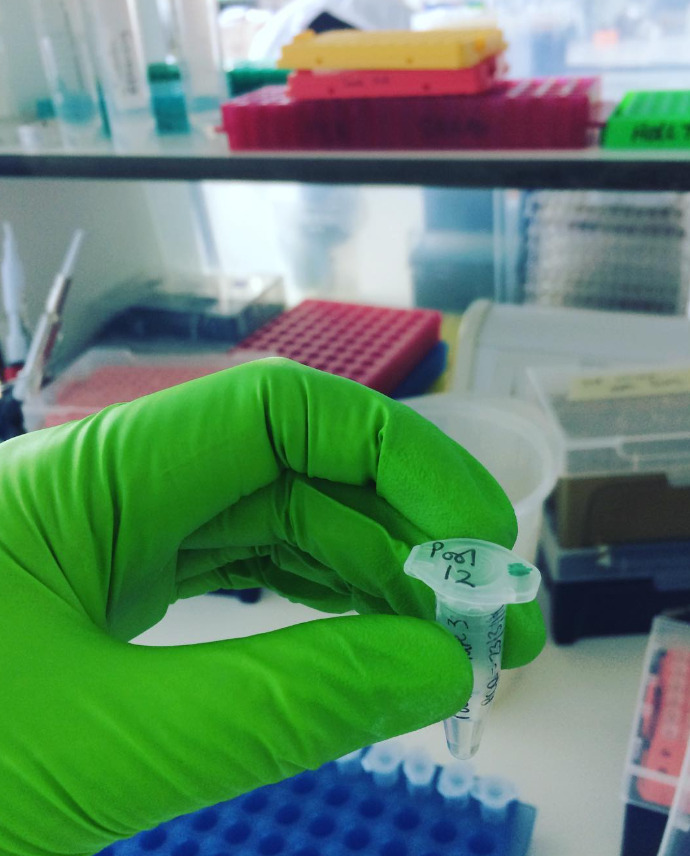 Figure 4. Pooling individually tagged and amplified DNA aliquots in Cardiff University’s molecular ecological laboratory, ready for library prep and HTS sequencing. Sample pooling is the process of combining many DNA aliquots (from individual diet samples) into a single, composite sample or “library” for sequencing.
My predictions had been that the three species would consume a wide range of arthropods in Catalonia, and this was certainly true – we detected 335 taxa in total, from a total of 189 warbler faecal samples (Figure 5). Furthermore, we revealed that dietary overlap was higher than expected by chance for the Eurasian and Great Reed Warblers pair and the Reed and Cetti’s Warblers pair but was lower than expected between Great Reed Warblers and Cetti’s Warblers. High overlap can often indicate reduced food availability, causing species to expand their diets beyond their preferences which can lead to a higher risk of interspecific competition (Cutting et al., 2016). This did not match what we had observed in the field from site invertebrate monitoring, nor the very high diversity of arthropod prey detected in the bird’s diets, suggesting that prey was not severely limiting. Moderately high dietary overlap can also indicate the opposite food availability scenario: superabundant prey that are consumed opportunistically by multiple consumers, masking the birds’ underlying food preferences (Trevelline et al., 2018b).
In addition, despite the higher-than-expected overlap between two of the three pairs of species, each warbler showed subtle but significant differences in their dietary choices. Unsurprisingly, Cetti’s Warblers consumed a significantly greater proportion of terrestrial prey compared to both of its more aquatic-habitat associated neighbours. Furthermore, Great Reed Warblers, the largest of the three bird species, consumed the largest prey items, with a fondness for grasshoppers, large moths and even a few instances of bees and dragonflies.
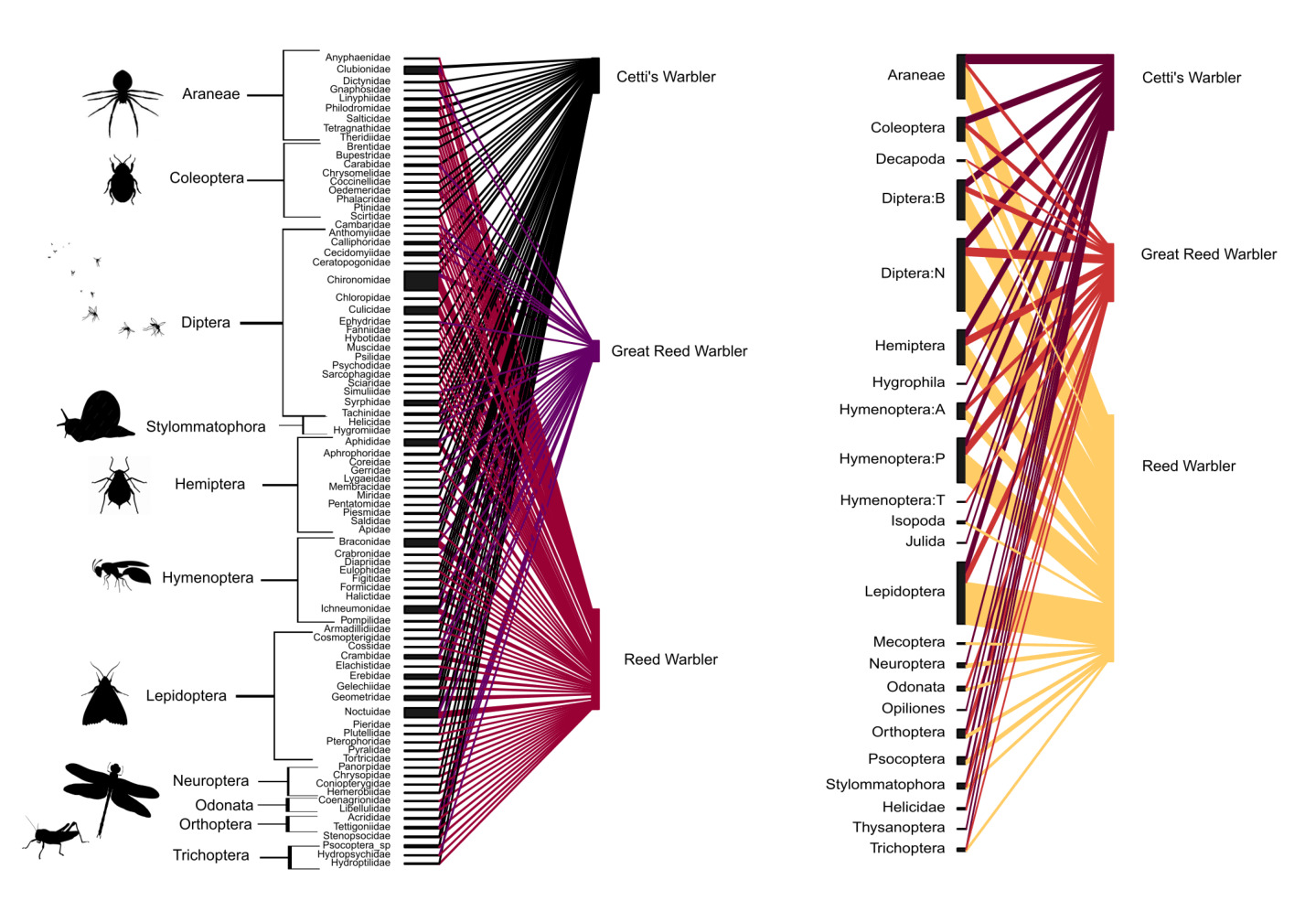 Figure 5. Bipartite plots revealing the wide diversity of prey consumed by the three reedbed warbler species across the study sites in Catalonia. The plot on the left-hand side is broken down to prey family level; while the plot on the right-hand side shows prey grouped at order level.
Our results have implications for wetland habitat and prey availability under climate change, because many shared prey items were aquatic or semi-aquatic insects that emerge from water over the summer. Such groups, include members of the diverse midge family of chironomids, that are known to provide an important food resource for insectivores. Reedbed drought, increasingly experienced in mid-late summer in the Mediterranean (Figure 6) could reduce prey resources for cohabitating wetland birds, increasing competition pressure in future (Jiménez et al., 2018).
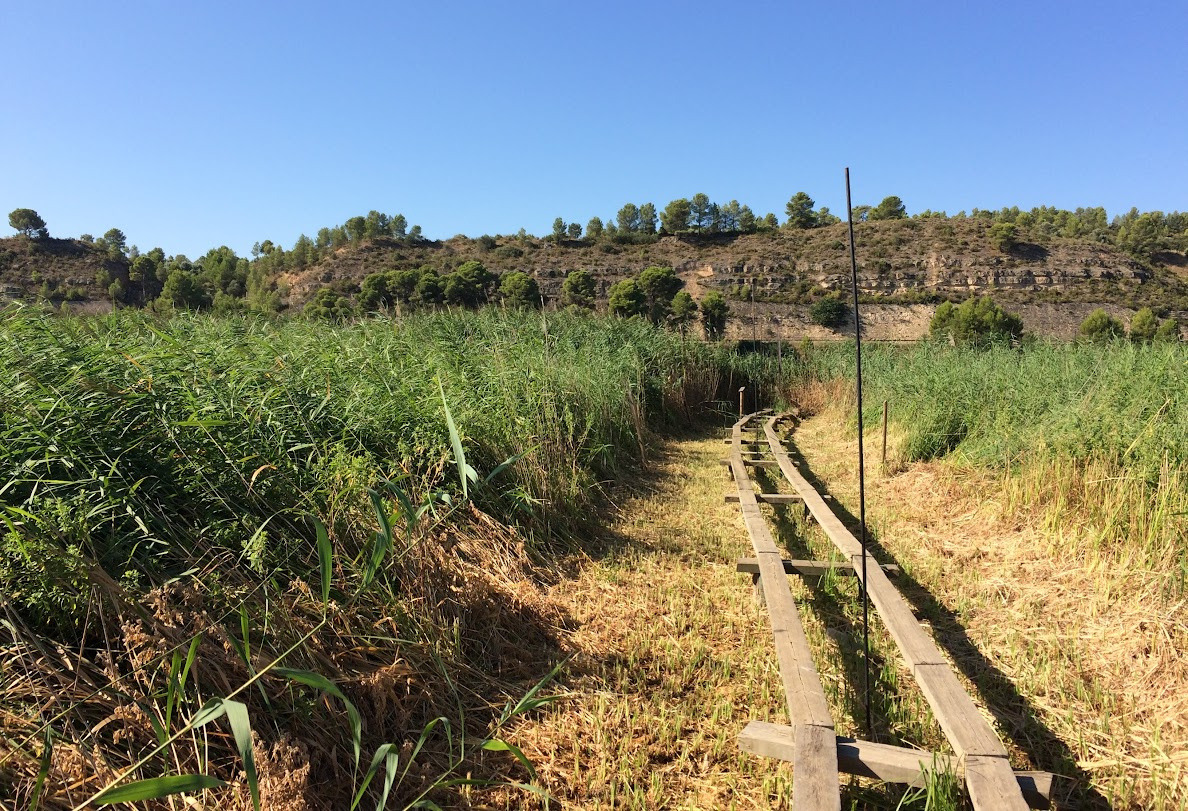 Figure 6. Preparing to set mist nets through a reedbed ride in Reserva Natural de Sebes in July 2018. The water level was almost as high as the raised platform in May, but the reedbed had dried out by this point. This highlights both the dynamic nature of wetlands and the growing risk of prolonged and more frequent drought at these sites expected with ongoing climate change.
As DNA technology continues to advance, I’m excited to find out what else we can learn about the complex interactions between ecologically similar species, and the vitally important, tangled web of invertebrates that form their diets.
References
Cutting, K.A., Anderson, M.L., Beever, E.A., Schroff, S.R., Khaphake, E., Korb, N. & McWilliams, S. 2016. Niche shifts and energetic condition of songbirds in response to phenology of food-resource availability in a high-elevation sagebrush ecosystem. Auk 133:685–697.VIEW
Jiménez, J., Hernández, J.M., Feliú, J., Carrasco, M. & Moreno-Opo, R. 2018. Breeding in a dry wetland. Demographic response to drought in the common reed warbler Acrocephalus scirpaceus. Ardeola 65:247–259.VIEW
Pianka, E.R. 1974. Niche overlap and diffuse competition. Proc. Natl. Acad. Sci. U.S.A. 71:2141–2145.
Trevelline, B.K., Nuttle, T., Hoenig, B.D., Brouwer, N., Porter, B.A. & Latta, S.C. 2018b. DNA metabarcoding of nestling faeces reveals provisioning of aquatic prey and resource partitioning among Neotropical migratory songbirds in a riparian habitat. Oecologia 187:85–98.VIEW
Image credit
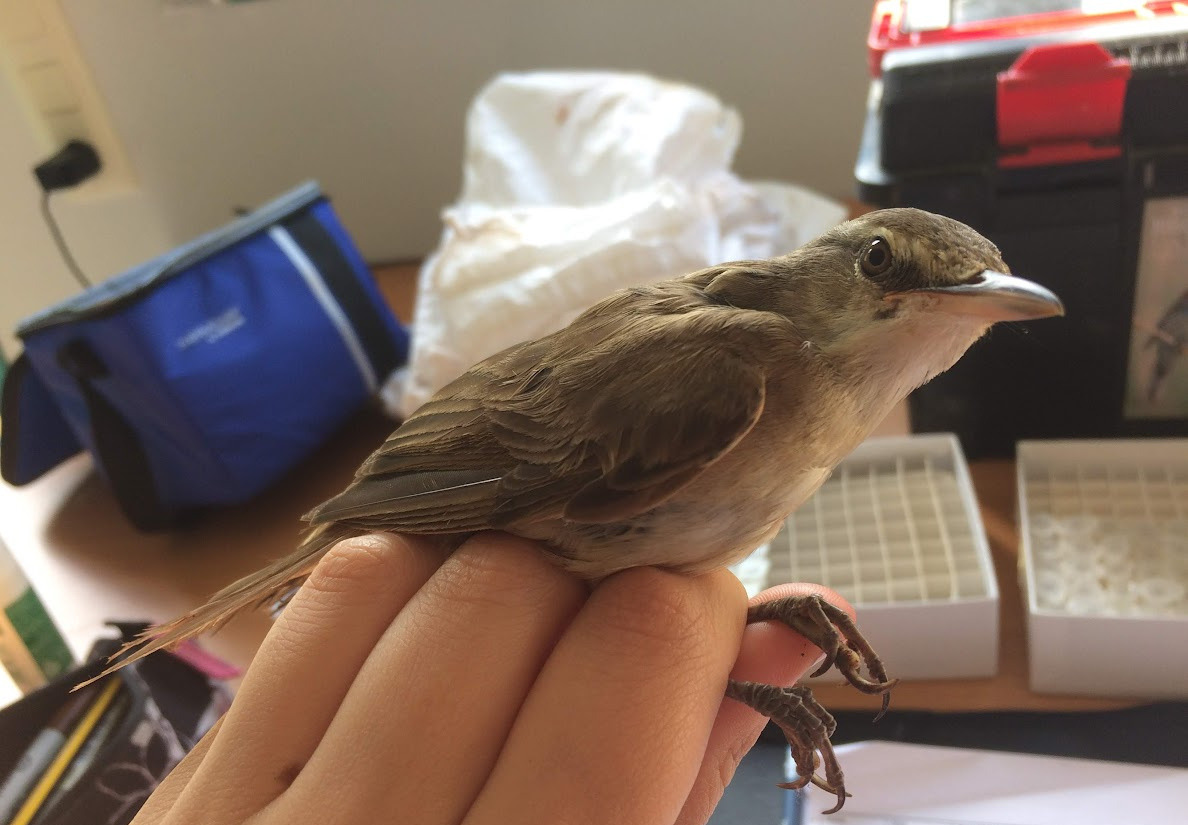
Top right and featured image: Ringing and processing a Great Reed Warbler that successfully produced a faecal sample for analysis. © Sarah Davies.
Please note: for all images throughout the blog, the birds were handled for by trained specialists under strict ethical guidelines for research purposes only.