



LINKED PAPER Reproductive consequences of mate retention and divorce in a short-lived migratory passerine. Rodríguez-Solís, D.R., Redondo, I., Martínez-Padilla, J., Camacho, C., Potti, J. & Canal, D. (2026) IBIS.VIEW
In migratory birds, every spring is a race against time. After returning from their wintering grounds, individuals must quickly establish a territory, find a partner, lay eggs and raise their chicks before the short breeding season comes to an end. Under such time pressure, one might expect that keeping the same partner year after year would be the safest strategy to maximise reproductive success. A familiar partner saves time and energy, and previous experience together could improve coordination in key tasks such as territory defence or chick provisioning.
However, long-term pair bonds are surprisingly rare in many species.
Our study focuses on the Pied Flycatcher (Ficedula hypoleuca), a small long-distance migratory bird that breeds in Europe and winters in West Africa (Figure 1).
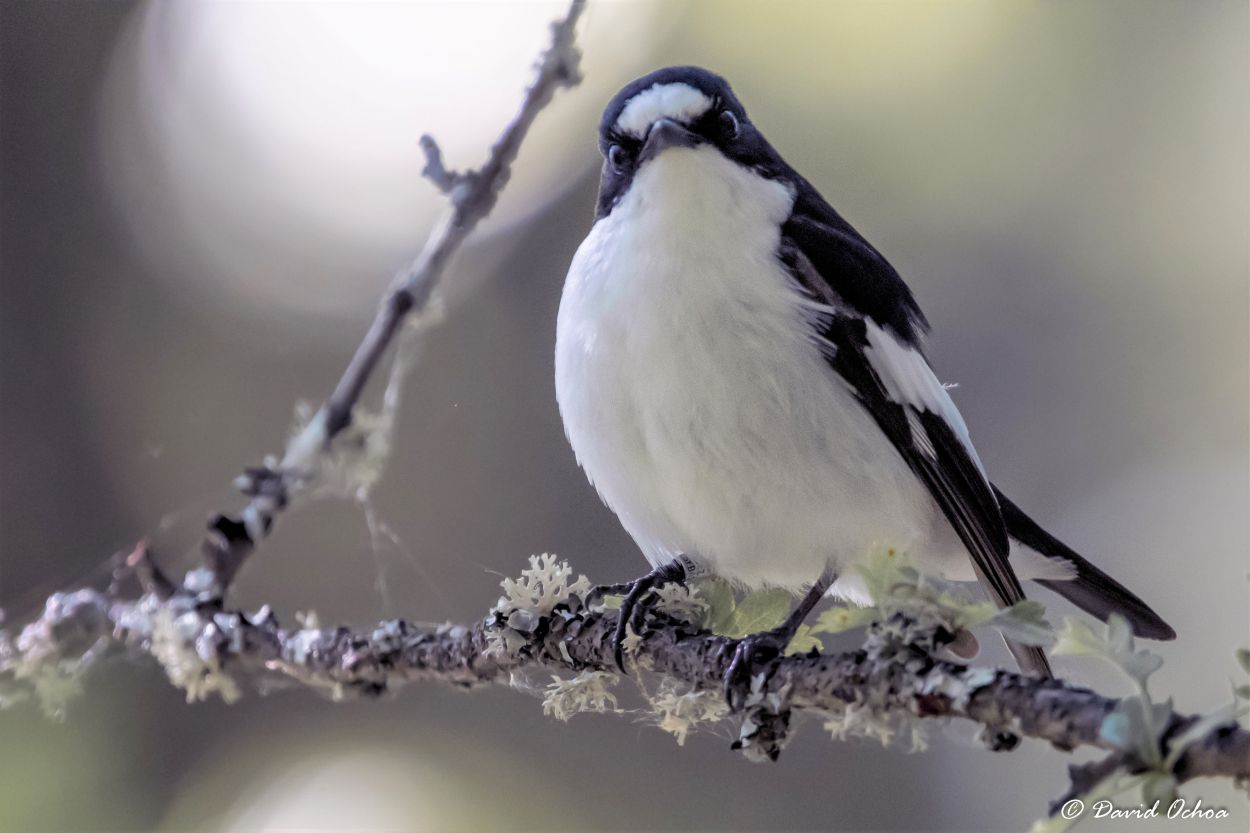 Figure 1. Male Pied Flycatcher (Ficedula hypoleuca) during the breeding season © David Ochoa.
Using nearly 40 years of continuous monitoring of a nest-box population in La Hiruela, central Spain (Figure 2), we were able to follow individually marked birds across breeding seasons.
 Figure 2. Oak woodland (Quercus pyrenaica) in La Hiruela (central Spain), where the long-term Pied Flycatcher population has been monitored for nearly four decades © Daniel R Rodríguez-Solís.
Individuals breed in nest boxes, allowing us to track pair formation and pair switching between years (Figure 3).
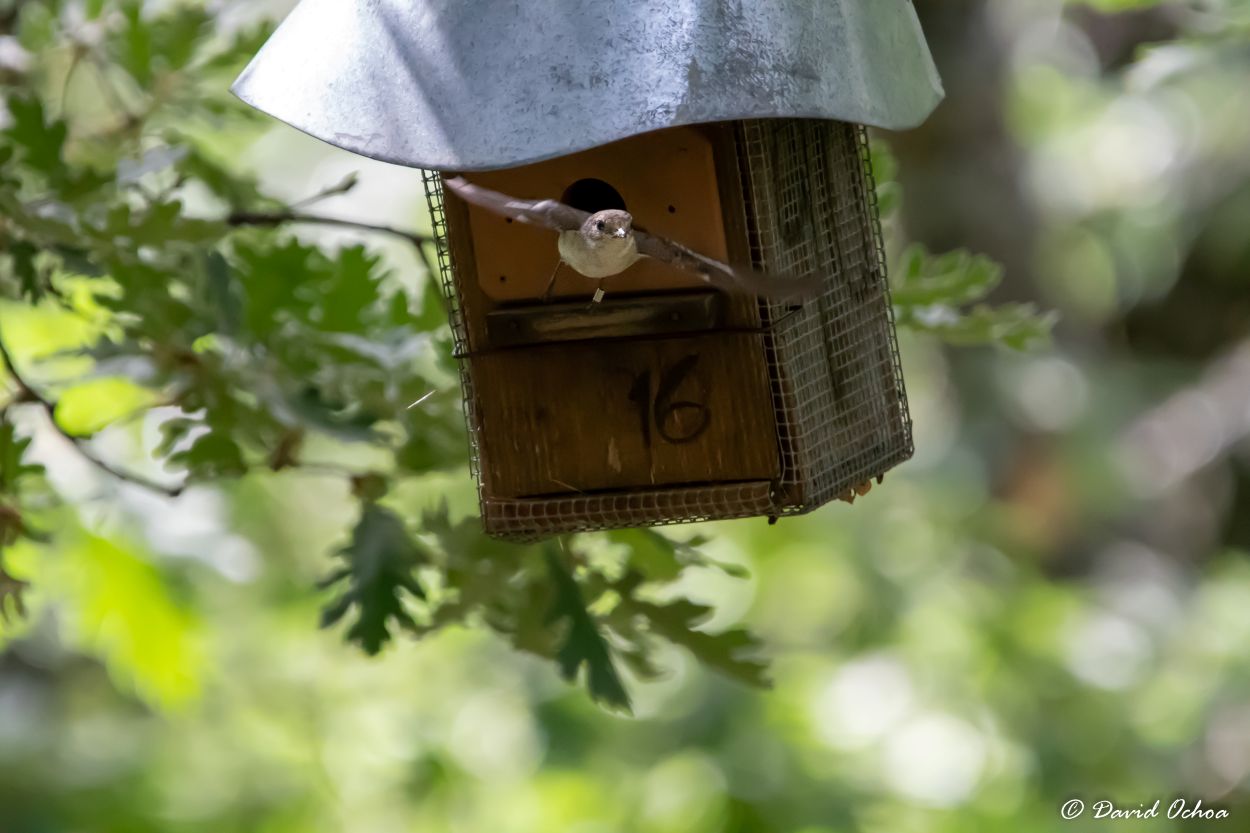 Figure 3. Female Pied Flycatcher (Ficedula hypoleuca) leaving a nest box during the breeding season. Note the metal cone protection against weasels and martens. Nest boxes allow individual birds and pair dynamics to be monitored across years © David Ochoa.
One striking result was how uncommon partner retention actually is: only about 3.5% of individuals bred with the same partner the following year. Most birds returned from Africa and ended up breeding with a new partner, even when their previous mate was still alive and breeding nearby.
But does mate switching affect reproductive performance?
To address this question, we compared breeding parameters before and after partner retention or divorce, including breeding date, clutch size and the number of fledglings. We also accounted for key factors known to influence reproduction, such as age and breeding habitat.
The results revealed a clear pattern: both males and females that changed partner produced more fledglings in the following breeding season than those that retained the same partner. Importantly, we focused only on true divorces, where the previous partner was still alive and breeding nearby. Interestingly, this advantage was not explained by earlier breeding or larger clutches. Instead, the difference emerged later in the breeding cycle, suggesting that the benefits of divorce may be related to factors such as partner compatibility, parental performance or territory quality.
Why might divorce be beneficial in this species?
The answer likely lies in the life history of the Pied Flycatcher. These birds are short-lived, surviving on average only a few years, and each breeding attempt represents a major proportion of their lifetime reproductive output. At the same time, the probability that both members of a pair survive migration and return the following year is relatively low. Under these conditions, waiting for a previous partner or reuniting with them may not be the most efficient strategy.
Changing partner may provide an opportunity to pair with a higher-quality mate or to settle in a better territory. Because food availability declines rapidly as the breeding season progresses, even small differences in clutch initiation date or territory quality can have large consequences for the number of chicks that survive to fledging (Figure 4).
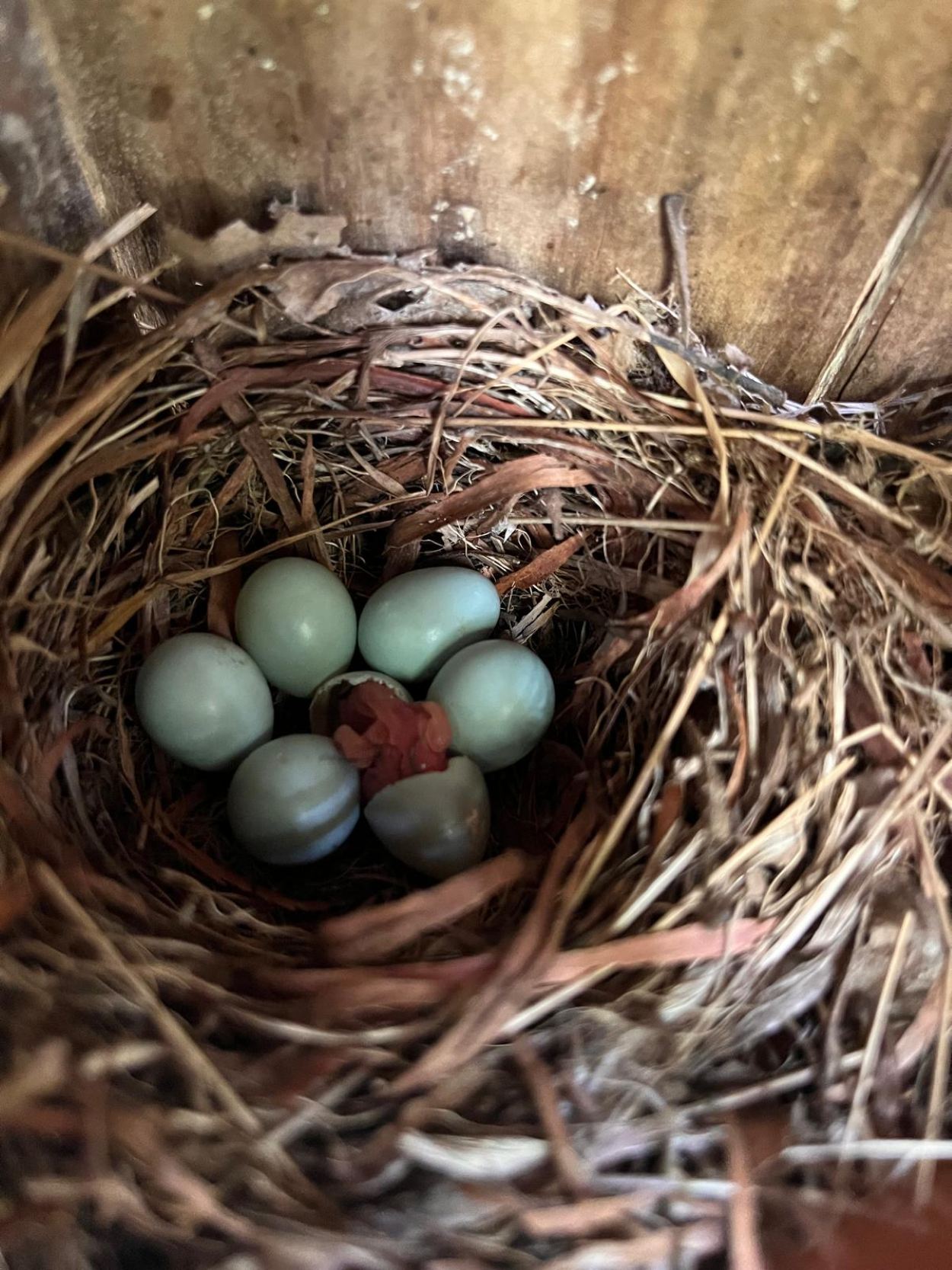 Figure 4. Pied Flycatcher (Ficedula hypoleuca) clutch in a nest box, with a chick hatching © Daniel R Rodríguez-Solís.
Divorce is not necessarily cost-free. Individuals that change partner often move longer distances between breeding attempts, which may involve energetic costs and uncertainty when searching for a new territory or mate. Nevertheless, our results suggest that these costs are compensated by improved reproductive success in the following season.
Conclusions and future direction
More broadly, our findings show that pair bonds in socially monogamous birds are not fixed relationships, but flexible strategies that can change from year to year depending on current ecological conditions and individual prospects.
This study also highlights the importance of long-term individual-based monitoring of animal populations. Only by following marked individuals over many years is it possible to detect patterns such as partner retention, divorce and their consequences for reproductive success. Without decades of continuous fieldwork, these subtle but important aspects of animal life histories would remain largely hidden.
In a short-lived migratory species like the Pied Flycatcher, staying together is not always the best option. Sometimes, changing partner may be the strategy that results in greater offspring production.
Image credit
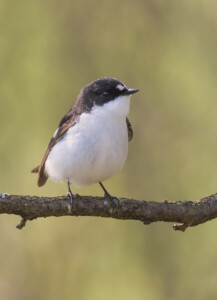
Top right and featured image: Pied Flycatcher (Ficedula hypoleuca) © Caroline Legg | CC BY-SA 4.0 Wikimedia Commons