



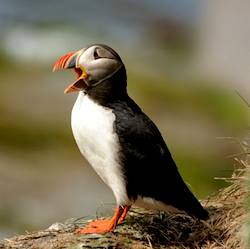
As I write this blog, I can’t help but have mixed feelings. On the one hand, I am incredibly proud and excited to be announcing to the ornithology community, on behalf of the team at BirdLife and beyond, that the European Red List of Birds, a product of more than three years of hard work, is now officially completed! On the other hand, I am disappointed, though perhaps not surprised, that the results paint a mixed picture and show that we still have a lot to do before all birds in Europe are safe from the risk of extinction.
The 2015 European Red List of Birds forms the third assessment of the status of bird species in Europe, building on the Birds in Europe volumes of 1994 and 2004. It is the product of a project funded by the European Commission, coordinated by BirdLife and with the involvement of a broad consortium including the International Union for the Conservation of Nature (IUCN), Wetlands International (WI), the European Bird Census Council (EBCC), the Royal Society for the Protection of Birds (RSPB / BirdLife UK), the Czech Society for Ornithology (CSO/ BirdLife in the Czech Republic), the British Trust for Ornithology (BTO) and Sovon Vogelonderzoek Nederland.
The IUCN Red List is widely recognised as the most authoritative and objective system for assessing the extinction risk of species. Although it was primarily developed for global use, it can also be applied at regional and national levels, following IUCN’s Regional Red List Guidelines. Since 2005, the European Commission has financed European Red Lists for all terrestrial vertebrate groups and for several other taxa, such as marine fishes, bees, medicinal plants, molluscs and others. The European Red List of Birds is part of this initiative and includes Red List assessments for all naturally occurring species in Europe at two scales: continental Europe and the EU (27 Member States at the time of assessment).
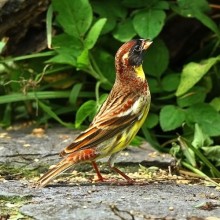 For the first time, the data-set for the EU is almost fully based on official reporting by Member States under the Birds Directive (see also State of Nature in the EU: Results from reporting under the nature directives 2007-2012). We sourced similar data from the rest of Europe, drawing heavily on the expertise and data-holdings of national bird monitoring schemes and organisations across Europe, including BirdLife International Partners and many others. This allowed us to build a detailed picture of bird population sizes and trends of all 533 wild bird species across the continent.
You can access the species factsheets and the European Red List of Birds publication, which provides an overview of the main results, on the BirdLife International DataZone here. The European Red list of Birds essentially identifies those species that are threatened with extinction at the regional level:
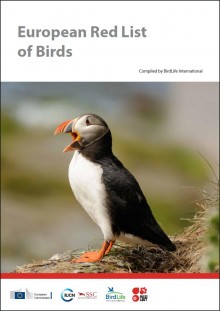 13% of species are threatened in Europe: 10 are Critically Endangered, 18 are Endangered and 39 are Vulnerable.
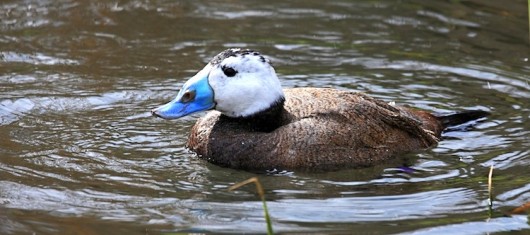
The figure is comparable to the results of the 2004 assessment, Birds in Europe 2, but it masks stories of winners and losers. Targeted conservation efforts, often supported by key EU policy instruments, such as the Birds Directive and the LIFE programme, have helped bring species back from the brink. White-headed Duck, Zino’s Petrel, Azores Bullfinch, Madeira Laurel-pigeon, Dark-tailed and White-tailed Laurel-pigeons, Bearded Vulture, Lesser Kestrel, Saker Falcon, Spanish Imperial Eagle, While-tailed Sea-eagle and Dalmatian Pelican are just a few examples.
On the other side, many species have been uplisted (that is, their extinction risk has increased) or have not improved, despite being identified as being in trouble a decade ago. Such species include for example Egyptian Vulture, Greater Spotted Eagle, Little Bustard, Aquatic Warbler, some formerly very common farmland birds, like the European Turtle-dove, Northern Lapwing and Eurasian Curlew, two once common seabirds, Atlantic Puffin and Northern Fulmar, and a suite of seaducks, including Common Eider and Velvet Scoter.
 Across Europe, many governments, NGOs and other organisations are showing increasing commitment to conserving wild birds and their habitats. In Europe, we have been able to successfully tackle some of the most urgent priorities. In the EU in particular, the legal protection and improved management achieved under the Birds and Habitats Directives catalyses conservation action and makes a fundamental contribution to safeguarding biodiversity in the region. As a result, many species – not just birds – are showing signs of recovery (for more success stories, see Wildlife Comeback in Europe). But many birds, including widespread and formerly common species, continue to decline as a result of various threats, including illegal hunting, changing agricultural practices, invasive and alien species and habitat loss and degradation. It is clear that much more still needs to be done to safeguard the bird populations in Europe.
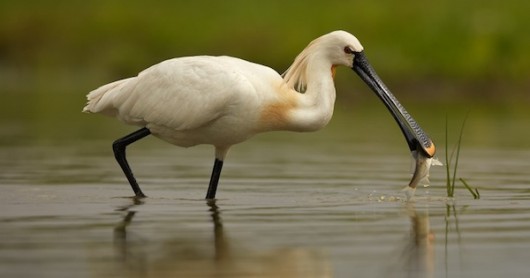
Image Credits
Atlantic Puffin Fratercula arctica © Ondrej Pelánek
Yellow-breasted Bunting Emberiza aureola © Hiyashi Haka
White-headed Duck Oxyura leucocepala © Ivan Mikšík
Northern Lapwing Vanellus vanellus © Ivan Dudáček
Eurasian Spoonbill Platalea leucorodia © Martin Mecnarowski
If you want to write about your research in #theBOUblog, then please see here.