

World Book Day is all about encouraging people – especially children and young adults – to read for pleasure. Books often do more than entertain or inspire us; they shape the way we see the world and understand our place within it. The possibilities open to us, who is allowed to succeed, and where we belong are all messages that books can quietly reinforce – or challenge.
So, for this year’s World Book Day, we have asked BOU Council and Committee members to recommend some of their favourite books about birds! To help celebrate diverse voices and perspectives in birding, we have asked them to pick books that have shaped the way we engage with birds, particularly those that help make birding a more welcoming and accessible space.
1. Diary of a Young Naturalist by Dara McAnulty

Publisher’s synopsis: “Evocative, raw and lyrical, this startling debut explores the natural world through the eyes of Dara McAnulty, an autistic teenager coping with the uprooting of home, school, and his mental health, while pursuing his life as a conservationist and environmental activist. Shifting from intense darkness to light, recalling his sensory encounters in the wild – with blackbirds, whooper swans, red kites, hen harriers, frogs, dandelions, Irish hares and more – McAnulty reveals worlds we have neglected to see, in a stunning world of nature writing that is a future classic.”
2. Birders of Africa: History of a Network by Nancy Jacobs

Publisher’s synopsis: “In this unique and unprecedented study of birding in Africa, historian Nancy Jacobs reconstructs the collaborations between well-known ornithologists and the largely forgotten guides, hunters, and taxidermists who worked with them. Drawing on ethnography, scientific publications, private archives, and interviews, Jacobs asks: How did white ornithologists both depend on and operate distinctively from African birders? What investment did African birders have in collaborating with ornithologists? By distilling the interactions between European science and African vernacular knowledge, this stunningly illustrated work offers a fascinating examination of the colonial and postcolonial politics of expertise about nature.”
3. Better Living Through Birding: Notes from a Black Man in the Natural World by Christian Cooper
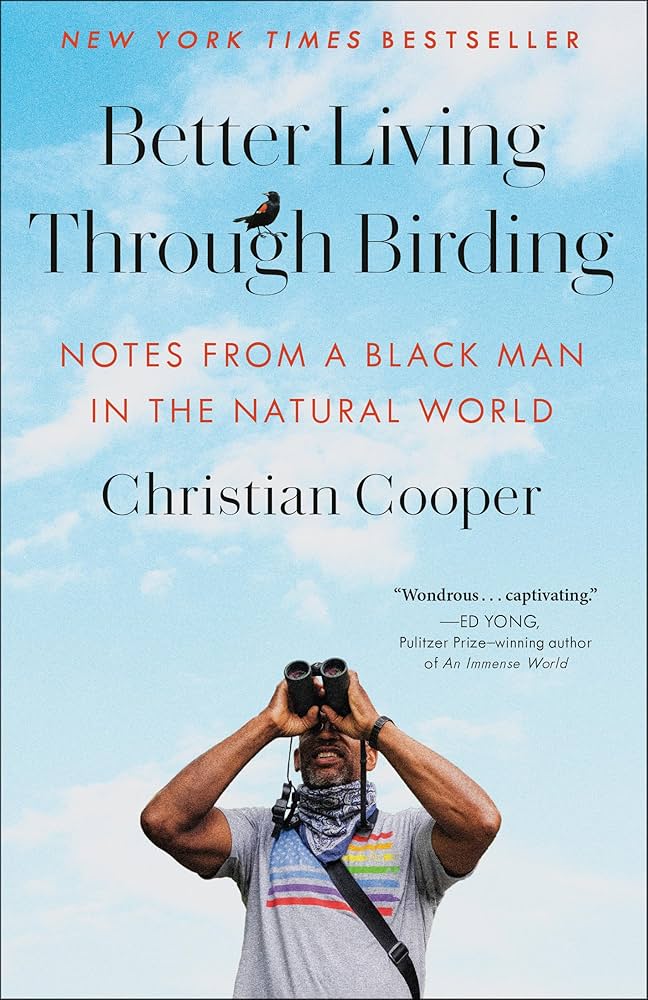
Publisher’s synopsis: “Central Park birder Christian Cooper takes us beyond the viral video that shocked a nation and into a world of avian adventures, global excursions, and the unexpected lessons you can learn from a life spent looking up. Christian Cooper is a self-described “Blerd” (Black nerd), an avid comics fan and expert birder who devotes every spring to gazing upon the migratory birds that stop to rest in Central Park, just a subway ride away from where he lives in New York City. While in the park one morning in May 2020, Cooper was engaged in the birdwatching ritual that had been a part of his life since he was ten years old when what might have been a routine encounter with a dog walker exploded age-old racial tensions. Cooper’s viral video of the incident would send shock waves through the nation. In Better Living Through Birding, Cooper tells the story of his extraordinary life leading up to the now-infamous incident in Central Park and shows how a life spent looking up at the birds prepared him, in the most uncanny of ways, to be a gay, Black man in America today.”
4. Birdgirl by Mya-Rose Craig

Publisher’s synopsis: “In her memoir, Mya-Rose Craig and her family travel the world in search of rare birds and astonishing landscapes. But a shadow moves with them, too – her mother’s deepening mental health crisis. In the face of this struggle, the Craigs turn to nature again and again, and every time it offers joy and stillness. On these journeys, Mya-Rose also witnesses the inequality and destruction we are inflicting on our fragile planet. And so, through the simple, mindful act of looking for birds, she becomes ever more determined to campaign for all our survival.”
5. An Immense World by Ed Young
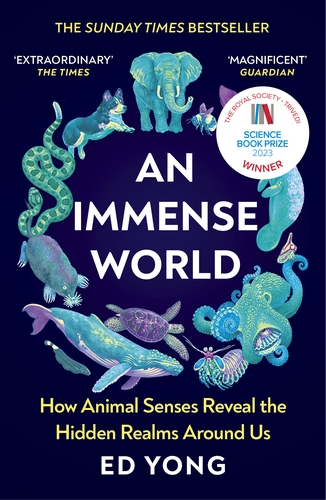
Publisher’s synopsis: “Award-winning science writer Ed Yong takes readers on an astonishing journey through the hidden senses of Earth’s creatures. From the magnetic compass of migratory birds to the ultraviolet vision of bees and the echolocation of bats, Yong welcomes us into previously unfathomable dimensions – the world as it is truly perceived by other animals. Drawing on the latest research in neurobiology and animal behaviour, An Immense World explores how each species lives within its unique environment, uncovering the sights and textures, sounds and vibrations, smells and tastes, electric and magnetic fields that form its sensory bubble of experience. This is science writing at its most transporting: showing us that in order to understand our world we don’t need to travel to other places; we need to see through other eyes.”
6. Nature Needs You by Hannah Bourne-Taylor

Publisher’s synopsis: “Nature Needs You tells the compelling story of how Hannah, without campaigning experience, funding or contacts, set out to save swifts from extinction in the UK. Her mission is to change the law and make ‘swift bricks’ mandatory so that the birds who nest in our walls will have a future in Britain. Nature Needs You delves into the highs and lows of trying to win hearts and minds, grab the news agenda with her naked Feather Speech, win Caroline Lucas and Lord Zac Goldsmith’s support, navigate meetings with Secretaries of State and debates in the Houses of Parliament, survive the trolling and midnight self-doubt and raise a petition with the requisite 100,000 signatures for a Parliamentary debate. At stake, with a decline in numbers of over 60% since 1995, are the birds who have become our symbol of summer, the swifts screaming in the skies above us.”
7. Bird Sense by Tim Birkhead

Publisher’s synopsis: “What is it like to be a swift, flying at over one hundred kilometres an hour? Or a kiwi, plodding flightlessly among the humid undergrowth in the pitch dark of a New Zealand night? And what is going on inside the head of a nightingale as it sings, and how does its brain improvise? Bird Sense addresses questions like these and many more, by describing the senses of birds that enable them to interpret their environment and to interact with each other. Our affinity for birds is often said to be the result of shared senses – vision and hearing – but how exactly do their senses compare with our own? And what about a birds’ sense of taste, or smell, or touch or the ability to detect the earth’s magnetic field? Or the extraordinary ability of desert birds to detect rain hundreds of kilometres away – how do they do it?”
8. The Genius of Birds by Jennifer Ackerman
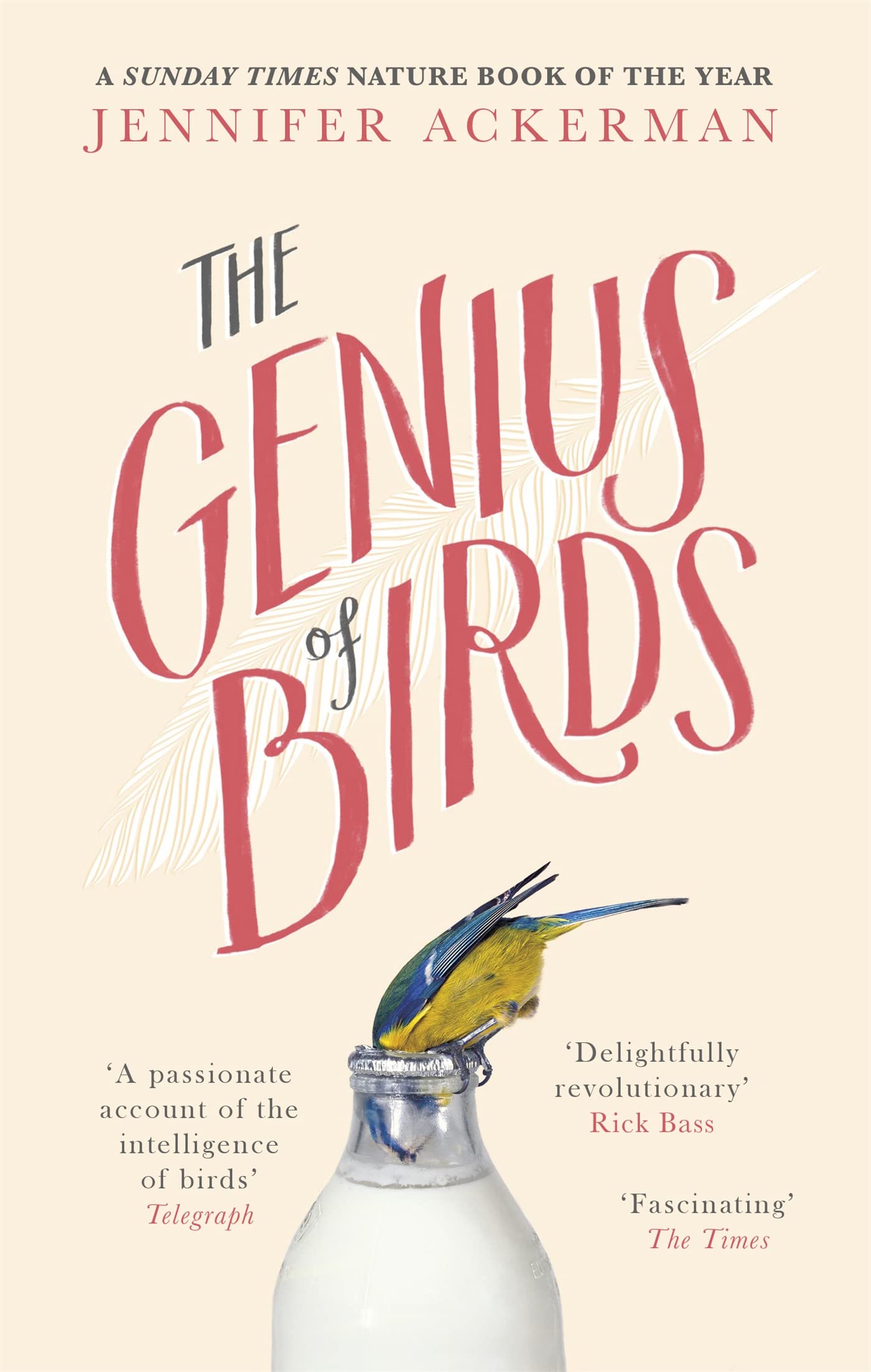
Publisher’s synopsis: “Birds are astonishingly intelligent creatures. In fact, according to revolutionary new research, some birds rival primates and even humans in their remarkable forms of intelligence. Like humans, many birds have enormous brains relative to their size. Although small, bird brains are packed with neurons that allow them to punch well above their weight. In The Genius of Birds, acclaimed author Jennifer Ackerman explores the newly discovered brilliance of birds and how it came about. As she travels around the world to the most cutting-edge frontiers of research – the distant laboratories of Barbados and New Caledonia, the great tit communities of the United Kingdom and the bowerbird habitats of Australia, the ravaged mid-Atlantic coast after Hurricane Sandy and the warming mountains of central Virginia and the western states – Ackerman not only tells the story of the recently uncovered genius of birds but also delves deeply into the latest findings about the bird brain itself that are revolutionizing our view of what it means to be intelligent.”
9. Feathers by Thor Hansen
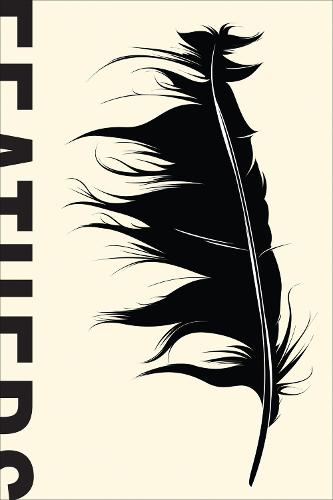
Publisher’s synopsis: “This is the untold natural and cultural history of nature’s finest invention. Feathers are quite an evolutionary marvel: aerodynamic, insulating, beguiling. Their story begins in the Jurassic and leads through the development of flight to high fashion. Yet, their story has never been fully told. In “Feathers”, biologist Thor Hanson tells a sweeping natural history of feathers, as they’ve been used to fly, protect, attract, and adorn through time and place. Applying the research of palaeontologists, ornithologists, biologists, engineers, and even art historians, Hanson asks: What are feathers? How did they evolve? What do they mean to us? …A captivating and beautifully-written exploration of the human fascination with feathers, this book transports readers from mythical associations with the divine to the height of modern-day science and technology”.
10. The Narrow Edge by Deborah Cramer

Publisher’s synopsis: “Each year tiny sandpipers—red knots—undertake a near miraculous 19,000 mile journey from one end of the earth to the other and back. In this firsthand account, Deborah Cramer accompanies them on their extraordinary odyssey along the length of two continents, tracking birds from remote Tierra del Fuego to the icy Arctic. On the full moon of spring’s highest tides, she seeks out horseshoe crabs, ancient, primordial animals whose eggs are essential to migrating shorebirds, and whose blue blood, unbeknownst to most people, safeguards human health. The Narrow Edge offers unique insight into how the lives of humans, red knots and horseshoe crabs are intertwined, and is an inspiring portrait of loss and resilience, of the tenacity of birds, and the courage of the many people who bird by bird and beach by beach, keep red knots flying.”
If you are interested in contributing to the #BOUdiversityBlog, please get in touch with us via this form which ensures anonymity for those who seek it.
Featured image credit: CCO PD pixabay.com