




LINKED PAPER Connectivity between breeding sites, wintering areas, and migration routes in Common Terns (Sterna hirundo) breeding in the Western Palearctic. Kiat, Y., Haviv, E., Perlman, Y. & Schekler, I. (2026) IBIS.VIEW

On spring nights at the Atlit saltpans, on Israel’s Mediterranean coast, the sky can fill with Common Terns. Some belong to the local breeding population, while others are passage migrants from breeding populations much farther north in Europe. Using long-term ringing data from Israel together with records from across Europe, we examined how breeding populations across the Western Palearctic differ in their migration routes and wintering areas.
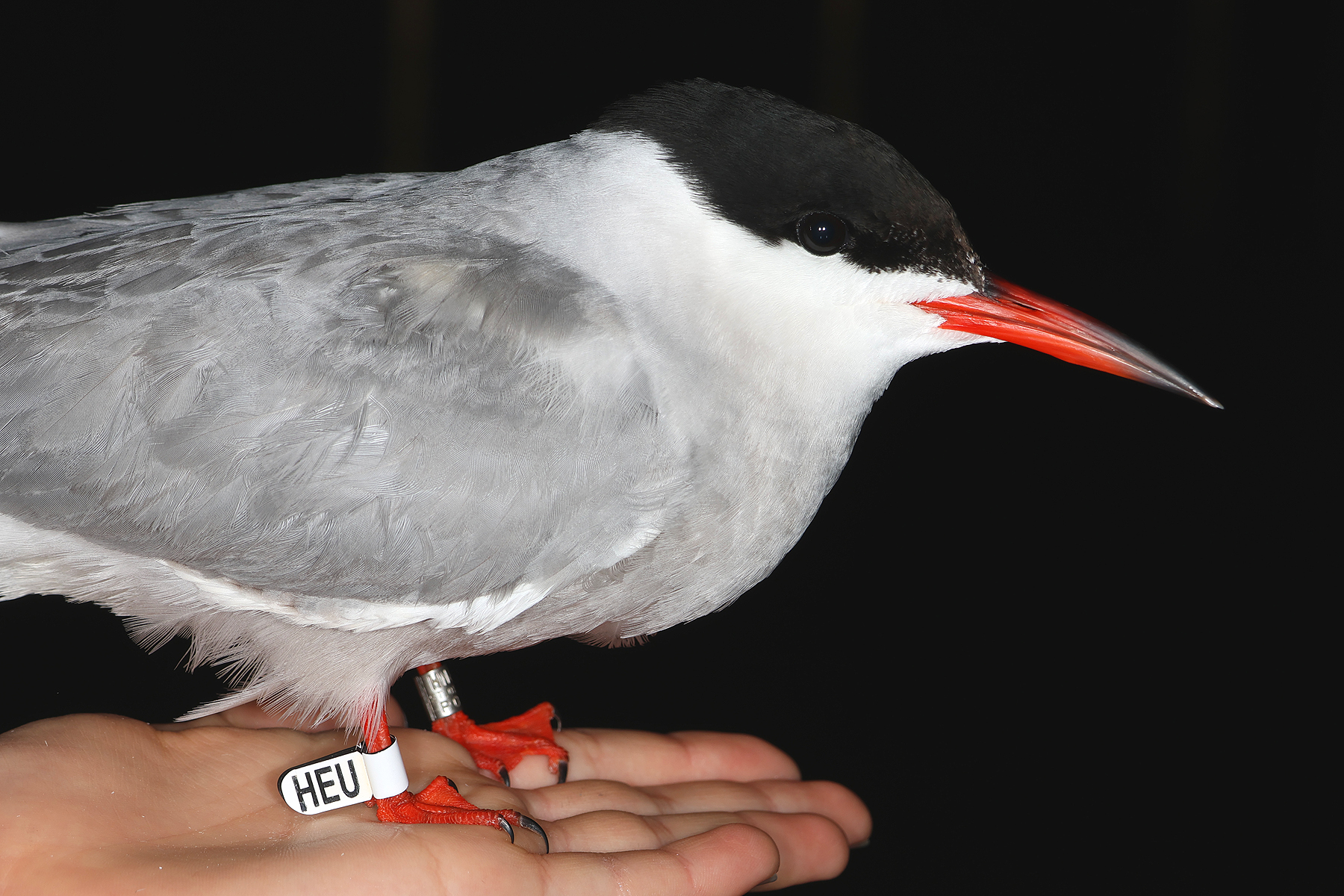 Figure 1. A Common Tern from Poland recorded during ringing activity at Atlit © Yosef Kiat.
Our work at Atlit began in 2010, primarily as a conservation project. In Israel, Common Terns have lost much of their breeding habitat, and about 90% of the national breeding population is now concentrated in a single large colony at Atlit, which currently holds around 1,300 breeding pairs. Common Terns face several threats, including habitat loss, predation, pollution, and disease outbreaks, but the concentration of most of the Israeli breeding population in a single colony makes it especially vulnerable to catastrophic events, particularly disease outbreaks. The site is therefore of major conservation importance.
To help monitor and protect the colony, we combined ringing with a remote-controlled camera system. The cameras allow us to follow breeding activity in real time, detect threats, and identify colour-ringed birds without repeatedly entering the colony. In a recent paper, we described this monitoring system in detail and showed that it substantially improved resighting rates while reducing disturbance to the birds (Kiat et al., 2025).
Figure 2. Common Tern ringing at Atlit © Yosef Kiat.At first, our ringing work raised simple local questions: where do the birds breeding in Israel spend the non-breeding season, and where do the migrants stopping at Atlit come from? Before this project began, only a small number of Common Terns had been ringed in Israel, producing very few recoveries. Over time, however, the picture became much broader. Since 2010, across 212 sleepless field nights, we have ringed nearly 15,000 Common Terns at Atlit, and those birds have produced hundreds of recoveries. We also documented many foreign-ringed terns stopping at the site. Together, these records made it possible to ask a larger question about migratory connectivity across the Western Palearctic.
Some of the early records were unexpected. In the first years of the project, we documented terns from Finland, Lithuania, and Germany at Atlit. This was notable because birds from the Baltic region were generally assumed to migrate mainly via the Atlantic flyway to western Africa. These observations suggested that the migratory system of Common Terns may be more complex than previously understood. To examine this more rigorously, we combined the Israeli data with ringing recoveries from the EURING Data Bank, the Russian Ringing Atlas, and published geolocator studies. The resulting dataset allowed us to compare breeding areas, migration routes, and wintering regions across a large part of the species’ Western Palearctic range.
The results showed two main flyways linking breeding populations in the Western Palearctic with Africa. Birds using the East Atlantic flyway mostly breed in Western Europe, Fennoscandia, and much of the Baltic region, and migrate toward western and southern Africa. In contrast, birds using the East Mediterranean–East African flyway mainly breed in Central and Eastern Europe and the Middle East, moving south via the eastern Mediterranean, the Red Sea, and the Indian Ocean. Between these two systems, we identified an overlap zone in Central Europe, where birds from same breeding areas may use different routes. The data collected in Israel were especially important for improving knowledge of the eastern route. Compared with the Atlantic flyway, the East Mediterranean–East African system has historically been less well documented, in part because the Middle East, Red Sea region, and parts of eastern Africa have been underrepresented in ringing data. The Atlit project helped fill part of that gap.
Figure 3. Bird activity at Atlit during spring migration stopover© Yosef Kiat.We also found evidence for leap-frog migration. Along the western flyway, more northern breeding populations tend to winter farther south, effectively passing beyond the wintering areas used by more southern breeders. In practical terms, this means that birds from northern and northeastern Europe often continue to southern Africa, whereas birds from more western or southerly breeding regions tend to remain farther north during the non-breeding season. Another clear pattern was that outside the breeding season, Common Terns in our dataset were recorded almost entirely along coastlines: the Mediterranean, Atlantic, and Indian Ocean shores. This supports the idea that route choice may be influenced not only by geography, but also by a strong association with coastal habitats outside the breeding season.
For us, one of the main points of this study is that long-term conservation work at a single site can also answer broader ecological questions. What began as a local ringing and monitoring project at an important breeding colony became, over time, a way to examine migratory connectivity across three continents. It also highlights the continuing value of ringing data. Even in the era of geolocators and other tracking technologies, large ringing datasets still provide an important perspective on migration at broad geographic and temporal scales. More broadly, the study emphasizes a familiar but important point: migratory birds cannot be understood or conserved only at the breeding site. A Common Tern breeding in Western Palearctic may depend on habitats and conditions extending across Europe, eastern Africa, or southern Africa. Understanding those connections is an essential part of understanding and conserving the species itself.
References
Kiat, Y., Hatzofe, O., Perlman, Y., & Schekler, A. I. 2025. Monitoring breeding seabird colonies and marked individuals using a remote-controlled camera system. Ornithological Applications. 128:1–12.VIEW
Image credit
Top right and featured image: Common Terns at Atlit during a spring migration stopover © Yosef Kiat.