

LINKED PAPER Use of anthropogenic landscapes in a wild Columba livia (Rock Dove) population. Smith, W.J., Portugal S.J. & Jezierski M.T. (2025) Ornithology. VIEW
Feral pigeons (Columba livia) are familiar to most of us. Usually found stealing chips and decorating statues, they are economically significant ‘pests’ in towns and cities. More generously: they are uber-successful and fascinating urban adapters, thriving in a concrete jungle which can be hostile to many other species. Feral pigeons descend from escaped domesticated pigeons, which have accompanied us humans for millennia as sources of food and entertainment (through showing and racing). Additionally, thanks to their use in biological research since Darwin’s time, domestic pigeons have contributed to scientific advancement. The wild-type form of Columba livia is the cliff-dwelling Rock Dove, a medium-sized blue-grey bird native to vast swathes of Afro-Eurasia. Rock Doves have a rather more mysterious status than their feral and domestic descendants. Thanks to extensive interbreeding with their more abundant cousins, they have been replaced by feral populations in many parts of their distribution (e.g. across all of England and Wales).
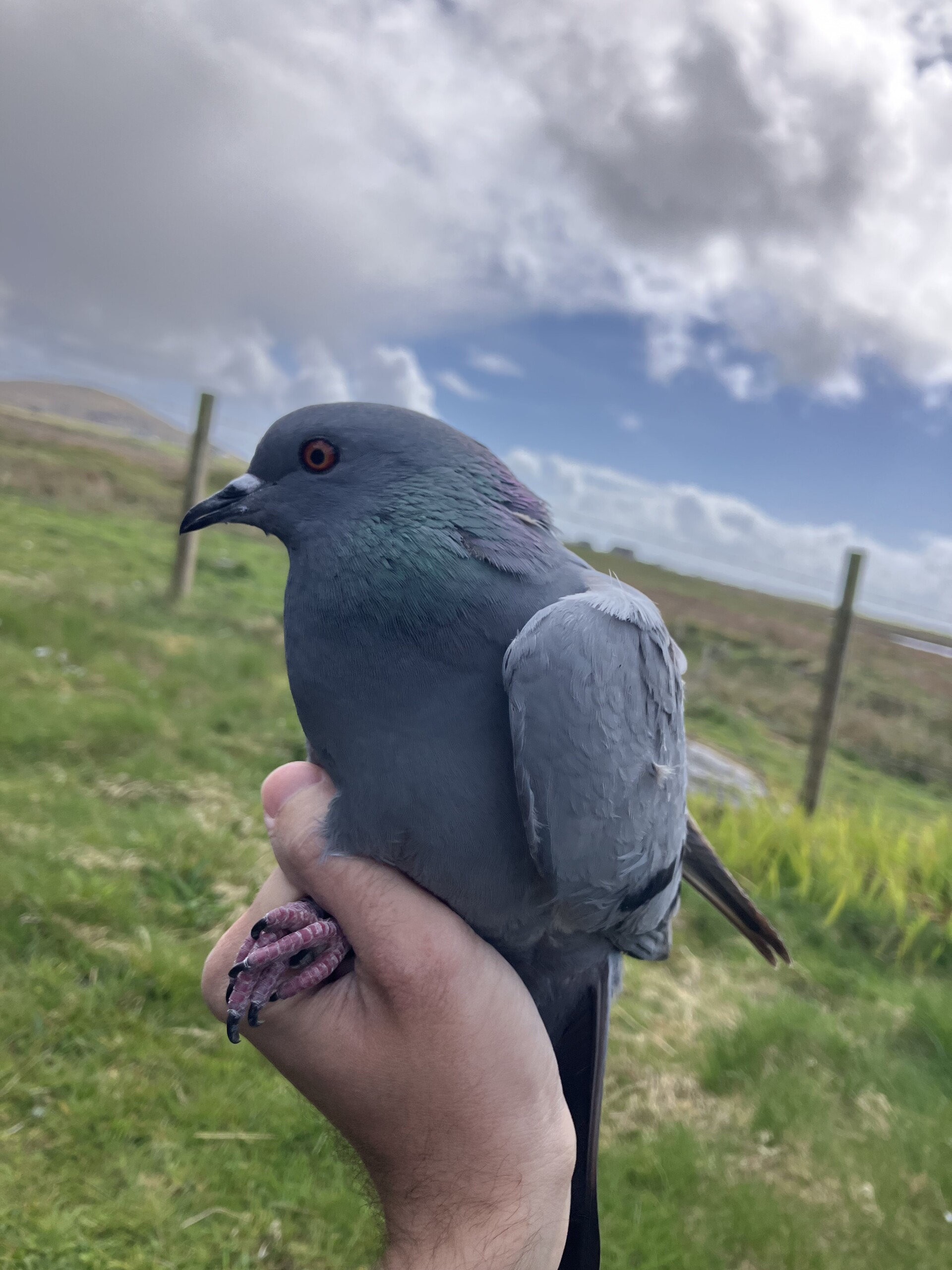 Figure 1. Wild Rock Dove, caught as part of research in the Outer Hebrides. © Will Smith.
For my doctorate, I worked to establish the contemporary status of wild-type Rock Doves in the British Isles. Using a combination of genomics, morphology, and plumage data, we showed that whilst relict populations known to occur across parts of Scotland and Ireland retain their ‘wild-type’ genetic background, wild-feral mixture is very common. The colonies which have retained their genetic distinctiveness to the greatest extent are found in the Outer Hebrides. Whilst I was carrying out data collection across these islands, for my doctoral research, I set up what I hope will become a long-term population study of Rock Doves. This is co-led with Michał Jezierski of the University of Birmingham. Started in 2019, this involves visiting the islands each year to maintain a mark-recapture population. We catch and ring doves at night in roost sites within caves and derelict buildings, collecting morphological and genetic data. We also engage with the local community to encourage the recording of colour-ringed individuals, collecting data on survival and movement. We have so far ringed over 1,300 individual Rock Doves as part of these efforts.
There are a couple of reasons why we set up this project. Firstly, ongoing feral-wild admixture threatens Rock Dove populations across the world. Our knowledge of the basic biology of these birds is surprisingly limited, so every little piece of information contributes to our understanding of vulnerable populations. Secondly, it is our hope that the study will become a resource for collaborators. Much of what we know about certain aspects of animal cognition and behaviour comes from research carried out on Columba livia. But these studies are of domesticated strains, in captive conditions – and so the extent to which conclusions can be applied more broadly across the avian clade can be unclear. Across multiple biological model species, there’s increasing interest in trying to understand wild-living populations, and so I’m keen to make the Outer Hebridean Rock Doves available as an opportunity to explore questions that have hitherto been asked only in domesticated individuals.
One of the first things that I was excited to investigate related to the movement ecology of these birds. Rock Doves are usually described in books as ‘commuting’ each day, flying from their cave homes for many miles, to reach the openlands in which they forage. Such flights perhaps underpin the homing abilities for which many domesticated strains are famed. In the Outer Hebrides, many of today’s Rock Dove colonies are found in derelict buildings within the meadowlands where the doves forage. I was really interested to see how these anthropogenically-associated birds move around the landscape. Thanks to grants from the British Birds Charitable Trust, the Scottish Ornithologists’ Club, and the British Trust for Ornithology, we managed to fund a handful of GPS tags for a pilot study. We successfully tagged five individuals in a derelict house at a croft on the island of North Uist, surrounded by ideal ‘machair’ meadowland habitat (a coastal ecosystem unique to parts of Scotland and Ireland).
After a nervous wait for the data to start coming in, it became clear that these five Rock Doves were doing very little! They spent most of the day loafing around their roost site, making brief forays a few metres away to feed in the fields. Not one of them moved further than 3km from the roost for the weeks-long tracking period! This was not at all like the classic ‘commuting’ behaviour which is described in field guides. And this little pilot study got us thinking about the species’ route into domestication. Agriculture, coupled with opportunities to nest and roost in proximity to such foraging habitats, clearly facilitates a much closer association with humans than would have been possible in the distant past. It seems very likely that such a Rock Dove/Human interaction, somewhere in the Middle East thousands of years ago, could conceivably have represented the start of our association with this species. It surely would not have taken long for our ancestors to start to see the value in these birds as a source of food and fertiliser.
 Figure 2. GPS tracks for five individual Rock Doves in the Outer Hebrides in July/August 2023. Triangles are buildings used for roosting. Birds spent all their time within agricultural habitats.
We continue to visit the Outer Hebrides regularly to ask new questions about these birds. Earlier this year, we’ve had our furthest recorded movement yet, with a bird ringed in March 2024 on South Uist (and not seen since) being reported by a member of the public on Barra, nearly 40km south. We’ve trialled the use of trail cameras within roosting sites to record behaviour at colonies. And we’ve collected additional data from feral pigeons on mainland Great Britain for comparative evolutionary studies. Fieldwork – and the opportunities it provides to spend time watching and learning from your study species – is a great way to inspire new questions and is my favourite part of the job. I can’t wait to find out what else we can learn from these special birds over the next few years.
References
Baldaccini, N.E., Giunchi, D., Mongini, E. & Ragionieri, L. 2000. Foraging flights of wild rock doves (Columba l. livia): a spatio-temporal analysis. Italian Journal of Zoology 67:371-377.
Johnston, R., Causey D. & Johnson, S. 1988. European populations of the Rock Dove Columba livia and genotypic extinction. American Midland Naturalist 120:1-10.
Smith, W.J., Sendell-Price, A.T., Fayet, A.L., Schweizer,T.M., Jezierski, M.T., Kerkhof, C.V.D, Sheldon, B.C., Ruegg, K.C., Kelly, S., Turnbull, L.A. & Clegg S.M. 2023. Limited domestic introgression in a final refuge of the wild pigeon. iScience 25(7):e104620. VIEW
Smith, W.J., Lavretsky, P., Gering, E. & Ottenburghs, J. 2026. Research and conservation priorities for domesticated birds’ wild counterparts. Ornithological Applications duag045. VIEW
Redford, K. & Dudley, N. 2018. Why should we save the wild relatives of domesticated animals? Oryx 52:397-398.
Image credit
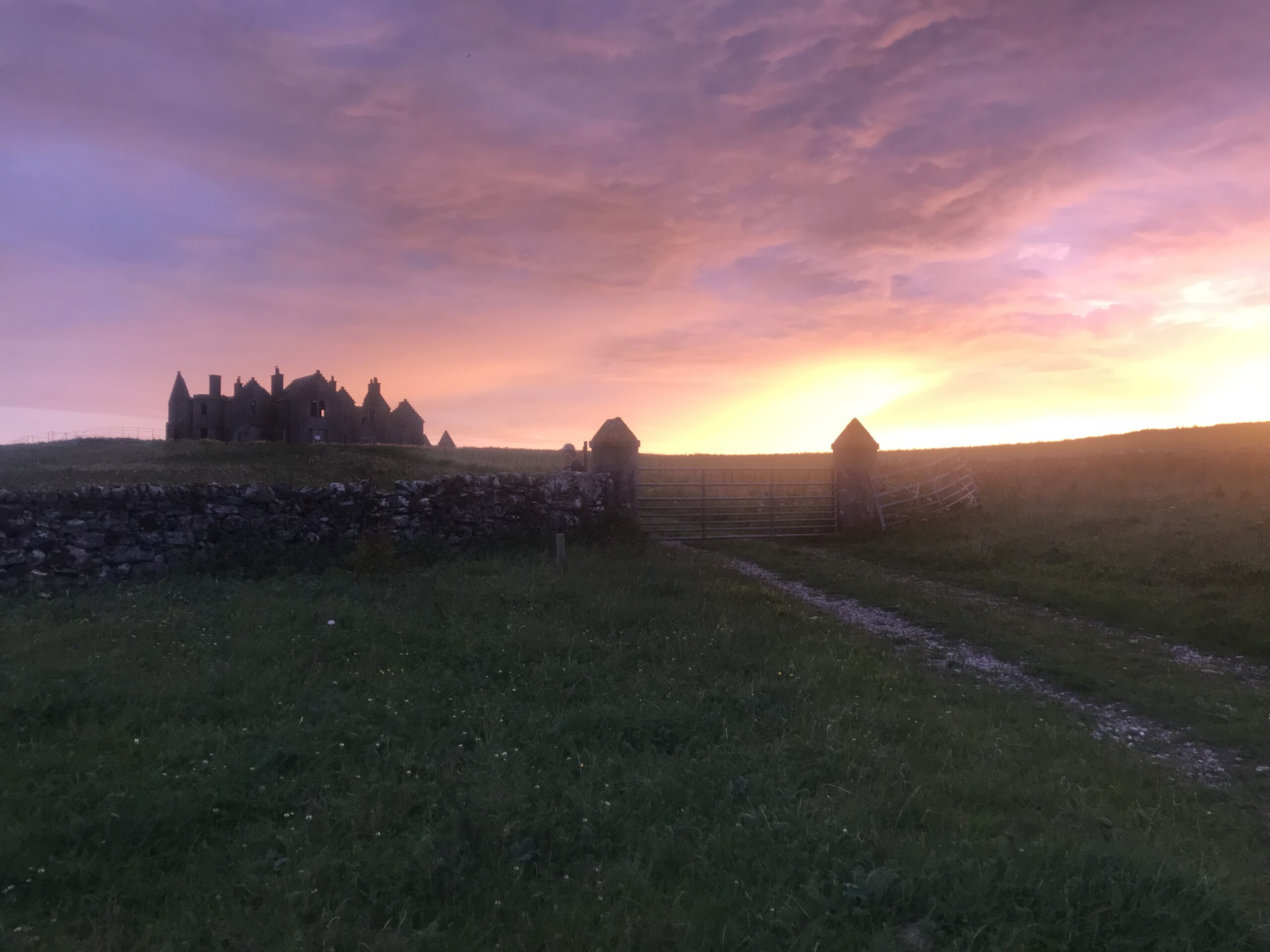
Top right and featured image: Derelict house within agricultural land. This building is on Vallay island in Uist, Outer Hebrides, and is home to a large wild Rock Dove colony. © Will Smith