
My reasons for attending the 25th BirdsCaribbean conference in July 2026 on the island of Trinidad were linked to my previous ornithological research in another Caribbean island. Back in 2018, during my MSc at University of East Anglia (UEA), a colleague and I, keen to research island endemic birds, spent April to June surveying pine forests birds of Grand Bahama. We focused our dissertations on two of the eight endemic birds of the Bahamas – Bahama Nuthatch (Sitta insularis) and Bahama Warbler (Setophaga flavescens).
Prior to our fieldwork, the nuthatch was feared extinct following Hurricane Matthew in 2016, whilst the warbler’s status on Grand Bahama was not known. We were then delighted when we rediscovered the nuthatch and recorded the warbler 327 times — hooray!
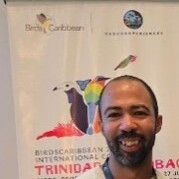
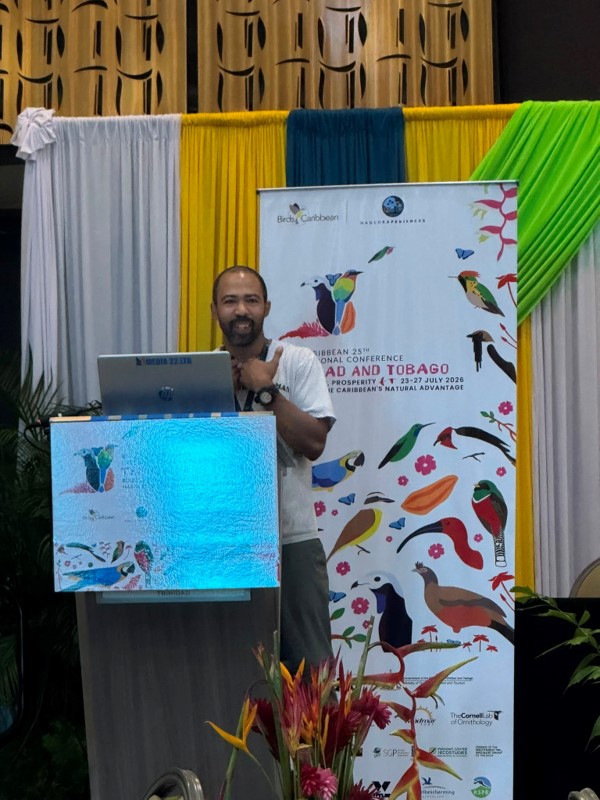 Figure 1. Author presenting at BirdsCaribbean2026 conference © Harry Bolton.
But a year after our fieldwork, in 2019, Hurricane Dorian struck Grand Bahama and both species have not been recorded on the island since, suggesting that they may have been wiped out. If confirmed, this means global extinction for the Bahama Nuthatch and extirpation for the Bahama Warbler, now a single-island endemic on the neighbouring Abaco, an island equally vulnerable to hurricane strikes…
The fieldwork and events that followed set me on a path to research hurricane impacts on island species. Therefore I decided to attend a conference where most attendees live in the Caribbean archipelago, a hurricane hotspot, and work to protect the endemic species that are vulnerable to these forces of nature. I was curious to find out about the challenges conservationists in the Caribbean currently face to protect their species, which include endemics found nowhere else on earth.
At the conference, there were several parallel sessions, each on different topics, and I mostly chose those on threatened and endemic species—there were plenty of talks (either in English or Spanish) about impacts of hurricanes on island bird species. I had previously read papers on many of these hurricane-threatened species, e.g., Dominican Amazon (Amazona imperialis), and it was nice to hear updates from the speakers on where the science and conservation efforts currently stand.
My turn to present as part of the endemic and threatened species session arrived quickly. And I believe the message hit home. I presented a study whose premise is that the fate of the Bahama Nuthatch (i.e. likely extinct following a hurricane) could befall at least 60 other island endemic species (birds, mammals, reptiles and amphibians) worldwide, 32 of them found in the Caribbean. And whilst it is impossible to prevent a hurricane from striking their islands, efforts can be made in between hurricane intervals to enhance species’ resilience to this threat. To help the people attempting to conserve these species on the ground, in our study, my team and I suggest that an International Union for Conservation of Nature (IUCN)-endorsed Task Force should be set up and focus on three key areas: enhancing resilience, emergency-response and post-hurricane recovery.
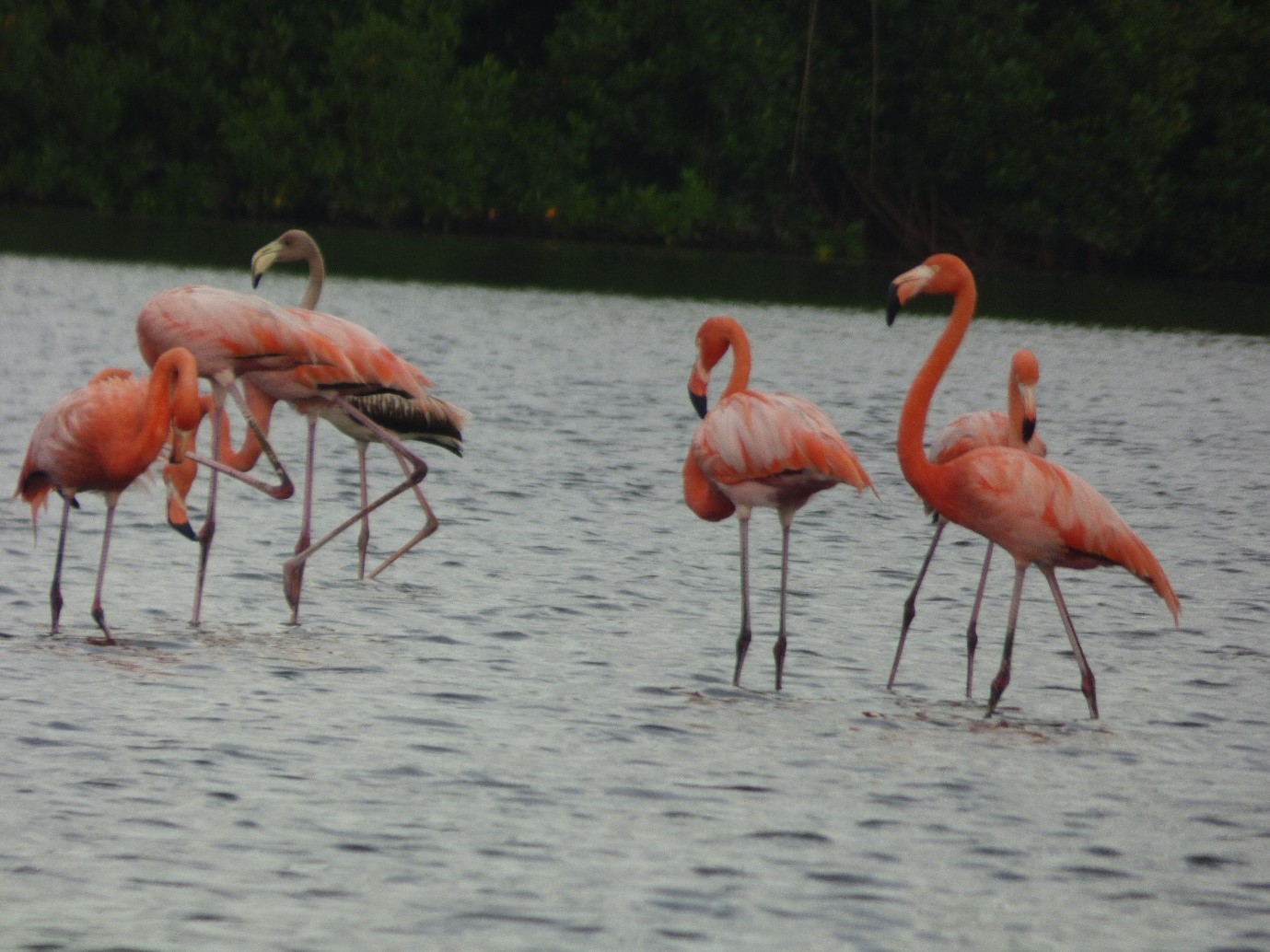 Figure 2. American Flamingos at Caroni Swamp, Trinidad © David Pereira.
Immediately after my talk’s session I was approached by attendees congratulating the study and offering to support this ongoing effort. I exchanged contacts with some – one person handed me their business card, whilst I connected with others on LinkedIn – and promised to keep in touch and provide updates on any major developments relating to the Task Force.
Having worked in the Bahamas in the past, at the networking sessions during breaks, I took the opportunity to (re)connect with local Bahamian scientists to find out about their work and the state of currents affairs relating to conservation of their endemic birds. I learned that, following a significant increase in research permit costs by the Bahamas government in 2021, research in the country has severely declined. Moreover, I learned that research permit costs have also become more expensive for local Bahamian scientists, making research less accessible to them. ‘Not good news for the Bahamas’ endemic birds, who were already poorly researched prior to this policy change’, I thought. ‘Many researchers now go somewhere else in the Caribbean’, a Bahamian scientist commented to me.
Nevertheless, the contacts I made may one day lead to future collaborations, including on follow-up ideas relating to my past projects. For example, on Grand Bahama, I believe priority is to attempt to rediscover the Bahama Nuthatch and Bahama Warbler, whilst on Abaco, assessing this warbler’s status and the habitat preferences of the island’s population is urgently needed.
I learned that, regardless of which Caribbean island these scientists/conservationists worked on, species conservation faced many of the same challenges. The ones I heard repeatedly were lack of local capacity to do the conservation or research work needed, as well as a lack of funding to get initiatives off the ground or continue these efforts for long enough to lead to positive change.
Across the Caribbean islands, biodiversity faces many of the same threats. Beyond hurricane impacts, I heard of the trapping of songbirds (and parrots) which happens for a myriad of reasons, including human companionship. The presence of invasive species was another: for example, I saw abandoned cats roaming free in pine forests in the Bahamas where endemic birds were found, and now the same in Trinidad when I visited the Caroni Swamp, where the Scarlet Ibis, their national bird, roosts.
But I also took note of one action that can turn the tide, which came up repeatedly in talks: community engagement. I heard of many efforts being made to involve local communities in scientific projects or conservation initiatives along the way. Equally, many projects included elements of public education on the study species and ways to protect them. Efforts such as these give me hope for the future of these species.
I left feeling inspired, more aware, more connected, and enriched. I thank the BOU for helping me to present, and I thank BirdsCaribbean for giving me a new perspective on all things Caribbean, and for broadening my understanding along the way.
Image credit
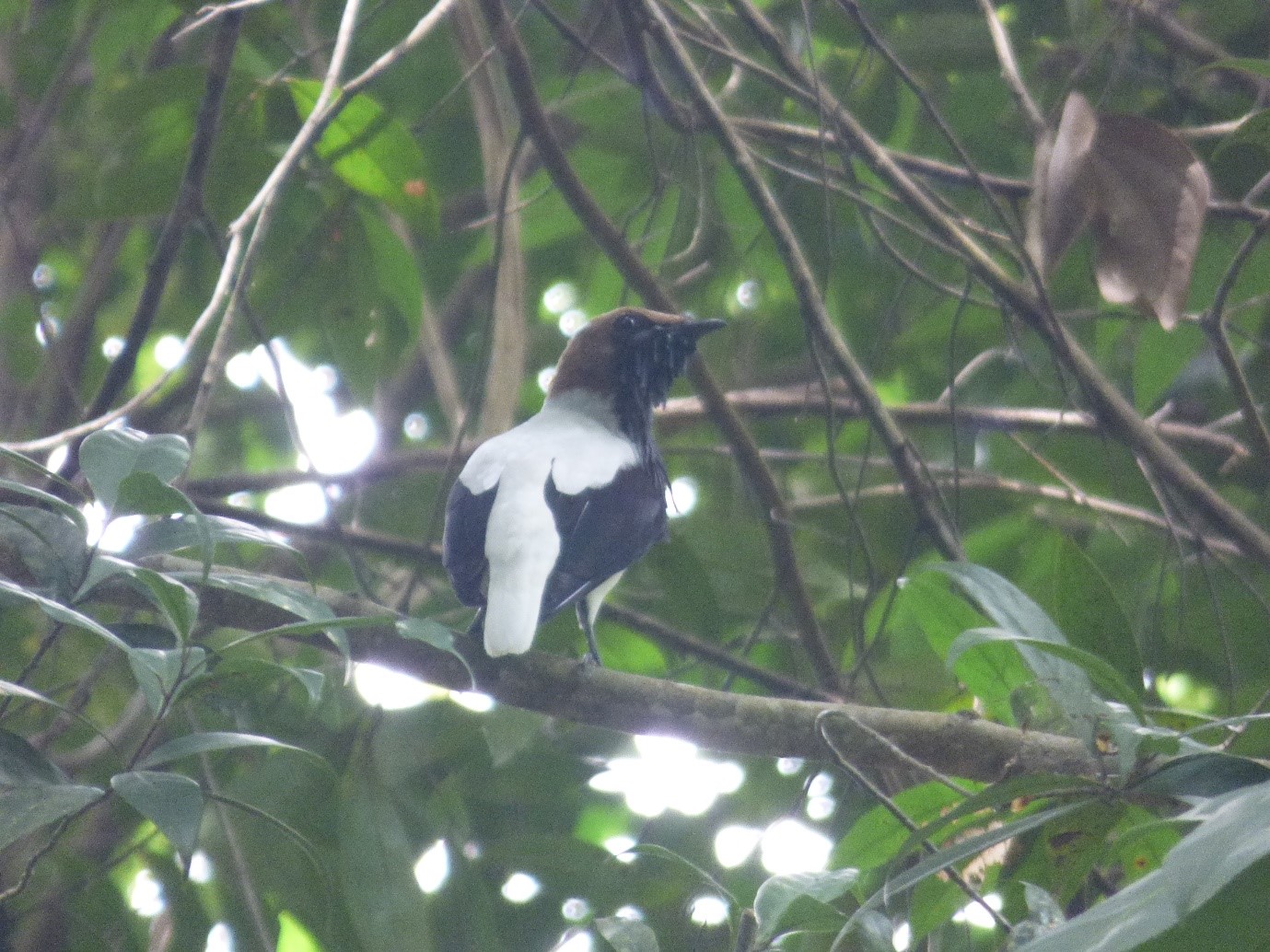
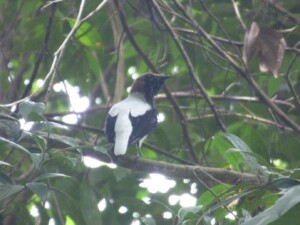
Top right & featured image: Bearded Bellbird at ASA Wright Nature Centre, Trinidad © David Pereira.