

In mid-September 2026, the annual conference of the German Ornithological Society took place in Mainz, Germany. Each year, members of the German-speaking ornithological community come together for a week of presentations, discussions, workshops, and conversations about birds.
The attendees represent a broad range of backgrounds, from amateur birdwatchers and dedicated hobby ornithologists to early-career researchers and experienced professors. Despite our different levels of experience, we all share one thing: a deep passion for birds and avian research.
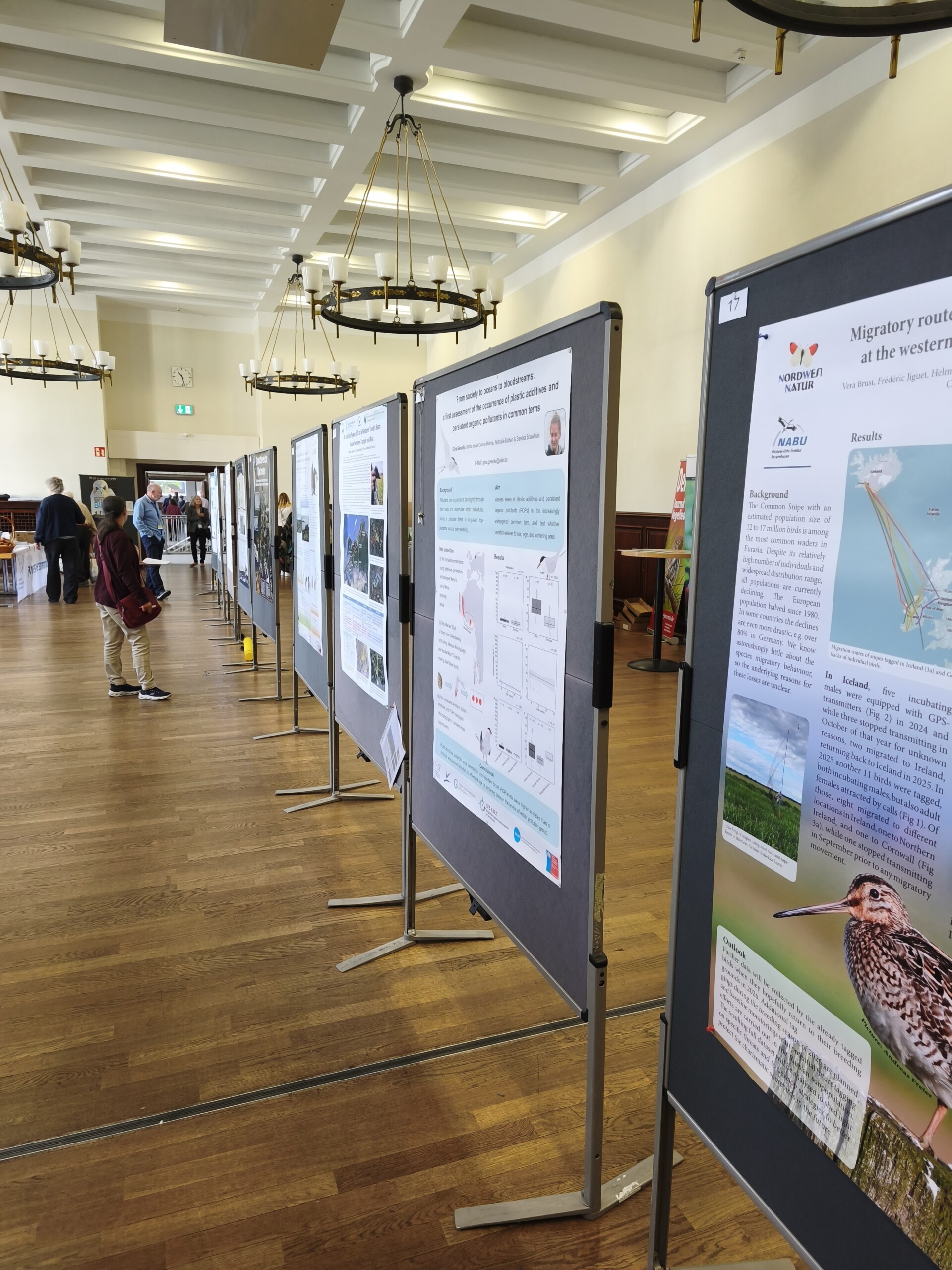
The conference offered an inspiring opportunity to exchange ideas, learn about the latest discoveries, and discuss the challenges that birds may face. Between oral presentations and poster sessions, there was plenty of time to meet old friends, make new connections, and talk about everything from behaviour to migration.
During the welcoming dinner, I met many familiar faces and enjoyed a wonderful evening catching up with colleagues and friends. The lunch breaks offered a different opportunity to connect. We had a chance to enjoy the warm September sunshine outside while enjoying our food discussing the morning’s talks. These moments made it easy to start conversations with people I had not met before and learn more about them and their research.
Later in the conference, the programme featured a session on movement ecology and tracking — one of the topics most closely related to my own research. I was especially excited to attend it and learn about the latest discoveries and approaches in the field. My talk was part of that session and focused on the sex-specific differences in the foraging ecology of the Little Auk (Alle alle), a small monomorphic seabird breeding in the High Arctic. Even though previous studies mainly suggested differences in size-dimorphic species, there can be some in monomorphic species as well. To assess that, we tracked Little Auks with GPS-TDR-devices during the chick-rearing period in three Svalbard colonies. While there are no sex differences in spatial distribution, we found females using different diving strategies compared to males.
After I gave my presentation, I had some people approached me to discuss my research. I was delighted by their interest, and it reminded me how valuable it is to discuss research with others. Conversations about methods and results often lead to new perspectives, broaden my thinking, and inspire new ideas about how to analyse my data.
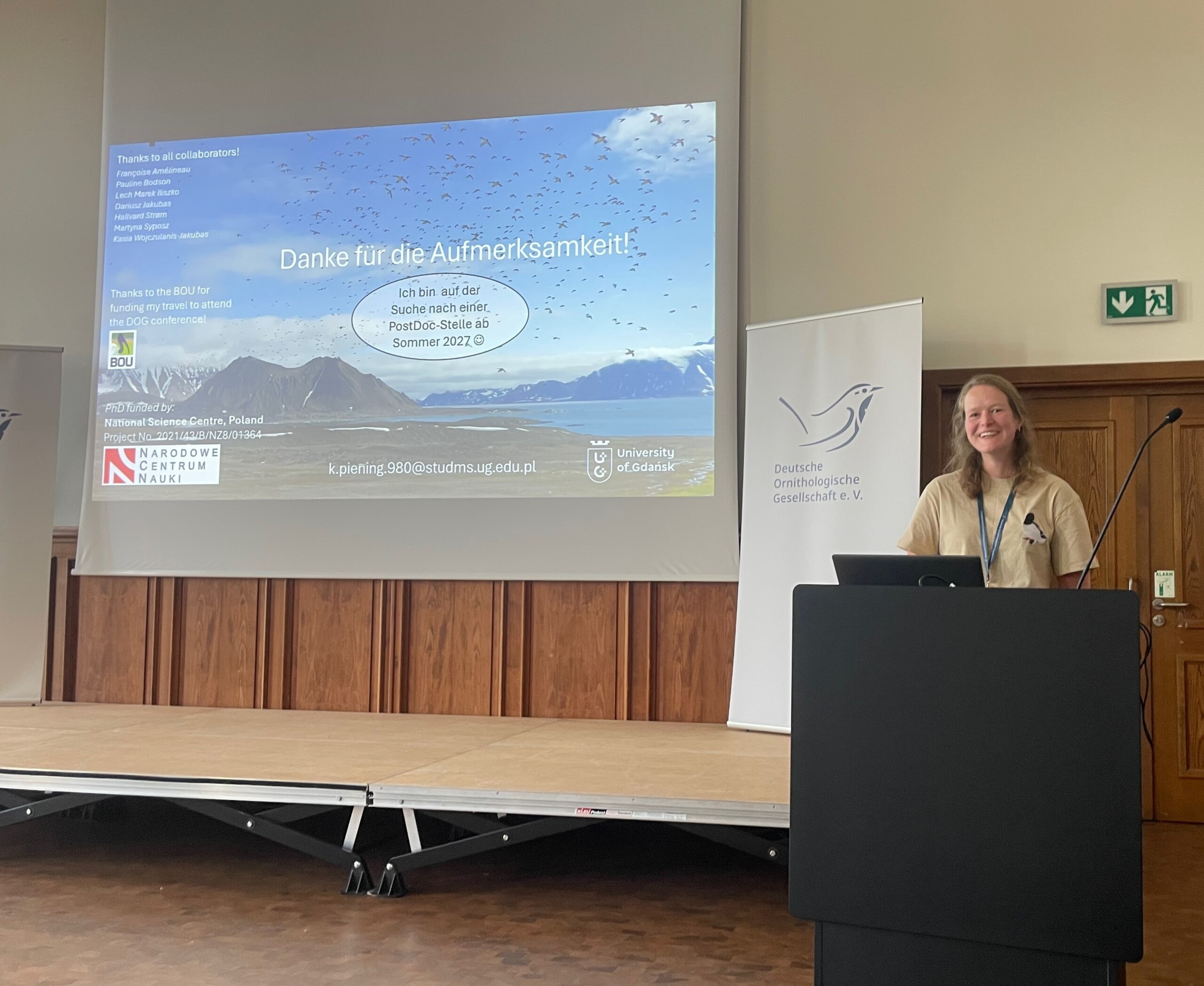 Figure 1. Kristin presents her results on the sex-specific differences in the foraging ecology of the Little Auk © Hannah Kalthoff.
As I am due to finish my PhD in about six months, I took the opportunity to introduce myself to established researchers and ask for their advice on finding a postdoctoral position. The conversations I had were incredibly helpful: they gave me practical suggestions, introduced me to different career paths, and helped me feel more confident about taking the next step. The conference therefore provided more than just a break from my usual office routine, it helped me look ahead — it gave me new perspectives on my research, valuable advice about my career, and the confidence to start planning the next stage after my PhD. I returned home feeling inspired, supported, and excited about the opportunities ahead.
Overall, I thoroughly enjoyed attending the German Ornithological Conference and I am very grateful to the DOG and the BOU for supporting my attendance and to the National Science Centre Poland for funding this research. The conference gave me the opportunity to share my research and connect with fellow ornithologists. I am already looking forward to the next meeting — and especially to the early-career conference — taking place in Osnabrück in 2027!
Image credit
Top right & featured image: Poster presentations during the German Ornithological Conference 2026 © Kristin Piening.