
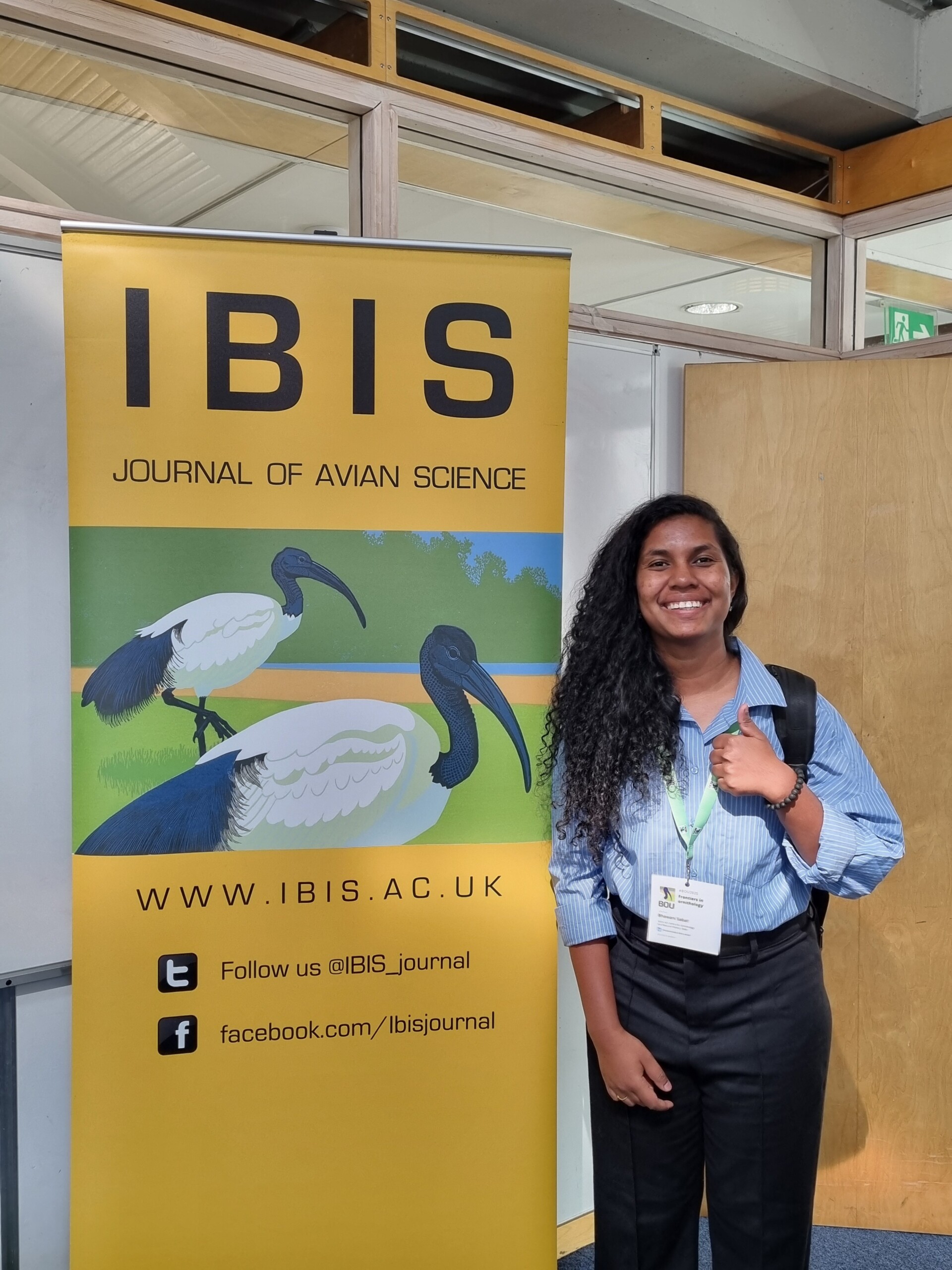

Attending BOU2025 – Frontiers in Ornithology in Nottingham this April was one of those moments in my academic journey that felt both surreal and energizing. I was awarded the BOU Member Conference Attendance Grant of £800, and was also lucky enough to receive free registration and accommodation. This support enabled to attend my first-ever BOU conference, an opportunity I had never expected would happen in my early research career. I solo travelled internationally for the very first time from India to the UK, to participate in a gathering that brought together ornithologists from every corner of the world. I am especially thankful to my supervisors, who strongly encouraged me to apply for the grant and supported me throughout the process.
My talk focused on ‘morphological and molecular forensics of select Galliformes for species identification’, a forensic database aimed at improving species identification when only partial remains – for example, feathers, eggs, or degraded samples – are available. I presented how this forensic database based on microscopy (LM & FESEM) and molecular (mtDNA- 12S, 16S, Cytb) techniques could crack wildlife crime cases related to Galliformes, the order containing birds like pheasants, partridges, quails, and francolins! This work is especially relevant in regions where illegal hunting, trade, or accidental mortality makes accurate identification crucial for conservation actions.
I was a little nervous initially, given that forensics in ornithology is a niche that not many are familiar with. But to my surprise, the audience showed genuine curiosity. The feedback I received was encouraging and constructive. Several researchers approached me afterward to discuss methods, challenges, and the potential applications of this database, and further exchanged ideas. One of the most memorable moments occurred when plenary speaker, Judy Shamoun-Baranes, came to speak with me about her own MSc work in feather morphometry. She shared thoughtful suggestions on how I could expand this research and encouraged me to continue decoding feather structures—an interaction that meant a great deal to me.
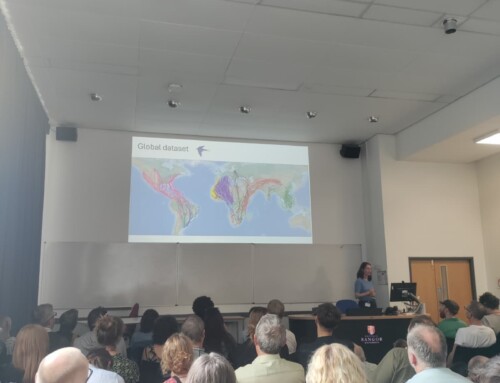
 Figure 1. Bhawani Sabat presenting her talk at BOU2025 © Bhawani Sabat.
I had the chance to interact closely with all the plenary speakers, who generously shared insights on research directions, career pathways, and academic growth. I am particularly thankful to Nishant Kumar, who motivated me to connect with more researchers working on similar themes to me. For my PhD research, I had always wanted to study some aspect of Galliformes’ diet, for which I spoke with Andreanna Welch about. She kindly offered to answer any questions I had as I explored this objective further. These conversations expanded my thinking and helped shape the next steps of my research plan.
What struck me most was the diversity of topics related to ornithology: migration, bioacoustics, socio-ecology, disease, genetics, behaviour and more. Listening to speakers openly share their uncertainties, struggles, and turning points in research is something I found deeply grounding as a young researcher trying to navigate the field and find my own direction.
Beyond the talks, it was the people who made the conference unforgettable. The poster sessions, tea breaks, and evening socials were equally enriching, filled with stories from field sites across continents, laughter, and new friendships. The informal networking was as valuable as the formal sessions, opening possibilities for future collaborations I had not envisioned before attending.
The conference was exceptionally well organised. I am grateful to Leila Walker, Angela Landford, and the entire BOU team, whose warmth and efficiency made a huge difference—especially for someone like me, travelling internationally for the first time. Despite being thousands of kilometres away, the hospitality and comfortable accommodation at the University of Nottingham made me feel at home. I loved the all-vegetarian meals, and the overall environment was welcoming and kind.
 Figure 2. BOU2025 conference at University of Nottingham © Bhawani Sabat.
After the conference, I had the chance to fulfil a personal dream—exploring Nottingham and London. As someone who had always imagined visiting the UK but had thus far only experienced it through books and documentaries, walking through those places during my first solo international trip felt surreal.
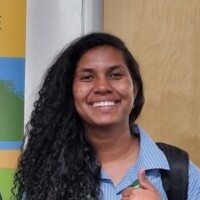
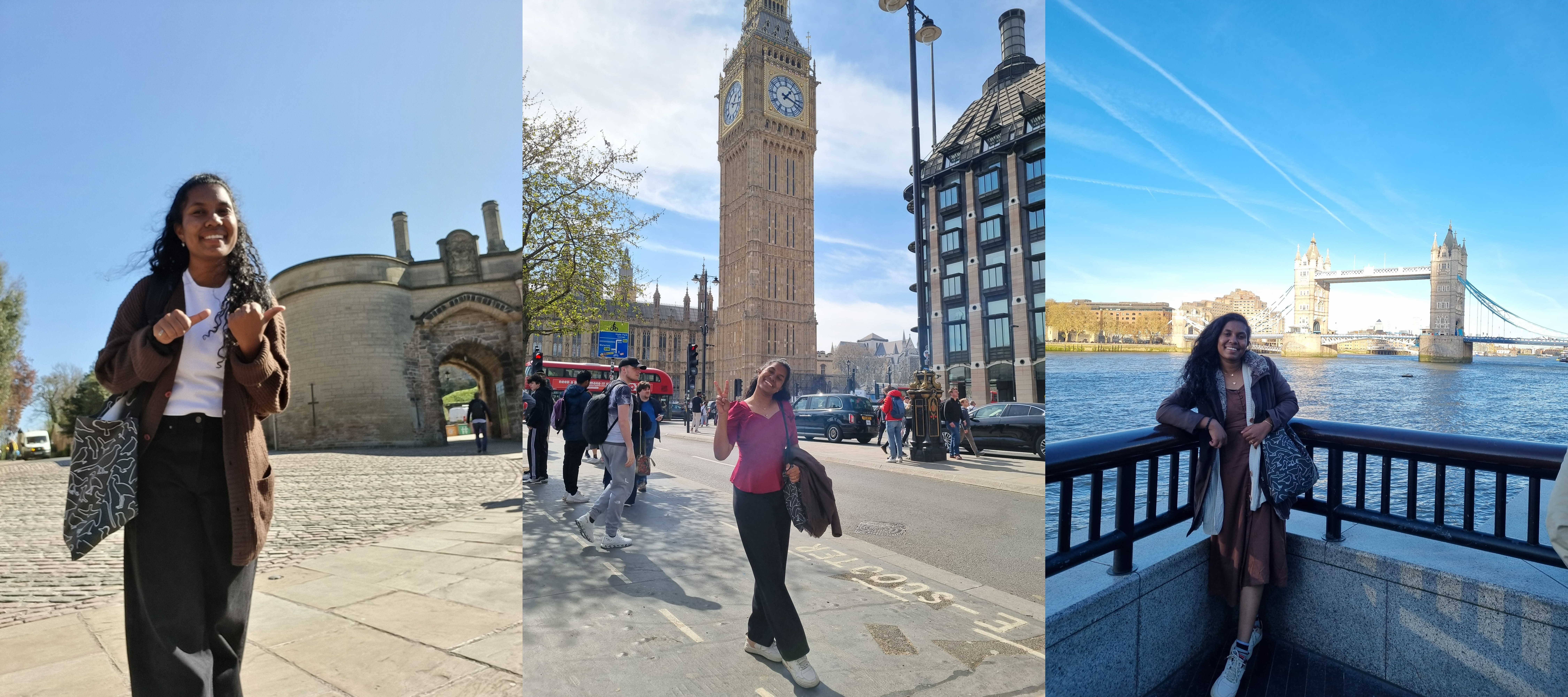 Figure 3. Bhawani exploring the UK: Nottingham and London © Bhawani Sabat.
As I returned to India, my journal was filled with ideas, notes, contacts, and reflections. More importantly, I returned with a renewed sense of clarity and enthusiasm. BOU2025 was more than a conference; it was a reminder of why I chose this field and how much there still is to explore.
My sincere thanks to the BOU for supporting my travel and giving me the chance to present my work internationally, a moment that made a long-cherished dream come true. I look forward to attending more BOU events in the future.